-
Image



Post-operative rehabilitation
- Post-operative rehabilitation
- Why post-operative rehabilitation matters
- Examples of post-operative rehabilitation for different parts of the body
- The role of physical therapy in post-operative rehabilitation
- Factors affecting recovery time
- Precautions
- Post-operative rehabilitation programme at Rehab Care Clinic
- 1. Individualised programme
- 2. Modern supporting technology
- 3. Specialised rehabilitation programmes
- 4. Preparation before and after surgery (Pre-hab & Post-op Rehab)
- Medical care combined with rehabilitation medicine
- Treat pain without drugs or surgery at Rehab Care Clinic
Post-operative rehabilitation
Surgery is only the beginning of treatment. After surgery — whether on the knee, tendons, spine or internal organs — the body needs to go through a "rehabilitation phase" that is just as important as the surgery itself. If it is left without proper care, complications may develop, such as joint stiffness, muscle wasting or recurring chronic pain. The key factor in whether you can fully return to daily life, work or sport is therefore a correct and consistent post-operative rehabilitation programme. Physical therapy not only helps relieve pain, but also restores the strength, range of motion and balance your body has lost.

Why post-operative rehabilitation matters
After surgery, muscles, tendons and joints often lose strength and range of motion. Proper rehabilitation helps to:
- Reduce pain and swelling
- Restore movement and balance
- Prevent scar tissue and joint stiffness, and reduce stiffness, tightness or muscle spasm
- Strengthen weakened muscles
- Reduce the risk of re-injury in the future
- Train balance and walking, helping patients walk and move safely again
Examples of post-operative rehabilitation for different parts of the body
1. Knee or hip surgery Start with gentle movement to prevent joint stiffness, then train the thigh muscles (quadriceps) and hip muscles to support walking later on.
2. Tendon or muscle surgery Movement and resistance must be increased gradually so that the tendons and muscles can return to their natural function.
3. Spinal surgery Train the core muscles to keep the spine stable and reduce chronic pain.
4. Abdominal or heart surgery Start with breathing exercises and correct techniques for getting up and sitting down, then gradually build strength without disturbing the surgical wound.
5. Trigger finger surgery Focus on physical therapy equipment to break down scar tissue and reduce inflammation, use massage and scar stretching to reduce tightness, and practise moving the fingers and making a fist and opening the hand to increase range of motion and restore the ability to grip and hold objects.
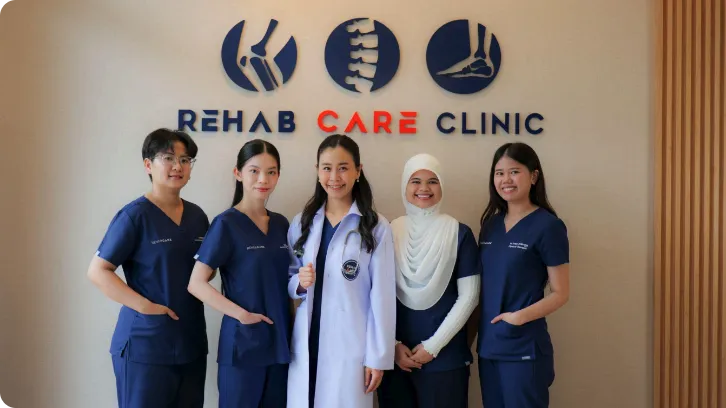
Pain treatment without medication or surgery
at Rehab Care Clinic
Rehab Care Clinic, a specialist rehabilitation medicine and physical therapy clinic,
is committed to providing high-quality, high-standard care
to give you a stronger body and a better quality of life.
"Dedicated to caring for every kind of pain, with doctors and physical therapists,
modern equipment and service from the heart."
The role of physical therapy in post-operative rehabilitation
Post-operative rehabilitation helps tissue repair follow its natural course properly. Its main aims are to prevent complications and return the patient to normal quickly and safely.
1. Preventing complications
- Preventing joint stiffness/contracture: especially after knee or hip replacement, the physical therapist helps the joint move correctly (passive and active range of motion).
- Preventing muscle weakness and atrophy: strengthening exercises appropriate to each stage of rehabilitation are started to maintain muscle mass.
- Preventing scar tissue (scar tissue management): specialised techniques are used to manage scars and reduce tightness from scar tissue under the skin.
2. Rehabilitation at each stage
The physical therapy programme is divided into stages, with the physical therapist controlling the intensity of treatment at each stage.
Rehabilitation stage | Main goals | Treatments used |
|---|---|---|
Stage 1: early stage (first 1–2 weeks after surgery) | Focus on reducing pain, swelling and inflammation, and maintaining range of motion |
|
Stage 2: intermediate stage (2–6 weeks) | Restore full range of motion, begin strengthening the muscles around the joint, and train balance and correct movement | Gradually increase exercise to build strength and flexibility in the muscles and joints
|
Stage 3: long-term recovery (6 weeks onwards) | Fully restore muscle strength, adjust posture in daily life to prevent re-injury, and train specific movements/functions such as walking, running or playing sport safely | Continue exercising and gradually return to daily activities to fully restore strength and prevent re-injury
|
Factors affecting recovery time
- Type of surgery: major surgery takes longer to recover from than minor surgery.
- The patient's physical condition: people with underlying conditions or older adults may take longer to recover.
- Following advice: strictly following the self-care advice of your doctor and physical therapist will help you recover faster.
Precautions
- Watch for abnormal symptoms such as severe pain, swelling, redness or fever, which may be signs of infection, and consult a doctor immediately.
- Avoid lifting heavy objects, bending, or moving with poor posture, which may cause re-injury.
- Consult a doctor or physical therapist if you have unusual pain or soreness after exercise.
Pain treatment without medication or surgery
at Rehab Care Clinic
Rehab Care Clinic, a specialist rehabilitation medicine and physical therapy clinic,
is committed to providing high-quality, high-standard care
to give you a stronger body and a better quality of life.
"Dedicated to caring for every kind of pain, with doctors and physical therapists,
modern equipment and service from the heart."
Post-operative rehabilitation programme at Rehab Care Clinic
At Rehab Care Clinic, we understand that recovery after surgery is a time when close rehabilitation care is needed. Our rehabilitation physicians and physical therapists therefore work together to design treatment programmes based on the surgeon's operative method and each patient's individual progression, so that the muscles, tendons and joints can work efficiently again.
1. Individualised programme
Every treatment plan starts with a detailed assessment of symptoms and movement to analyse the root cause and design a physical therapy programme suited to each patient's stage of recovery.
Therapeutic exercise
The physical therapist gradually adjusts the intensity of exercise according to the stage of tissue healing.
- Early stage (weeks 1–2): focus on reducing pain and swelling and maintaining range of motion
- Functional rehabilitation stage (weeks 3–6): strengthen the muscles around the joint, and train balance and correct movement
- Return-to-activity stage (6 weeks onwards): train specific functions such as walking, running or playing sport safely
Treatment goals:
- Reduce pain and swelling and restore injured tissue
- Increase range of motion
- Increase muscle strength and joint stability
- Prevent re-injury
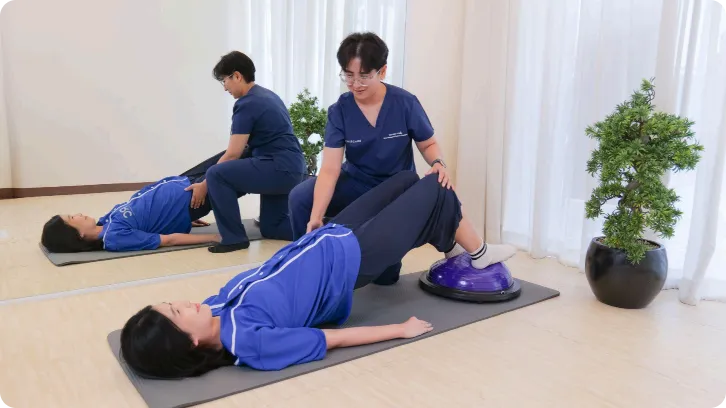
Therapeutic exercise at Rehab Care Clinic
2. Modern supporting technology
We use equipment imported from abroad to help control pain and swelling and speed up tissue repair for an effective recovery, including:
- Focused shockwave therapy: stimulates new cell growth and breaks down scar tissue
- High-power laser therapy: speeds up cell repair and reduces pain and inflammation
- Peripheral magnetic stimulation (PMS): stimulates deep muscles and nerves, repairs tissue and reduces injury; it also helps build strength and slows muscle wasting
- Deep-heat ultrasound therapy: speeds up the repair process, increases the flexibility of connective tissue, and reduces pain, spasm and injury in muscles and tendons
- Electrical nerve stimulation (TENS): reduces pain by stimulating the nerves through the skin
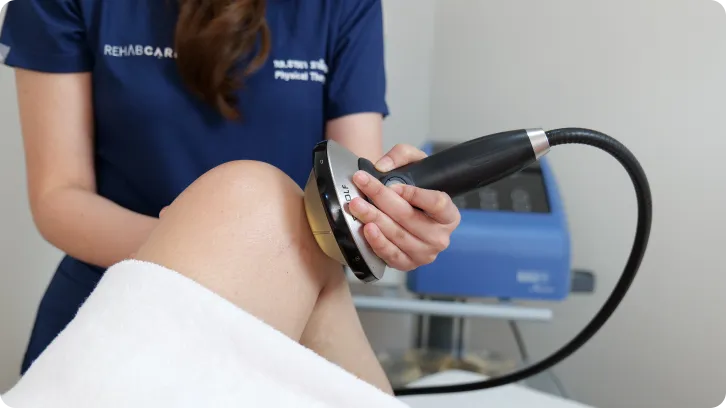
Knee treatment with focused shockwave therapy at Rehab Care Clinic
3. Specialised rehabilitation programmes
For holistic care, we offer additional specialised programmes tailored to each condition, including:
- Therapeutic Exercise : individual exercise to build strength, improve balance and enhance physical performance
- Hydrotherapy : exercise in water to reduce impact on the joints, suitable for post-operative rehabilitation, especially for older adults who need to reduce pressure on their joints, so they can move safely
- Ergonomics and Posture Rehab : correcting posture and movement mechanics to prevent re-injury
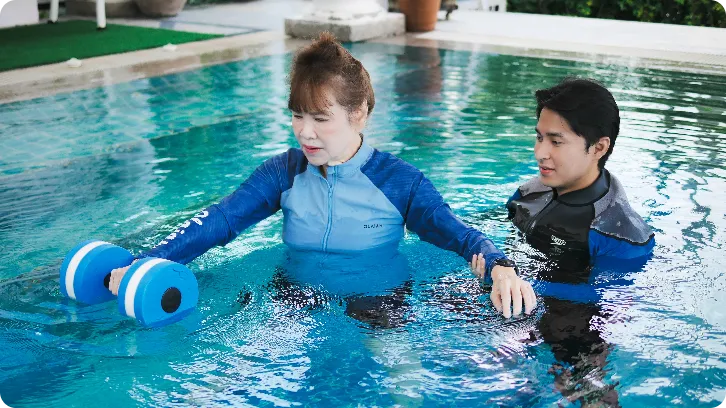
Hydrotherapy treatment at Rehab Care Clinic
4. Preparation before and after surgery (Pre-hab & Post-op Rehab)
- Preparation before surgery (pre-hab): training muscle strength and range of motion before surgery helps reduce complications and speeds up recovery
- After surgery (post-op rehab): ongoing care by a physical therapist to restore function as close to normal as possible
Medical care combined with rehabilitation medicine
For chronic injuries or slow recovery, treatment may be supplemented with specialist treatments such as:
- Dry needling to release muscle knots and trigger points
- Regenerative therapy for injuries, for example prolotherapy (concentrated glucose) or concentrated plasma (PRP) injections using ultrasound guidance (US-guided injection with prolotherapy), to speed up the repair of injured tendons and joints, stimulate repair and accelerate the body's natural healing and recovery process
Post-operative rehabilitation is a process that requires patience, consistency and close cooperation between the patient, doctor and physical therapist. Don't let successful surgery go to waste by neglecting rehabilitation.
At Rehab Care Clinic, our rehabilitation physicians and physical therapists work together to design an "individual rehabilitation programme" covering every stage of recovery. Book an appointment to consult and plan your post-operative rehabilitation with a physical therapist at Rehab Care Clinic, so you can get back to life with confidence and full function.
Pain treatment without drugs or surgery at Rehab Care Clinic
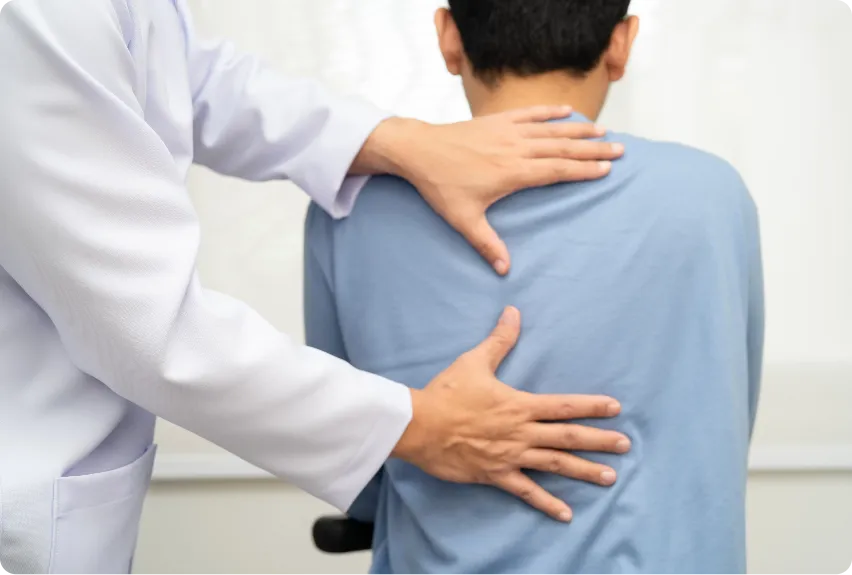
Pain treatment without drugs or surgery
at Rehab Care Clinic
Rehab Care Clinic is a specialist rehabilitation medicine and physical therapy clinic dedicated to high-quality, high-standard care, helping you to a stronger body and a better quality of life.
Contact a branch
-
Phetkasem
-
Rama 2
-
Muang Thong Thani
-
Ratchada
-
Sathorn
- Journal of Orthopaedic & Sports Physical Therapy (JOSPT). (2022). Postoperative Rehabilitation Guidelines: Evidence-Based Clinical Practice.
- Royal College of Physiotherapists. (2021). Postoperative Rehabilitation Standards and Guidance.
- Royal College of Physiotherapists. (2021). Postoperative Rehabilitation Standards and Guidance.
- Kisner, C., & Colby, L. A. (2021). Therapeutic Exercise: Foundations and Techniques (7th ed.). F.A. Davis Company.
- Lieberman, J. R., & Pensak, M. J. (2020). Rehabilitation after total knee arthroplasty: A practical guide for the orthopedic surgeon. The Journal of Bone and Joint Surgery, 102(23), 2056-2062.
- American Physical Therapy Association (APTA). Guide to Physical Therapist Practice 3.0 (2020).
- Prentice, W. E. (2020). Rehabilitation Techniques for Sports Medicine and Athletic Training (7th ed.). Human Kinetics.
- Mahidol University (Rama Channel). (2020). Joint stiffness after bone and joint surgery [Online].
- Hunter, G. R., & Wetzstein, C. J. (2000). Postoperative rehabilitation of the knee. Physical Therapy, 80(7), 681–687.
- Cameron, M. H. (2013). Physical Agents in Rehabilitation: From Research to Practice. Elsevier Health Sciences.