
-
Image

Hip pain radiating down the leg
- Hip pain radiating down the leg
- What is sciatica?
- Causes of nerve compression
- Common symptoms
- Risk behaviours that may trigger symptoms
- Did you know?
- So why do some people take medication for a long time without getting better?
- Pain treatment without medication or surgery at Rehab Care Clinic
Hip pain radiating down the leg
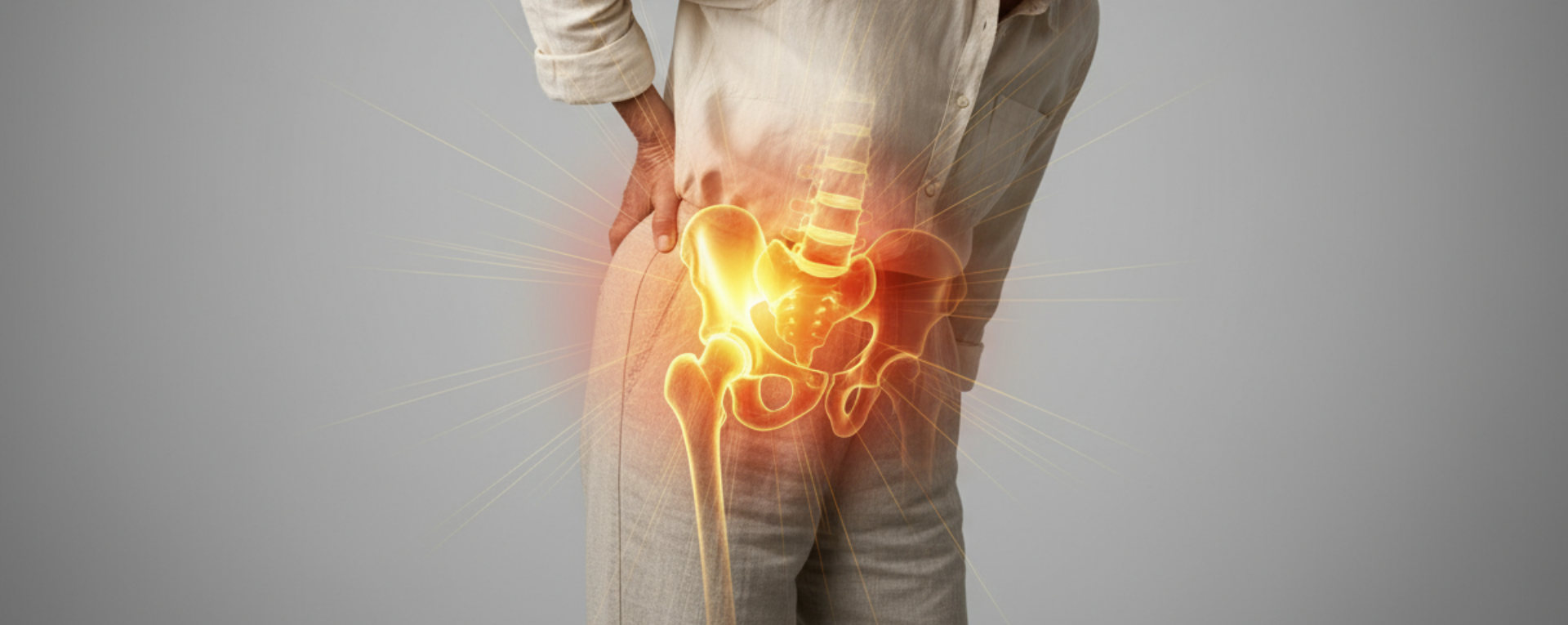
Have you ever had hip pain that radiates down your leg? It may start as a feeling of tightness in the lower back or hip and gradually become a deep pain extending to the thigh, calf or even the foot. If you have had symptoms like these, it may be a sign of sciatica, a condition in which the sciatic nerve is compressed.
What is sciatica?
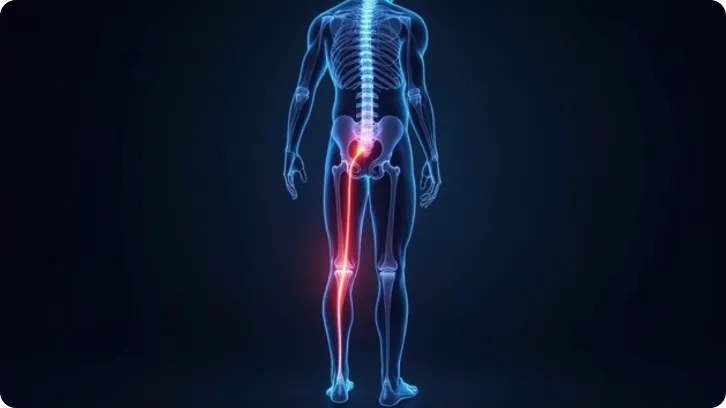
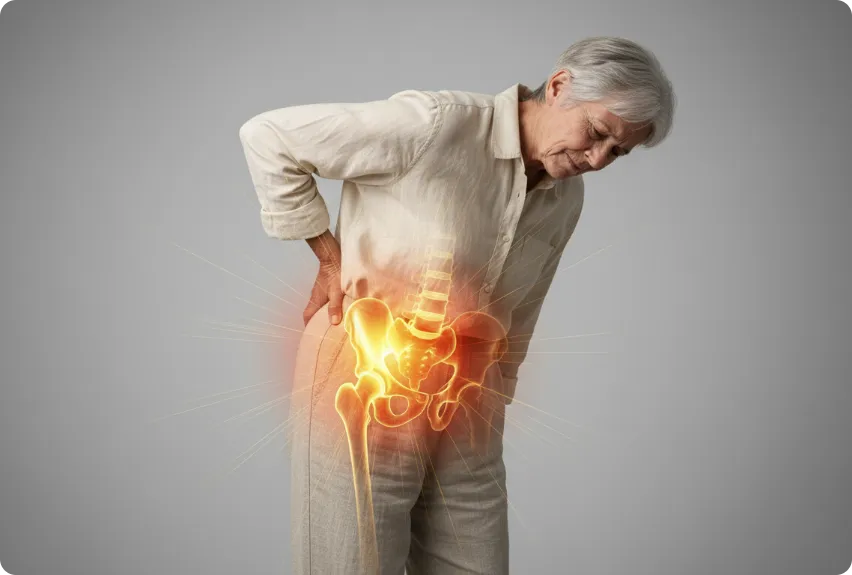
Sciatica (hip pain radiating down the leg) is caused by compression of a nerve, usually the sciatic nerve. This is the longest nerve in the body; it starts from the lower spine at waist level and runs through the back of the hip, the back of the thigh and the calf down to the foot. So if anything abnormal presses on the nerve at the lower spine or anywhere along its path, it can cause back pain radiating down the leg along the nerve. The pain starts around the lower back or hip and radiates down the back of the leg, usually on one side only. It may be accompanied by numbness and can extend to the calf or foot.
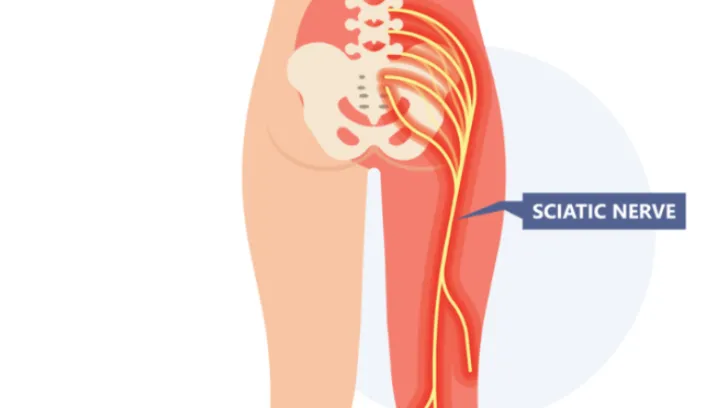
Causes of nerve compression
- A herniated disc pressing on the nerve
- Spinal degeneration (spinal stenosis), common in older people
- Tight or inflamed hip muscles (piriformis syndrome) compressing the sciatic nerve
- Risk behaviours such as sitting or standing for long periods without changing position

Pain treatment without medication or surgery
at Rehab Care Clinic
Rehab Care Clinic, a specialist rehabilitation medicine and physical therapy clinic,
is committed to providing high-quality, high-standard care
to give you a stronger body and a better quality of life.
"Dedicated to caring for every kind of pain, with doctors and physical therapists,
modern equipment and service from the heart."
Common symptoms
- Hip pain radiating down the leg, which may get worse when sitting, standing or walking for long periods
- Numbness or weakness in the leg or foot
- A burning or electric-shock sensation in the leg
- Pain that may get worse when standing up or moving
If you have severe symptoms, such as leg weakness that stops you from walking or loss of bladder or bowel control, see a doctor immediately.
Risk behaviours that may trigger symptoms
- Sitting cross-legged or with your weight on one side for long periods
- Sitting at work or driving for long periods without changing position
- Overexercising, such as running or lifting weights without warming up
- Lifting heavy objects incorrectly, causing the spine to compress the nerve
Did you know?
In all of the positions above, a small muscle deep in the buttock has to work hard, contracting repeatedly until it becomes tense and injured. This usually happens to a muscle called the piriformis, through which a large nerve passes. If this muscle becomes very tight, it squeezes the nerve and causes pain, leading to the following symptoms:
- Hip pain
- Buttock pain
- Pain with numbness radiating down the leg
- A burning or hot flushing sensation in the buttock
If you have these symptoms, seek advice straight away and don't leave it too long. If the problem builds up over time, leg weakness may develop, because the nerve is squeezed so much that it can no longer send signals to the muscles. For initial treatment, muscle relaxants or anti-inflammatory medication work well in the early stages; if the muscle tightness is still mild, medication can reduce the pain and stiffness.
Pain treatment without medication or surgery
at Rehab Care Clinic
Rehab Care Clinic, a specialist rehabilitation medicine and physical therapy clinic,
is committed to providing high-quality, high-standard care
to give you a stronger body and a better quality of life.
"Dedicated to caring for every kind of pain, with doctors and physical therapists,
modern equipment and service from the heart."
So why do some people take medication for a long time without getting better?
Because medication only relieves the symptoms temporarily. If the problem piriformis muscle remains tight and keeps squeezing the nerve, the radiating pain will not go away. Physical therapy is therefore an option for treating muscle tightness and pain. At Rehab Care Clinic, we use physical therapy equipment imported from Europe with pain-relief technology to resolve the pain, including the following:
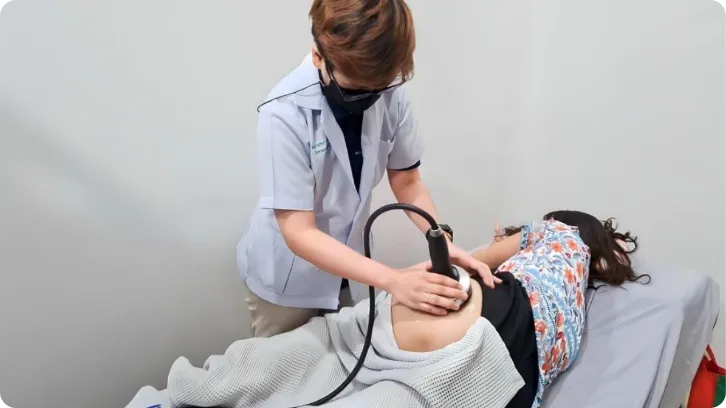
Focused shockwave therapy
applied to the tight muscle to release the tension that is squeezing the nerve
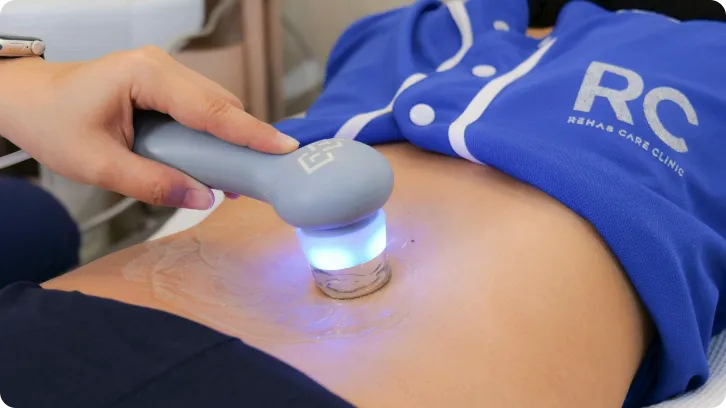
Deep heat therapeutic ultrasound
helps reduce pain
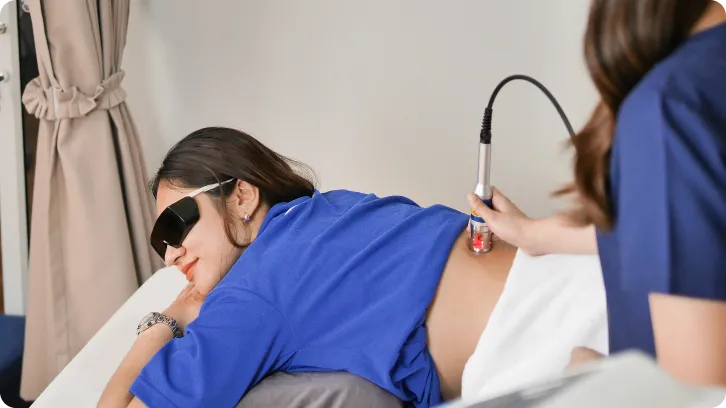
High-power laser therapy
energises cells and reduces nerve inflammation
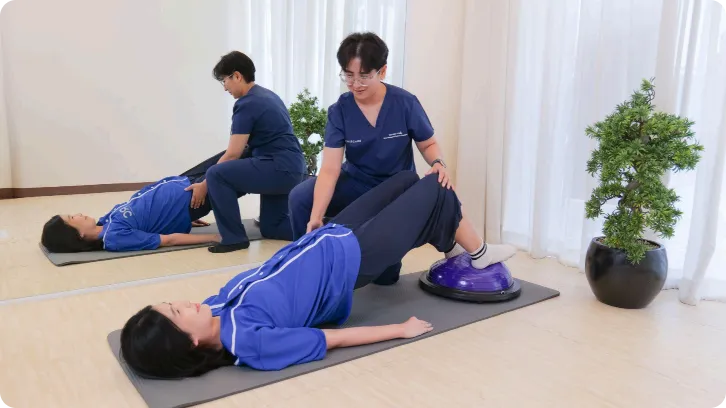
Personalised exercise and body realignment programme
to prevent re-injury
Initial self-care for hip pain radiating down the leg includes stretching the hip and thigh muscles to release tension and reduce tightness. You can also apply warm compresses, such as a warm gel pack, hot water bottle or electric heating pad, to help reduce pain. Most importantly, avoid habits that make the symptoms worse, such as sitting for long periods or exercising too strenuously.
However, if you have the symptoms described above, don't let hip pain radiating down your leg hold you back. Consult a specialist promptly to plan suitable treatment. Rehab Care Clinic is ready to take care of you. If you want to restore your body's strength without relying on medication or surgery, we are ready to advise you and design a treatment programme that suits you. Start looking after your health with us today.
Pain treatment without drugs or surgery at Rehab Care Clinic
Pain treatment without drugs or surgery
at Rehab Care Clinic
Rehab Care Clinic is a specialist rehabilitation medicine and physical therapy clinic dedicated to high-quality, high-standard care, helping you to a stronger body and a better quality of life.
Contact a branch
-
Phetkasem
-
Rama 2
-
Muang Thong Thani
-
Ratchada
-
Sathorn
- American Academy of Orthopaedic Surgeons. (2023). “Sciatica.” Retrieved from https://www.aaos.org
- National Health Service (NHS). (2023). “Sciatica.” Retrieved from https://www.nhs.uk
- American Physical Therapy Association. (2023). “Sciatica and Low Back Pain.” Retrieved from https://www.apta.org
- National Institute of Neurological Disorders and Stroke (NINDS). “Sciatica.” Retrieved from https://www.ninds.nih.gov