
-
Image

Deep-heat ultrasound therapy
- What is deep-heat ultrasound therapy?
- How ultrasound therapy works
- Ultrasound wave modes
- Benefits of ultrasound therapy
- Conditions that can be treated with ultrasound therapy
- Contraindications for ultrasound therapy
- Frequently asked questions about ultrasound therapy
- Treat pain without drugs or surgery at Rehab Care Clinic
What is deep-heat ultrasound therapy?
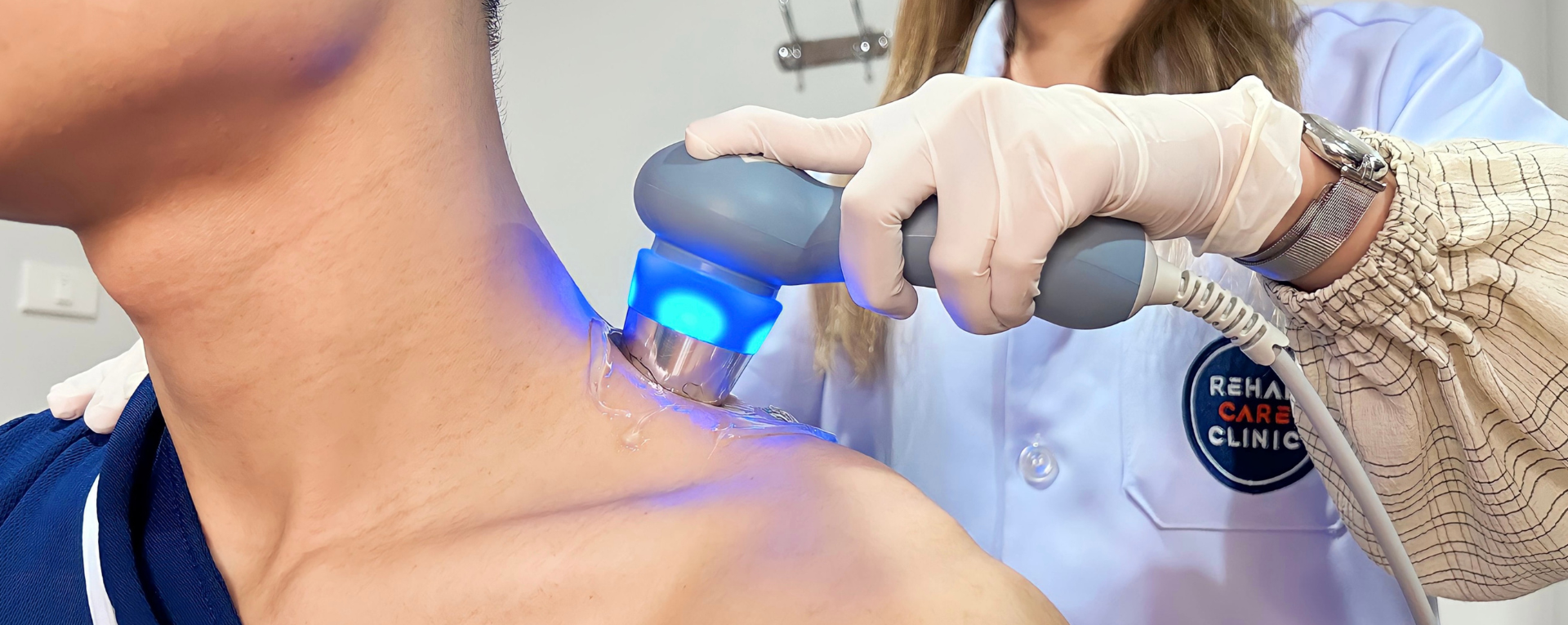
Ultrasound therapy is a physical therapy technique that uses high-frequency sound waves to help relieve pain, reduce inflammation and stimulate tissue recovery. This makes it well suited to treating muscle, joint and tendon injuries.
How ultrasound therapy works
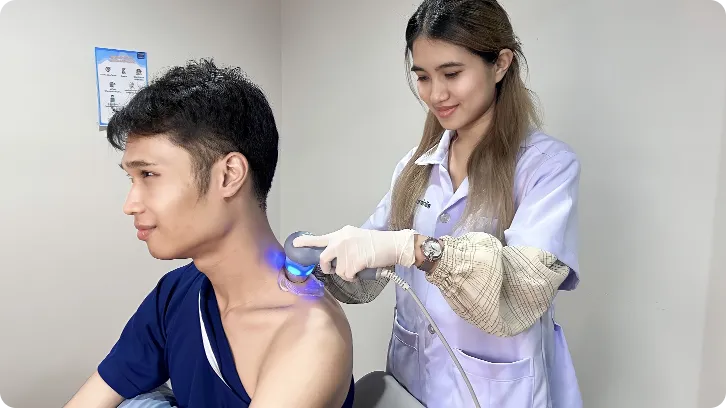
A physical therapy ultrasound machine emits high-frequency sound waves that produce deep heat, reaching 2–5 cm beneath the skin. The ultrasound used in physical therapy has a frequency of 0.75–3 MHz and an intensity of 0.125–3 W/cm². The waves enter the body through a conductive gel applied to the skin, and generate heat within the deeper tissues.
Ultrasound wave modes
- Continuous mode means the waves are emitted continuously throughout the treatment. This produces a thermal effect, which reduces joint stiffness, eases muscle spasm and relieves pain.
- Pulsed mode means the waves are emitted intermittently, alternating between on and off periods throughout the treatment. This produces a non-thermal effect, which speeds up tissue formation, stimulates protein synthesis and accelerates bone healing.
Benefits of ultrasound therapy
- Increases blood circulation, delivering oxygen and nutrients to repair tissue
- Treats injuries to deep tissues and joints
- Reduces pain and muscle tension
- Reduces stiffness in tissue and fascia
- Increases the flexibility of connective tissue
- Reduces inflammation, helping to relieve swelling and inflammation in the treated area
- Stimulates tissue recovery by speeding up the repair of injured cells
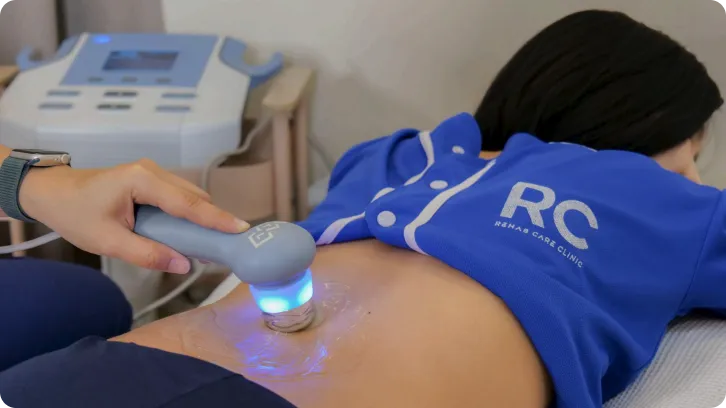
Ultrasound therapy being used to treat muscle inflammation from sport at Rehab Care Clinic
Conditions that can be treated with ultrasound therapy
- Muscle and joint pain
- Sports injuries
- Tendinitis
- Frozen shoulder
- Fascial adhesions and hardened scar tissue
- Pain from osteoarthritis
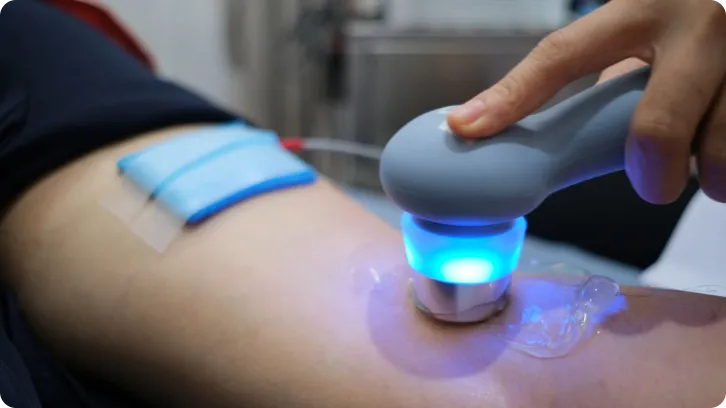
Ultrasound therapy being used to treat muscle inflammation at Rehab Care Clinic
Contraindications for ultrasound therapy
Ultrasound therapy has few side effects, but it is not recommended in the following cases:
- People with a pacemaker
- Areas with acute infection
- Areas with open wounds or severe skin inflammation
- Pregnant women (abdomen or lower back)
- Epiphyseal plates (growth plates) in children
- Areas affected by cancer or tumours
- People with circulatory problems, such as deep vein thrombosis
- Always inform the doctor and physical therapist of any underlying conditions, history of accidents or previous surgery before every treatment.
Frequently asked questions about ultrasound therapy
Q: What does ultrasound therapy feel like?
A: With acute injuries, patients usually feel no pain during treatment. Some people with chronic conditions may feel mild warmth, a dull or heavy sensation, or slight vibration in the treated area, as the physical therapist will assess you and choose the treatment technique best suited to you. If the sensation becomes stronger or you notice anything unusual during treatment, tell your physical therapist straight away.
Q: How long does each ultrasound therapy session take?
A: Each session generally takes about 5–10 minutes, depending on the size and nature of the area being treated.
Q: How many sessions are needed to see results?
A: The number of sessions depends on the patient's condition and the physical therapist's advice. In some cases, 2–3 sessions a week over several weeks may be needed. When combined with other physical therapy equipment, however, the frequency and duration of treatment may be reduced, because the treatment is more comprehensive and effective. This depends on the patient's condition and the advice of the physical therapist in charge.
Q: Does ultrasound therapy have side effects?
A: This treatment is generally safe when carried out by a physical therapist. However, if the wave intensity is too high, it may cause a burning sensation or skin irritation.
Q: Can ultrasound therapy be combined with other treatments?
A: Yes. This treatment is often used alongside other physical therapy equipment or techniques, and gives even better results when combined with rehabilitation exercise.
Treatment with Ultrasound Therapy is one of the most effective physical therapy methods for reducing pain and speeding up recovery. However, you should consult a physical therapist before treatment to make sure it is safe and suitable for your individual condition. If you have muscle or tendon pain that needs treatment, Rehab Care Clinic is ready to advise you and plan the right treatment for you. Our experienced physical therapists are ready to advise you and look after you closely.
Pain treatment without drugs or surgery at Rehab Care Clinic
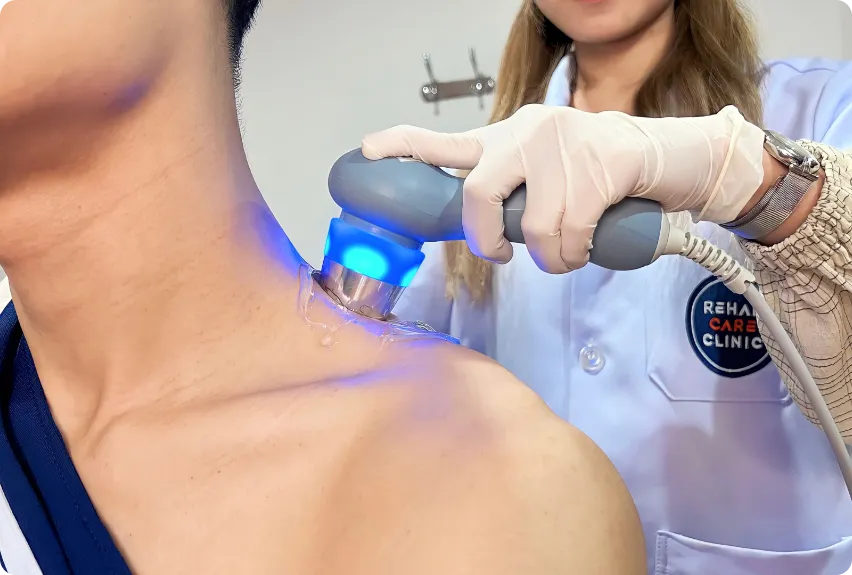
Pain treatment without drugs or surgery
at Rehab Care Clinic
Rehab Care Clinic is a specialist rehabilitation medicine and physical therapy clinic dedicated to high-quality, high-standard care, helping you to a stronger body and a better quality of life.
Contact a branch
-
Phetkasem
-
Rama 2
-
Muang Thong Thani
-
Ratchada
-
Sathorn