
-
Image
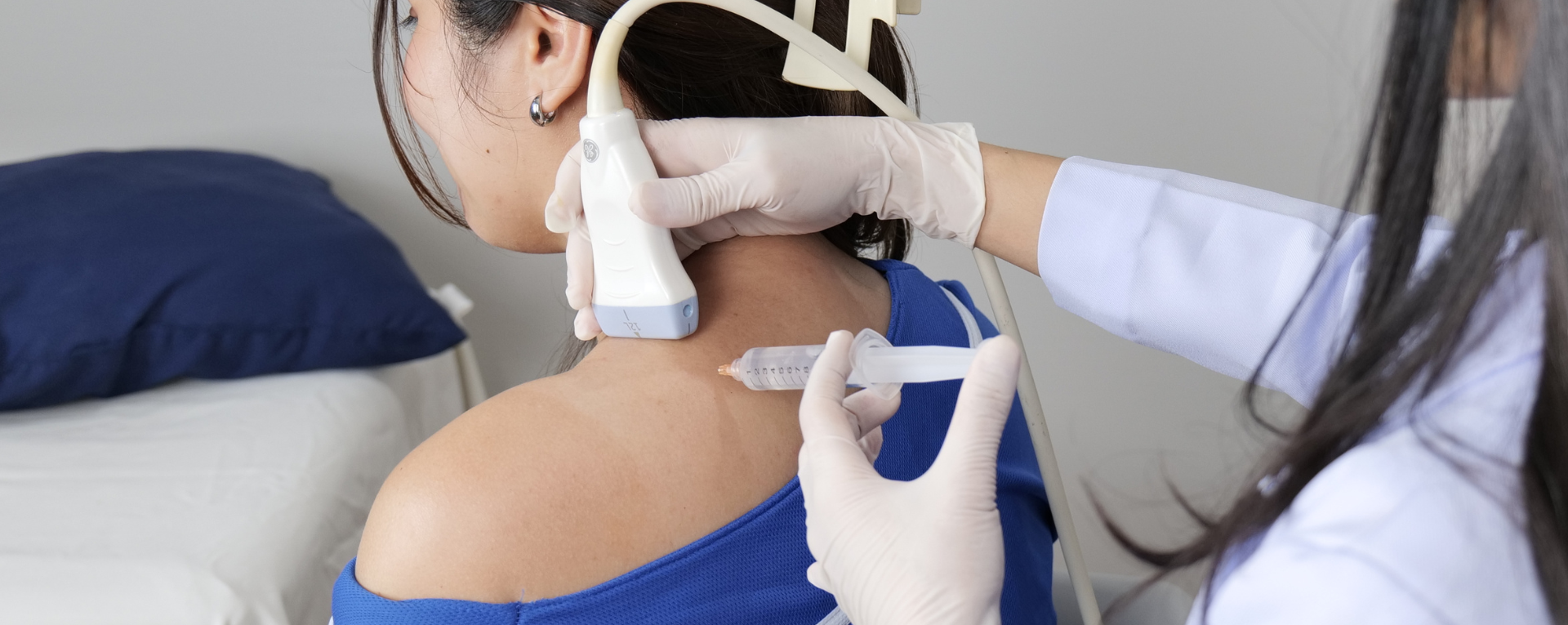

Concentrated glucose injection (prolotherapy)
- What is prolotherapy?
- How prolotherapy works
- Benefits of prolotherapy What conditions can prolotherapy treat?
- Prolotherapy at Rehab Care Clinic
- How should I care for myself after prolotherapy?
- Pain treatment without relying on medication or surgery at Rehab Care Clinic
What is prolotherapy?
Prolotherapy is a treatment for chronic pain in the joints, tendons, ligaments, muscles and nerves. A highly concentrated solution, such as glucose, is injected into areas of chronic inflammation to trigger an inflammatory response, which restarts repair at the molecular level. It also supplies energy to the cells, brings in fresh blood and carries away waste products, allowing complete repair, reducing inflammation, relieving chronic pain and supporting the body’s natural recovery.
How prolotherapy works
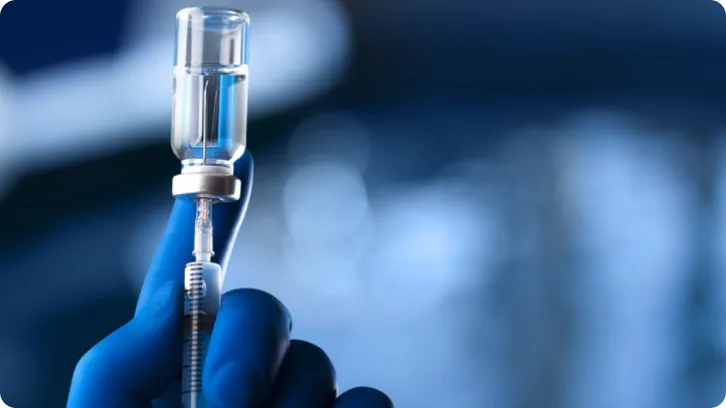
Prolotherapy works by triggering localised inflammation to stimulate the body’s repair process. The injected solution usually contains a dextrose solution or other substances that increase blood circulation and stimulate collagen production. When injected into the injured area, the body responds by activating tissue-repair cells, making the tendons, ligaments and joints stronger.
Benefits of prolotherapy
- Relieves chronic pain, such as back, neck, knee and shoulder pain
- Helps restore degenerated joints, tendons, ligaments and tissues
- A non-surgical treatment that avoids the risks of major surgery
- Reduces reliance on painkillers and anti-inflammatory drugs
- Stimulates the body to repair itself naturally
What conditions can prolotherapy treat?
- Chronic joint pain, such as knee osteoarthritis and hip osteoarthritis
- Tendon, ligament and muscle injuries, such as tendinitis and myositis
- Back pain from degenerative disc disease
- Pain from office syndrome or work-related injuries
Prolotherapy at Rehab Care Clinic
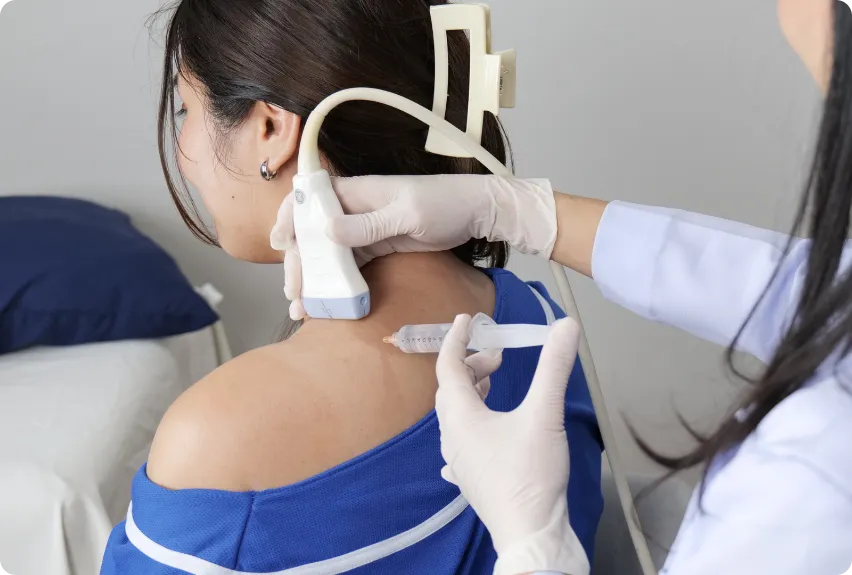
Prolotherapy has been accepted nationwide and in the United States for more than 50 years, and its results are supported by international research. Our clinic uses injection solutions that are safe for the body, consisting of concentrated glucose, sterile saline, concentrated vitamins, a local anaesthetic and sterile water. We also use modern diagnostic ultrasound technology for diagnosis and to guide injections, directing the needle precisely to the problem area so that treatment is effective and safe.
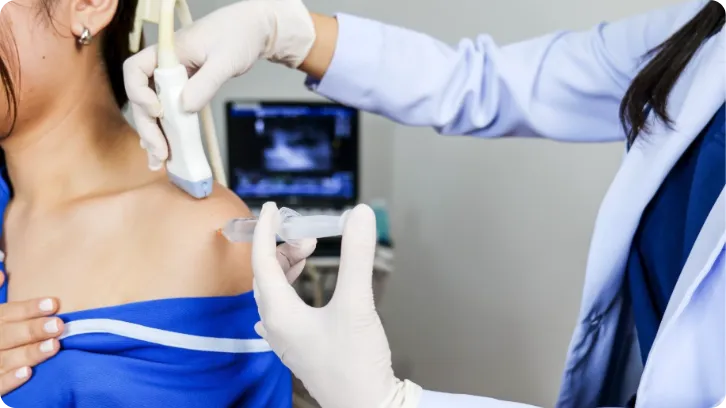
Ultrasound-guided prolotherapy injection to the shoulder at Rehab Care Clinic
How should I care for myself after prolotherapy?
If the pain is severe, we recommend a simple painkiller and a cold compress. Anti-inflammatory drugs (NSAIDs) are not recommended, as they interfere with the repair process triggered by the injection. Rest, avoid exercise and avoid using the injected area for 1–2 days.
*** Injections are given every 3–4 weeks. Most people see clear results from the second or third injection onwards. On average, at least 3–5 injections are needed, depending on the severity of the condition.
Prolotherapy is a good option for people with chronic pain. It relieves symptoms and improves quality of life without the need for surgery. However, you should consult a specialist physician before treatment so they can assess you and plan the most appropriate treatment for you. If you are looking for assessment and treatment for problems with your joints, tendons, ligaments, muscles or nerves, our rehabilitation physicians and team of physical therapists at Rehab Care Clinic are ready to take care of you.
Pain treatment without drugs or surgery at Rehab Care Clinic
Pain treatment without drugs or surgery
at Rehab Care Clinic
Rehab Care Clinic is a specialist rehabilitation medicine and physical therapy clinic dedicated to high-quality, high-standard care, helping you to a stronger body and a better quality of life.
Contact a branch
-
Phetkasem
-
Rama 2
-
Muang Thong Thani
-
Ratchada
-
Sathorn
- Hauser, R. A., et al. (2016). “A Systematic Review of Prolotherapy for Chronic Musculoskeletal Pain.” Clinical Medicine Insights: Arthritis and Musculoskeletal Disorders, 9, 139-159.
- Lyftogt, J. (2007). “Prolotherapy for Achilles tendinopathy: A pilot study.” British Journal of Sports Medicine, 41(4), 232-237.
- Rabago, D., et al. (2010). “Dextrose Prolotherapy for Knee Osteoarthritis: A Randomized Controlled Trial.” Annals of Family Medicine, 11(3), 229-237.
- Hackett, G. S., Hemwall, G. A., & Montgomery, G. A. (1993). Prolotherapy for Ligament and Tendon Reconstruction: The Art and Science of Prolotherapy. Gustav A. Hemwall.
- American Osteopathic Association of Prolotherapy (AOAP). “Prolotherapy Overview and Research.” Retrieved from www.aoap.org