-
Image



Shoulder pain that isn't just frozen shoulder
- Shoulder pain and frozen shoulder
- Symptoms of shoulder pain
- What causes shoulder pain?
- 3 common shoulder conditions you should know about so you can get treatment in time
- How to treat and relieve shoulder pain
- Physical therapy treatment
- Medical treatments
- Pain treatment without medication or surgery at Rehab Care Clinic
Shoulder pain and frozen shoulder
Shoulder pain is a common problem, but if left untreated it can affect daily life. Many people mistakenly believe that shoulder pain always means frozen shoulder, but in fact there are many causes of shoulder pain, and without proper treatment the condition may progress and become more severe.
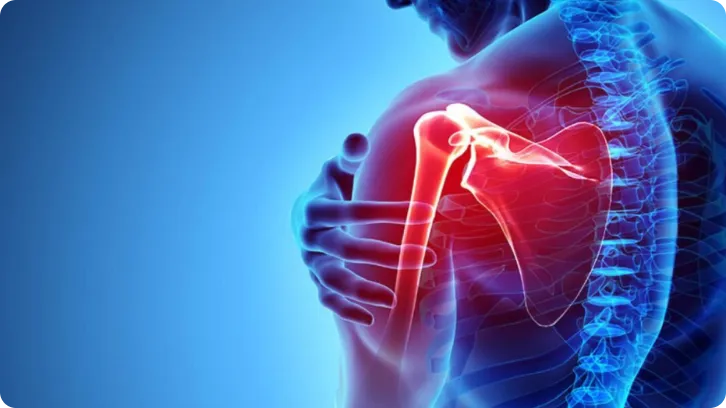
Symptoms of shoulder pain
- Pain or soreness around the shoulder
- Stiffness or difficulty moving the arm
- Pain that may radiate down the upper arm or into the back
- In frozen shoulder, there may be a clear restriction of shoulder movement, making it difficult to raise the arm or reach behind the back
What causes shoulder pain?
1. Overuse injuries
- Work that involves regularly lifting heavy objects, such as construction or warehouse work
- Sports that put excessive strain on the shoulder, such as weightlifting, swimming, tennis or badminton
- Repetitive movements over long periods, such as typing or using a computer mouse for hours
2. Inflammation of the shoulder tendons and joint
- Tendinitis: friction on the shoulder tendons causes inflammation and pain
- Bursitis: the bursae around the shoulder joint reduce friction; when they become inflamed they cause pain and swelling
- Arthritis: seen in older people or those with a history of degenerative joint disease
3. Frozen shoulder
- Caused by inflammation of the shoulder joint lining, leading to adhesions and restricted shoulder movement
- Often seen in patients who have injured the shoulder and not moved it for a long time, for example after surgery or an accident
- Common in people with diabetes and thyroid disease
4. Accidents or injuries
- Shoulder dislocation: caused by a severe impact that forces the head of the upper arm bone out of its socket
- Rotator cuff tear: usually occurs in older people or those who have used their shoulders heavily over a long period
- Clavicle (collarbone) fracture: caused by accidents such as a fall or a direct blow
5. Systemic diseases that affect the shoulder joint
- Diabetes mellitus: causes adhesions in the shoulder joint, making frozen shoulder more likely
- Rheumatoid arthritis: an autoimmune disease that causes chronic inflammation of the shoulder joint
- Thyroid disorders (hypothyroidism/hyperthyroidism): affect inflammation and tissue recovery in the shoulder joint
Pain treatment without medication or surgery
at Rehab Care Clinic
Rehab Care Clinic, a specialist rehabilitation medicine and physical therapy clinic,
is committed to providing high-quality, high-standard care
to give you a stronger body and a better quality of life.
"Dedicated to caring for every kind of pain, with doctors and physical therapists,
modern equipment and service from the heart."
3 common shoulder conditions you should know about so you can get treatment in time
1. Shoulder tendinitis
This has several causes. It can result from using or moving the arm in the same way repeatedly, such as activities that involve raising the arm overhead again and again, or heavy activities requiring repeated force to lift the arm. It can also result from an accident that inflames the shoulder tendons. Another important cause is repeatedly sleeping on the same side, which compresses and rubs the tendons against the bones of the shoulder joint, leading to inflammation.
2. Rotator cuff tear
Once a shoulder tendon has torn, it does not heal by itself. The tear gets larger over time, and if left untreated the torn tendon retracts and can no longer be surgically repaired, which may lead to shoulder arthritis in the future. There are several possible causes, including:
- Tears caused by age-related degeneration of the tendon, mostly seen in patients aged 50 and over
- Tears caused by accidents, such as a fall or a forceful swing or flick of the arm
- Tears caused by impingement from the acromion, which rubs against the shoulder tendon
3. Frozen shoulder
Frozen shoulder occurs when the shoulder joint capsule, the tissue surrounding the shoulder joint, becomes inflamed and stiff and forms abnormal bands of tissue. This leads to adhesions that restrict shoulder movement, so the shoulder moves less and becomes painful.
Frozen shoulder usually causes a dull ache that worsens with movement. The most obvious symptom is being unable to move the shoulder, with pain when lying on it or at night. Frozen shoulder has 3 stages:
Stage 1, the painful (freezing) stage: pain gradually increases and may be present even at rest. This stage usually lasts from 6 weeks to 9 months, and the shoulder's range of motion decreases. Stage 2, the frozen stage: the pain from the first stage persists but eases, while shoulder movement becomes markedly reduced. This stage generally lasts 4–9 months, or possibly longer. Stage 3, the thawing (recovery) stage: pain decreases and shoulder movement gradually improves over 5 months to 2 years.
How to treat and relieve shoulder pain
- Rest and cut down on activities that overuse the shoulder; avoid lifting heavy objects or activities that require force from the shoulder
- Medication, such as non-steroidal anti-inflammatory drugs (NSAIDs), or in some cases a steroid injection to reduce inflammation
- Hot or cold compresses: use a hot compress for stiffness and tightness, as it improves blood flow and relieves muscle tension. Use a cold compress for pain with swelling, redness and heat, or within the first 24–48 hours after an injury, to reduce inflammation and relieve pain
- Exercising and stretching the muscles around the shoulder joint
- Physical therapy, such as using physical therapy equipment to reduce pain
- Medical treatment: for severe symptoms, further treatment may be needed, such as injections or, in some cases, surgery
If you have pain or feel that your shoulder is starting to have problems, see a doctor promptly for diagnosis and treatment.
For diagnosis at Rehab Care Clinic, our rehabilitation medicine specialists and physical therapists plan treatment together. The doctor will take a history of your pain, what causes it, which positions make it worst, your working posture and other indications, and will perform a physical examination with various tests to confirm shoulder tendinitis. The clinic can also use musculoskeletal ultrasound to check for inflammation of the tendons, muscles and joints to confirm the diagnosis of shoulder tendinitis.
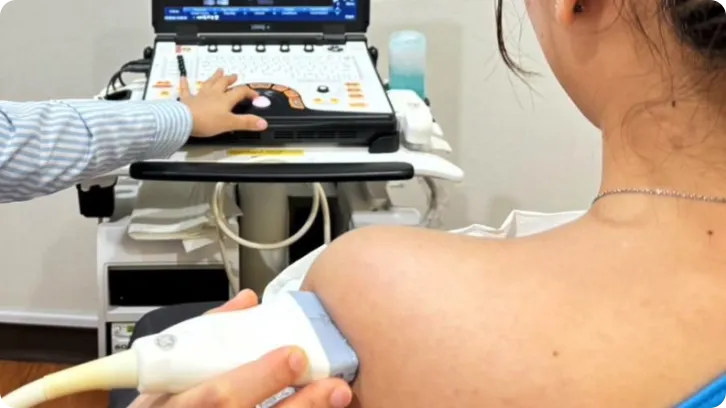
Image: diagnostic ultrasound examination of the shoulder at Rehab Care Clinic
Pain treatment without medication or surgery
at Rehab Care Clinic
Rehab Care Clinic, a specialist rehabilitation medicine and physical therapy clinic,
is committed to providing high-quality, high-standard care
to give you a stronger body and a better quality of life.
"Dedicated to caring for every kind of pain, with doctors and physical therapists,
modern equipment and service from the heart."
Physical therapy treatment
Treatment aims to reduce pain and inflammation and to preserve the shoulder's range of motion. Physical therapy uses a range of equipment to help reduce pain and inflammation.
- Using focused shockwave therapy to help reduce pain and muscle tension
- Using High power laser to help reduce pain and tendon inflammation and to speed up the body's repair and recovery process
- Using deep heat, or Ultrasound therapy to help reduce pain and improve blood circulation
- Using TENS (transcutaneous electrical nerve stimulation) electrical stimulation to reduce pain
- Individualised exercise and stretching to build strength and maintain shoulder movement
However, if the pain and inflammation are so severe that physical therapy alone is not enough, the doctor may consider an injection to reduce pain and inflammation first, combined with physical therapy to treat and repair the still-inflamed shoulder tendons.
Medical treatments
In some cases, if several physical therapy sessions have not brought enough improvement, the doctor may consider treatment with prolotherapy a treatment for chronic pain in the joints, tendons, muscles and nerves. A highly concentrated solution such as glucose, which mildly irritates the tissue, is injected into the chronically inflamed area to trigger an inflammatory response, which in turn starts the repair process again at the molecular level. This energises the cells, brings in fresh blood and carries away waste, leading to complete repair and reducing inflammation and pain.
If the patient wants an even better and more effective result, the doctor may consider concentrated plasma injections (platelet-rich plasma, PRP). The patient's own blood is spun in a centrifuge to separate out the plasma and concentrated platelets, which are then injected back into the inflamed area. The platelets stimulate white blood cells and other cells to repair the injured or inflamed tissue. The growth factors they release stimulate wound healing, tissue and collagen formation, and cell growth and division. In other words, the body's repair processes speed up, helping to reduce injury and inflammation quickly. The clinic uses ultrasound guidance for injections to ensure they are precise, accurate and effective, with no surgery, fast recovery and a lower risk of complications.
Shoulder pain and frozen shoulder are common conditions that can affect daily life. However, with appropriate care and treatment, symptoms can be relieved and future complications prevented. Looking after your shoulders with exercise and avoiding incorrect use is important for a better quality of life. If you are suffering from shoulder pain, don't let it become chronic. We recommend consulting a specialist promptly for an examination and diagnosis, so that a precise, targeted and suitable treatment plan can be made.
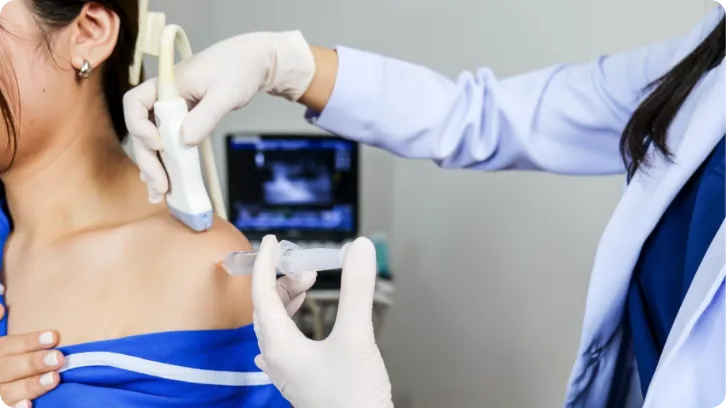
Image: ultrasound-guided injection into the shoulder tendon at Rehab Care Clinic
Pain treatment without drugs or surgery at Rehab Care Clinic

Pain treatment without drugs or surgery
at Rehab Care Clinic
Rehab Care Clinic is a specialist rehabilitation medicine and physical therapy clinic dedicated to high-quality, high-standard care, helping you to a stronger body and a better quality of life.
Contact a branch
-
Phetkasem
-
Rama 2
-
Muang Thong Thani
-
Ratchada
-
Sathorn
- American Academy of Orthopaedic Surgeons. (2023). “Shoulder Pain and Common Shoulder Problems.” Retrieved from https://www.aaos.org
- National Health Service (NHS). (2023). Shoulder Pain. Retrieved from https://www.nhs.uk
- American Physical Therapy Association. (2023). Rotator Cuff Injuries. Retrieved from https://www.apta.org
- National Institute of Arthritis and Musculoskeletal and Skin Diseases (NIAMS). “Rotator Cuff Injuries.” www.niams.nih.gov