-
Image
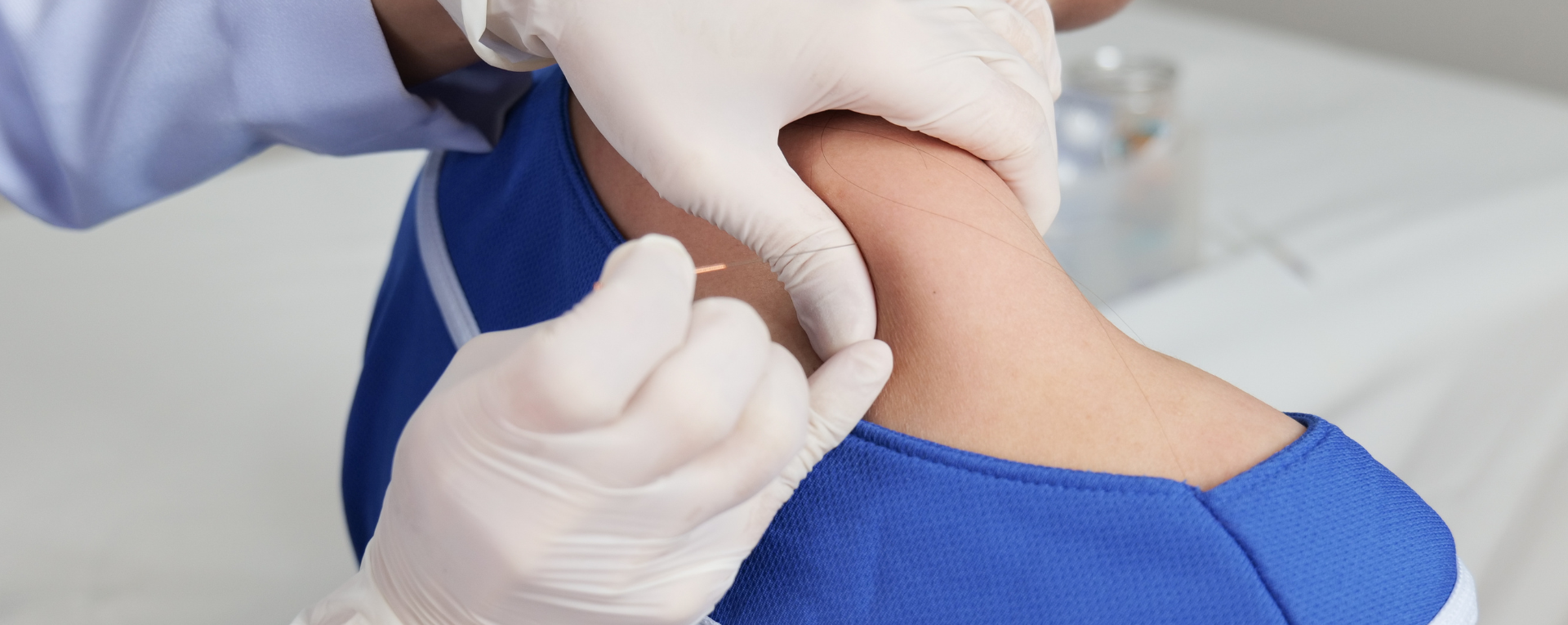

Dry needling for muscle knots
- DRY NEEDLING & ACUPUNCTURE
- 1. Chinese acupuncture
- 2. Western needling (dry needling)
- Comparing dry needling (Western needling) and
- Chinese acupuncture
- Which should you choose?
- Pain treatment without relying on medication or surgery at Rehab Care Clinic
DRY NEEDLING & ACUPUNCTURE
Acupuncture is a medical technique that has existed for many centuries, particularly in Traditional Chinese Medicine. Today, however, there is also a needling technique called dry needling, which has become increasingly popular in physical therapy and sports medicine. This article explains the concept of dry needling and how it differs from traditional Chinese acupuncture.
There are two types of needling:
1. Chinese acupuncture
2. Western needling (dry needling)
1. Chinese acupuncture
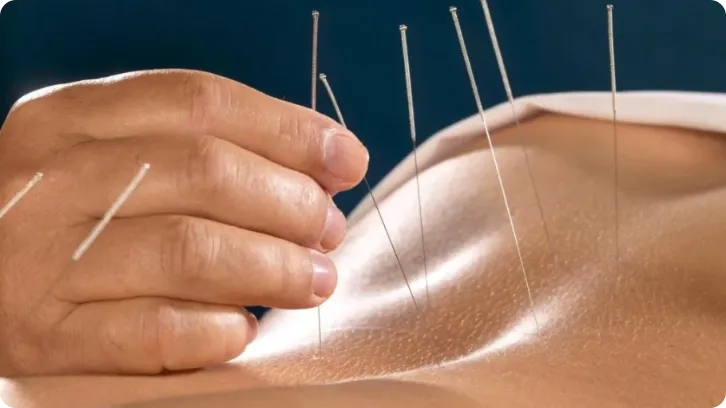
Chinese acupuncture is a discipline that treats illness by inserting needles at specific points on the body, following the principles of Traditional Chinese Medicine. It is based on the concept of life energy, or Qi, which flows along channels called meridians. Acupuncture improves the circulation of the meridian system and helps rebalance the body. Current research has found that acupuncture triggers the release of neurotransmitters that suppress pain, reduce inflammation and increase blood flow to inflamed areas.
How Chinese acupuncture works
- Rebalances Qi and the body’s energy
- Supports the function of the internal organs
- Stimulates blood circulation and the flow of energy along the meridians
- Reduces pain and promotes overall health
2. Western needling (dry needling)
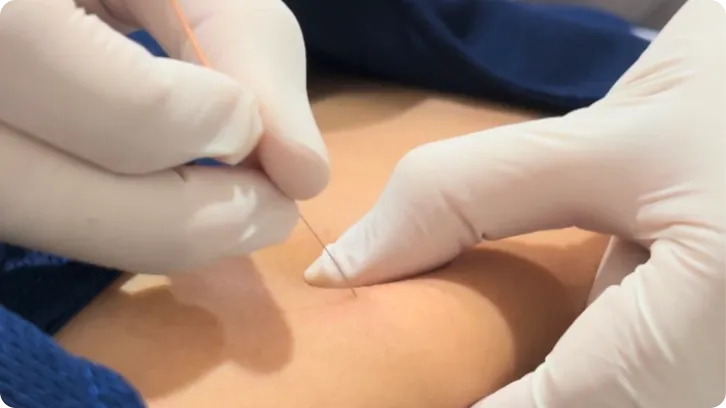
Dry needling, or needling to release muscle knots, treats pain caused by persistently contracted muscle known as myofascial trigger points. A fine needle is used to stimulate the trigger point so that the contracted muscle knot twitches and releases. This encourages the muscle to relax and helps reduce muscle pain.
How dry needling works
- Stimulates trigger points: tender points that are often the cause of muscle pain
- Stimulates blood circulation: to speed up the body’s repair process
- Reduces muscle tension: relaxes contracted muscles
- Stimulates the nervous system: to rebalance the body’s pain mechanisms
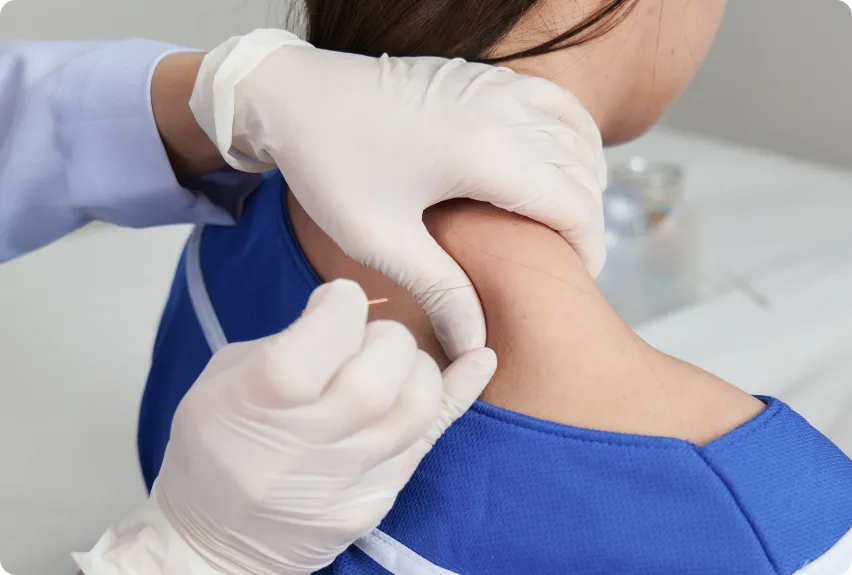
Dry needling (Western needling) at Rehab Care Clinic
Comparing dry needling (Western needling) and Chinese acupuncture
Topic | Dry Needling | Chinese acupuncture |
|---|---|---|
| Origin | Modern medicine; developed in the 1980s | Originated in China as part of ancient Traditional Chinese Medicine, with a history of more than a thousand years |
| Concept | Focuses on treating pain and muscles | Focuses on rebalancing the body’s energy holistically |
| Needling points | Areas of pain, contracted muscle or trigger points | Acupuncture points along the meridians |
| Main goal | Reduce pain and relieve muscle tension | Rebalance energy and promote health |
| Practitioner | Rehabilitation physician | Traditional Chinese Medicine practitioner or acupuncture specialist |
| Needling technique | The needle directly stimulates the muscle at the painful spot. Needles are inserted only at the muscle knots causing the pain, for no more than 3–5 minutes per point. | Needles are inserted along the meridians and left in place for about 15–30 minutes, together with electrical stimulation. |
Which should you choose?
Whether to choose dry needling or Chinese acupuncture depends on your goals. If you want to treat muscle pain or recover from an injury, dry needling may be the right option. If you want holistic treatment to rebalance the body and promote overall health, Chinese acupuncture may be the better choice.
At Rehab Care Clinic, we offer needling based on modern medicine, performed by rehabilitation physicians. All rehabilitation physicians are normally qualified to perform Western needling, whereas Chinese acupuncture requires further specialist training in Chinese acupuncture. Ultimately, the choice depends on each individual’s needs, and you should consult a specialist physician to receive the most appropriate treatment.
Rehab Care Clinic focuses on targeted treatment to relieve pain and release muscle tension. If you have chronic muscle pain, do not ignore it. At Rehab Care Clinic, our rehabilitation physicians and team of physical therapists are ready to take care of you.
Pain treatment without drugs or surgery at Rehab Care Clinic
Pain treatment without drugs or surgery
at Rehab Care Clinic
Rehab Care Clinic is a specialist rehabilitation medicine and physical therapy clinic dedicated to high-quality, high-standard care, helping you to a stronger body and a better quality of life.
Contact a branch
-
Phetkasem
-
Rama 2
-
Muang Thong Thani
-
Ratchada
-
Sathorn
- American Physical Therapy Association. (2023). “Dry Needling: What You Need to Know.” Retrieved from www.apta.org
- World Health Organization. (2003). “Acupuncture: Review and Analysis of Reports on Controlled Clinical Trials.”
- Dommerholt, J., & Fernández-de-Las-Peñas, C. (2013). “Trigger Point Dry Needling: An Evidence and Clinical-Based Approach.”
- MacPherson, H., & Hammerschlag, R. (2018). “Acupuncture Research: Strategies for Developing an Evidence Base.”
- National Center for Complementary and Integrative Health. (2023). “Acupuncture: In Depth.” Retrieved from www.nccih.nih.gov