

-
Image
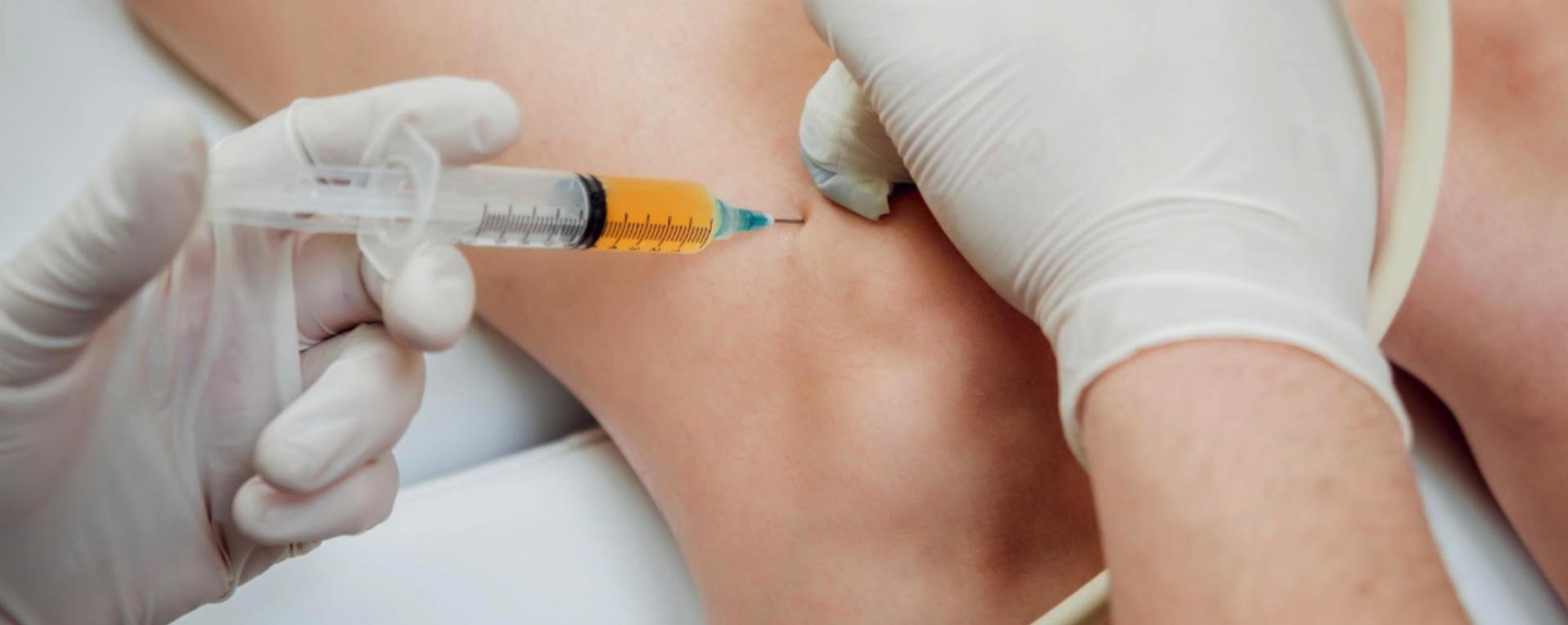

Concentrated plasma injection
- Plasma therapy: a new option for treating and recovering from pain with concentrated plasma from your own blood
- What is concentrated plasma?
- Indications for concentrated plasma treatment
- Concentrated plasma treatment procedure
- Advantages of concentrated plasma treatment
- How is concentrated plasma different from other treatments?
- Who is concentrated plasma suitable for?
- Results and time to see results with concentrated plasma treatment
- Safety and precautions for concentrated plasma treatment
- Rehab Care Clinic’s standards for concentrated plasma treatment
- Why is combining concentrated plasma treatment with physical therapy important?
- Frequently asked questions (FAQ)
- Pain treatment without relying on medication or surgery at Rehab Care Clinic
Plasma therapy: a new option for treating and recovering from pain with concentrated plasma from your own blood
Many people suffer from chronic pain in the joints, tendons, ligaments or muscles that interferes with daily life. Medication may bring only temporary relief, and other treatments sometimes work slowly or do not help. If you are looking for long-term recovery, an interesting option today is concentrated plasma derived from the patient’s own blood, also known as platelet-rich plasma (PRP). It is another way to stimulate the body’s natural repair and recovery, without relying on medication or surgery.
What is concentrated plasma?
After a separation process, we obtain concentrated plasma with a higher density of growth factors, which act as the body’s natural “repair team”. When concentrated plasma is injected into an injured area, the platelets help heal the tissue and stimulate white blood cells and other cells to repair the injured or torn tissue, while the growth factors stimulate the body’s healing process, speeding up repair. Once repair is complete, pain and inflammation decrease naturally, as follows:
- Stimulates new tissue growth to replace old, degenerated tissue
- Reduces inflammation in the injured area
- Increases blood flow to nourish the damaged area
- Relieves pain effectively and precisely, without strong medication or surgery
Indications for concentrated plasma treatment
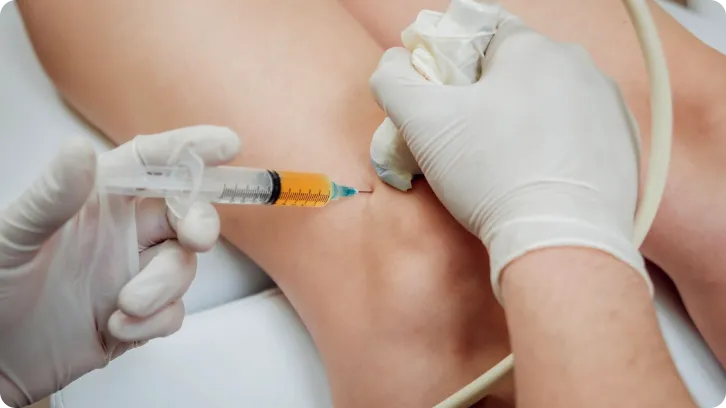
- Joint pain and osteoarthritis, such as knee, ankle, hip or shoulder osteoarthritis
- Tendon degeneration or chronic tendinitis, for example of the elbow tendons, patellar tendon, Achilles tendon, plantar fascia, ankle tendons or hip tendons
- Pain from injuries to the joints, tendons, ligaments and muscles
- Chronic muscle inflammation or chronic pain from repetitive use, such as office syndrome and overuse injuries
Concentrated plasma treatment procedure
1. Blood draw: the doctor draws blood from the patient’s arm, just like a routine blood test.
2. Centrifugation: the blood is placed in a dedicated centrifuge to separate out the concentrated plasma.
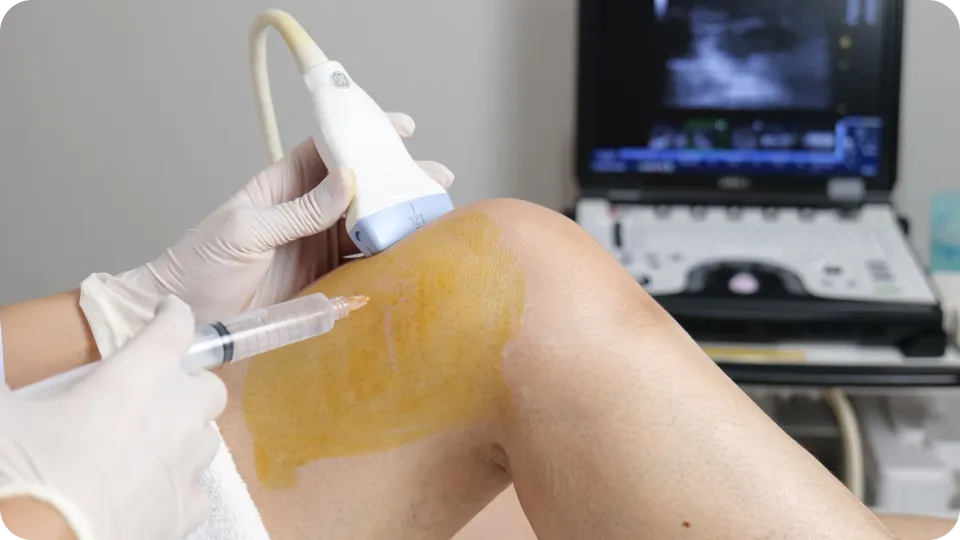
3. Re-injection: the doctor injects the concentrated plasma back into the painful area under ultrasound guidance for greater safety, accuracy and precision, making the treatment more effective.
After the injection, you must avoid anti-inflammatory drugs and steroids for 6 weeks. If you have pain, you may take paracetamol only.
Advantages of concentrated plasma treatment
- Safe: it uses the patient’s own blood, reducing the risk of allergic reactions.
- Natural recovery: it stimulates the body’s repair mechanisms without drugs or chemicals.
- Short recovery time: you can return to daily life quickly.
- Targets the problem: it helps repair tissue at the root of the problem.
- Reduces the need for medication and surgery: an option for people who want to avoid long-term painkillers or surgery.
How is concentrated plasma different from other treatments?
- Steroid injections: steroids reduce inflammation and pain quickly, but they do not repair tissue, and frequent use can weaken tissue.
- Physical therapy: physical therapy restores strength and movement, but where tissue damage is extensive, concentrated plasma treatment speeds up repair and makes physical therapy rehabilitation more effective. We therefore recommend combining the two.
Who is concentrated plasma suitable for?
- People with joint pain or osteoarthritis, such as knee pain, particularly early to moderate knee osteoarthritis; it helps reduce pain and slow joint degeneration
- People with chronic muscle pain, such as neck and shoulder pain, back pain, office syndrome or arm pain
- Athletes with sports injuries or anyone who wants to get back to activity quickly
- People with chronic tendinitis, such as tennis elbow, Achilles tendinitis or plantar fasciitis
- People with shoulder tendinitis or partial tendon tears; it helps reduce inflammation and stimulate tendon repair
- People whose pain has not responded to conventional treatment
- People who want to avoid surgery
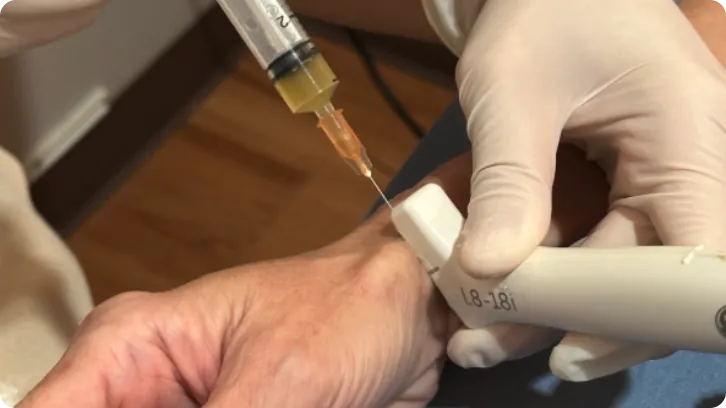
Ultrasound-guided concentrated plasma injection to the wrist at Rehab Care Clinic
Results and time to see results with concentrated plasma treatment
Because the treatment stimulates the body to repair itself, patients see changes about 3 months after the injection, with improvement beginning in the first 4–6 weeks and continuing gradually.
The recommended number of treatments is 1–3, depending on the severity of the condition and each individual’s response, as the treatment uses the patient’s own blood.
Safety and precautions for concentrated plasma treatment
Concentrated plasma treatment is considered very safe. Because it uses the patient’s own blood, the risk of allergic reactions or rejection is reduced. However, some minor side effects may occur, such as:
- Mild pain, swelling, redness or bruising at the injection site, which resolves on its own within 1–2 days
- Infection (rare), which can be prevented by having treatment at a clean, accredited medical facility
Precautions for certain patient groups:
- People with bleeding disorders or who take anticoagulants
- People with certain types of cancer or a bloodstream infection
- Pregnant or breastfeeding women
- People with low platelet counts or severe anaemia
- People who are unwell, have a fever or have an infection must recover fully first, as there may be pathogens in the bloodstream
- It is therefore essential to consult your doctor and give a detailed medical history before treatment, to make sure concentrated plasma is a safe and suitable option for you.
Rehab Care Clinic’s standards for concentrated plasma treatment
At Rehab Care Clinic, we see concentrated plasma treatment as the “spark” that ignites the repair process, and “physical therapy” as the “key tool” that makes the process complete and lasting. That is why we place great importance on the “quality and concentration” of the concentrated plasma we use:
- High concentration standards with a focus on safety: we use internationally standard extraction equipment and techniques to achieve the right concentration. The clinic uses extraction kits and special tubes approved by the Thai FDA (Food and Drug Administration). The special tubes are single-use and dedicated to each patient to prevent contamination and maintain hygiene standards, and our centrifuge yields up to 17 times more plasma concentrate than usual, making the plasma more effective and the treatment of higher quality. In addition, concentrated plasma treatment tends to have a better safety profile than some chemical agents that can cause allergic reactions.
- Our rehabilitation physicians use high-resolution ultrasound to guide every injection, delivering the plasma precisely to the injured site and ensuring patient safety.
- Follow-up and rehabilitation are combined with physical therapy, with our physical therapists designing an individual treatment plan to enhance the results, build strength and prevent recurrence.
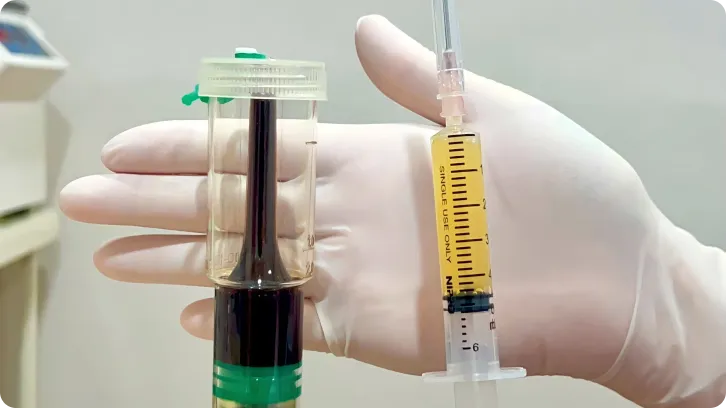
Separation of concentrated plasma at Rehab Care Clinic
Why is combining concentrated plasma treatment with physical therapy important?
Concentrated plasma injections “spark the repair process”, but physical therapy is the key to making the treatment even more effective.
1. Preparation before the injection: the doctor and physical therapist carry out a thorough musculoskeletal assessment to pinpoint the source of the pain, and explain how to prepare and the injection procedure.
2. During the injection: the doctor uses ultrasound guidance to make the concentrated plasma injection safer, more accurate and more precisely targeted.
3. Rehabilitation after the injection: as the repair process begins, a personalised physical therapy programme helps restore movement, build flexibility and strength in the muscles around the injured area, and correct your movement patterns.
4. Preventing recurrence: we work with you to address the root cause so that you can return to your life and the activities you love with long-term confidence.
Frequently asked questions (FAQ)
Does the concentrated plasma injection hurt?
You may feel some pain at the injection site, but the doctor uses ultrasound guidance for greater safety, accuracy and precision, making the treatment more effective.
If I have had concentrated plasma injections before, can I have them again? How many will I need?
There is no contraindication to repeat injections. To allow the repair process to complete, we recommend an interval of 3 months between injections, at the doctor’s discretion. The number of injections depends on the severity of the condition and each individual’s response, as the treatment uses the patient’s own blood.
When will I see results from concentrated plasma treatment?
Because the treatment stimulates the body to repair itself, patients begin to see improvement from 4–6 weeks up to 3 months after the injection, and symptoms continue to improve gradually, especially when combined with physical therapy.
How should I prepare for concentrated plasma treatment?
1. Drink plenty of water and get enough rest so that the blood drawn is of good quality.
2. Stop anti-inflammatory drugs and steroids about 2 weeks before the injection.
3. Avoid anti-inflammatory or steroid injections for 3 months before the procedure, as anti-inflammatory drugs make the plasma less effective and reduce repair.
4. Avoid alcohol for 2–3 days before the injection.
If you are in pain, other treatments have not helped and you want to recover without surgery, treatment with concentrated plasma from your own blood, combined with physical therapy, is another option for lasting recovery that harnesses your body’s natural mechanisms.
If you would like a consultation to find out whether concentrated plasma treatment is right for you, contact Rehab Care Clinic. Our rehabilitation physicians and physical therapists are ready to advise you and provide comprehensive care, so that you can move with confidence and enjoy a good quality of life again.
Pain treatment without drugs or surgery at Rehab Care Clinic
Pain treatment without drugs or surgery
at Rehab Care Clinic
Rehab Care Clinic is a specialist rehabilitation medicine and physical therapy clinic dedicated to high-quality, high-standard care, helping you to a stronger body and a better quality of life.
Contact a branch
-
Phetkasem
-
Rama 2
-
Muang Thong Thani
-
Ratchada
-
Sathorn
- Cole, B. J., et al. (2020). Platelet-rich plasma for the treatment of knee osteoarthritis: a systematic review and meta-analysis of randomized controlled trials. The American Journal of Sports Medicine, 48(9), 2210-2221.
- Mishra, A., et al. (2021). Platelet-rich plasma in the treatment of chronic tendinopathy: a systematic review and meta-analysis. Clinical Journal of Sport Medicine, 31(3), 269-278.
- Anitua, E., et al. (2015). Platelet-rich plasma: new clinical applications in musculoskeletal medicine. European Journal of Sports Medicine, 18(2), 101-110.
- American Academy of Orthopaedic Surgeons (AAOS). (2022). Information on Platelet-Rich Plasma (PRP). [Online Article]. (Accessed on 7 November 2025).
- Dallari, D., et al. (2019). Safety and Efficacy of Ultrasound-Guided Intra-Articular Injections of Platelet-Rich Plasma in Knee Osteoarthritis: A Randomized Controlled Trial. Clinical Orthopaedics and Related Research, 477(9), 2007-2016.