-
Image


Sports injuries
- Sports injuries
- What is a sports injury?
- Common causes and types of sports injuries
- First aid for injuries
- Treatment and rehabilitation of sports injuries at Rehab Care Clinic: programme highlights
- Rehabilitation programmes for athletes
- Preventing sports injuries
- Preventing sports injuries and basic self-care
- Don't let injury stop you doing what you love
- Treat pain without drugs or surgery at Rehab Care Clinic
Sports injuries
Exercise and sport are good for your health: they strengthen the muscles, improve heart and blood vessel function and reduce stress. But they always come with a risk of injury, especially when training hard, using incorrect technique or overusing the body, which can lead to "sports injuries". Knowing the common types of injury and the right treatment is therefore essential for getting back to the exercise or sport you love.
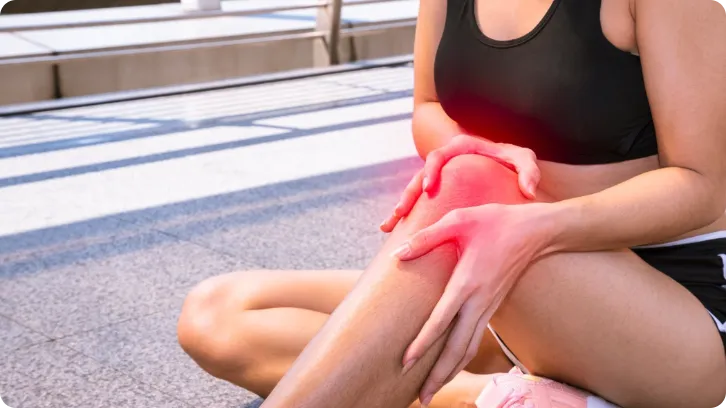
What is a sports injury?
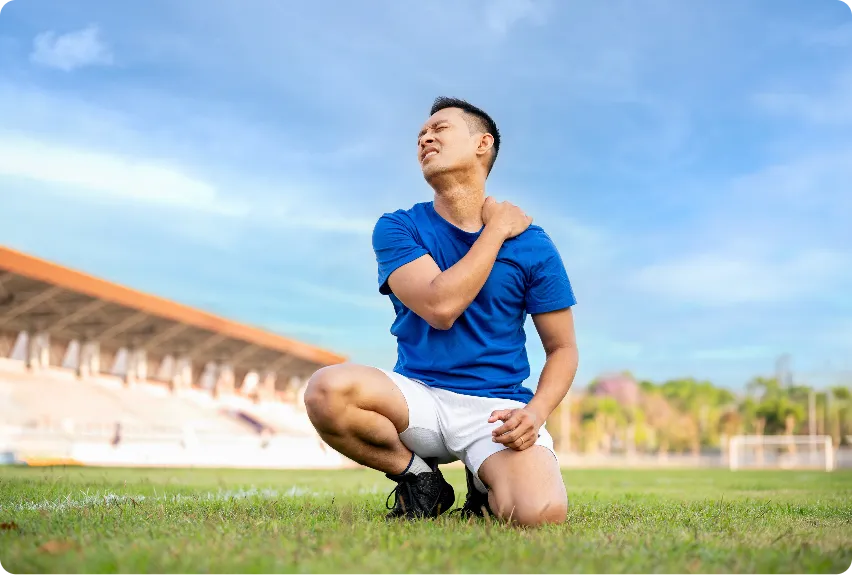
A sports injury is an injury to the muscles, tendons, ligaments, joints or bones that occurs during exercise or sporting activity. It may result from an "acute accident", such as a fall, a twisted joint or a torn muscle, or from "repetitive use", such as knee pain or Achilles tendon pain from running.
Common causes of sports injuries
- Not warming up or stretching enough before exercise
- Incorrect technique, such as poor running form or improper weightlifting technique
- Sports equipment that doesn't suit your body, such as unsupportive running shoes
- Weak or imbalanced muscles
- Training too hard without enough rest
- Lack of recovery after exercise
Pain treatment without medication or surgery
at Rehab Care Clinic
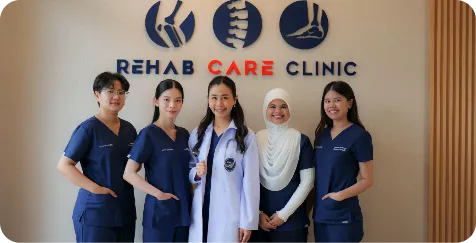
Rehab Care Clinic, a specialist rehabilitation medicine and physical therapy clinic,
is committed to providing high-quality, high-standard care
to give you a stronger body and a better quality of life.
"Dedicated to caring for every kind of pain, with doctors and physical therapists,
modern equipment and service from the heart."
Common types of injury
1. Acute injuries
These happen suddenly during sport, for example:
- Ankle sprain
- Muscle strain
- Anterior cruciate ligament tear (ACL tear)
- Fractures
2. Chronic injuries
- These are caused by repetitive use or continuous intensive training, for example:
- Achilles tendinitis
- Pain at the front of the knee (runner's knee)
- Plantar fasciitis
- Elbow tendinitis (tennis elbow/golfer's elbow)
- Shoulder pain from swimming (swimmer's shoulder)
Examples of common injuries in different sports
Sport | Common injuries | Symptoms |
|---|---|---|
| Running/football |
|
|
| Tennis/badminton |
|
|
| Basketball/volleyball |
|
|
| Weightlifting/weight training |
|
|
First aid for injuries
In the early stage of an injury, follow the R.I.C.E. principle (for acute injuries):
- Rest: rest the injured area
- Ice: apply a cold compress within the first 48 hours to reduce pain, swelling and inflammation
- Compression: use an elastic bandage to reduce swelling
- Elevation: raise the injured part above the level of the heart
If your symptoms do not improve within 2–3 days, or the pain and swelling get worse, see a doctor or physical therapist promptly for assessment and an appropriate treatment plan.
Treatment and rehabilitation of sports injuries at Rehab Care Clinic
Treating sports injuries doesn't end when the pain goes away; it is about restoring the body's strength and balance to prevent re-injury in the long term. At Rehab Care Clinic, we care for people with sports injuries with the philosophy: "Rebuild your strength and return to sport with confidence, with care from an experienced team of physical therapists and doctors."
Highlights of the treatment programme at Rehab Care Clinic
Rehabilitation physicians and physical therapists carry out a detailed assessment of your pain and work together to design a holistic, individual treatment plan.
1. Medical treatment by rehabilitation physicians
For severe or chronic injuries involving structures, tendons and joints, rehabilitation physicians can provide treatment.
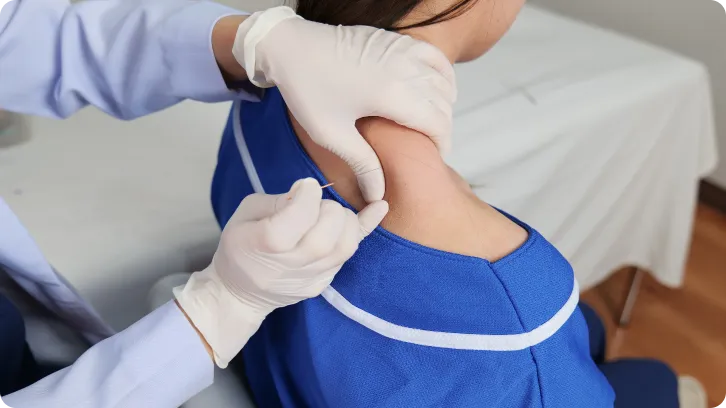
Dry needling to release muscle knots
Releases tight, contracted muscle knots — a main cause of pain — helping to stimulate blood circulation and reduce pain.
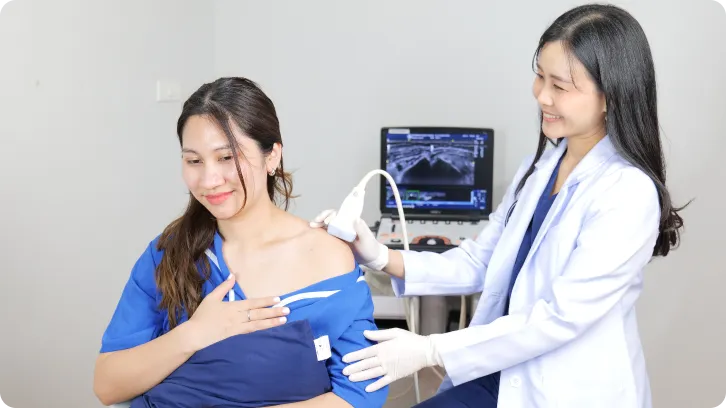
Regenerative therapy injections
Such as concentrated plasma (PRP) or prolotherapy (concentrated glucose) injections using ultrasound guidance (US-guided injection), to stimulate the repair of injured tendons, joints and tissue, encourage healing and accelerate the body's natural healing and recovery process.
Rehab Care Clinic uses diagnostic ultrasound to guide every injection precisely to the abnormal area. This increases safety and accuracy, makes treatment more effective, and reduces the risk of injecting into a blood vessel or nerve.
2. Physical therapy: the heart of rehabilitation
At Rehab Care Clinic, our physical therapists design programmes focused on "treating the root cause" so that the muscles, tendons and joints can work efficiently again, using modern technology to reduce pain and inflammation.
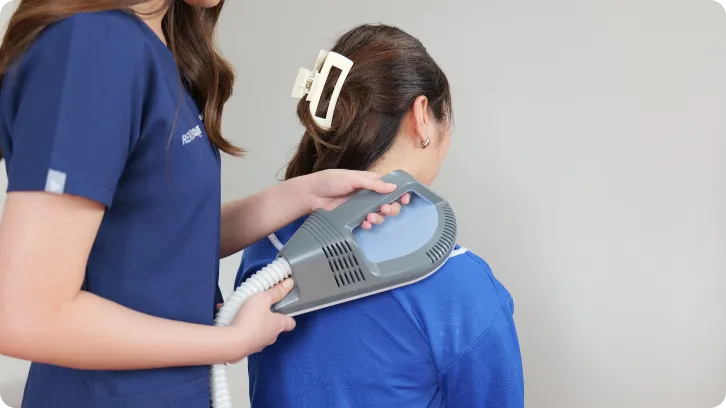
Peripheral magnetic stimulation (PMS)
Stimulates weak muscles and nerves up to 10 cm deep, improving blood circulation and promoting tissue repair, which reduces injury and pain. It also helps build strength and slows muscle wasting.
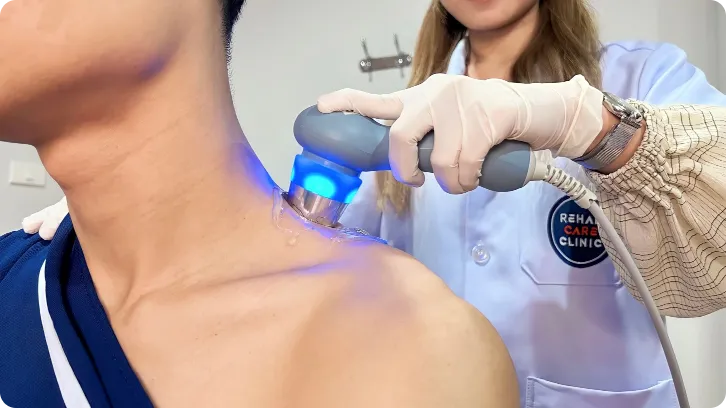
Deep-heat ultrasound therapy
Helps treat tendon or tissue injuries and speeds up the repair process by increasing blood circulation, increasing the flexibility of connective tissue, and reducing pain and spasm in muscles and tendons.
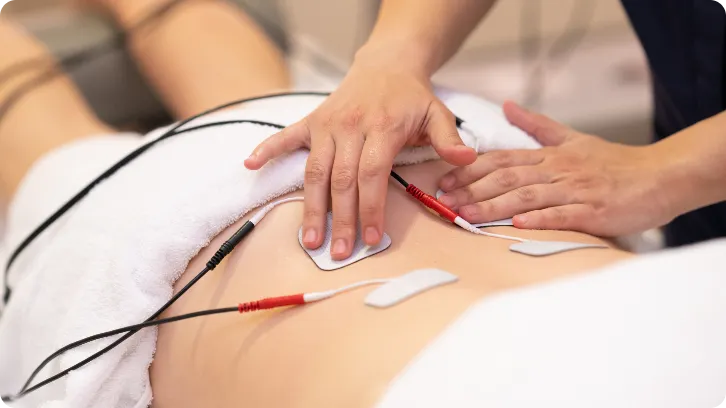
Electrical nerve stimulation (TENS)
An electrical current that stimulates the nerves through the skin to help reduce pain.
Rehabilitation programmes for athletes
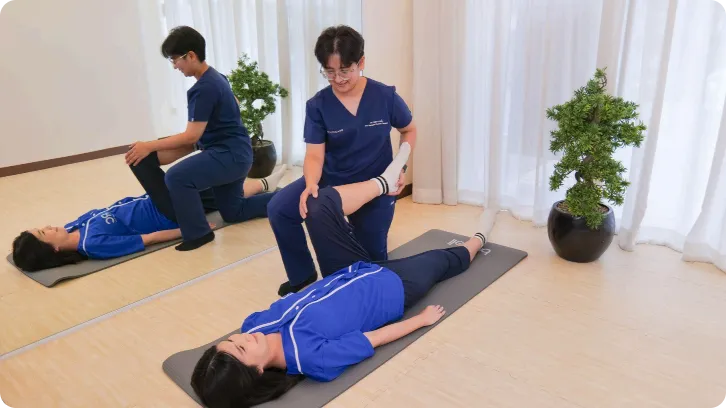
Therapeutic Exercise
Individually designed exercise programmes that focus on increasing the flexibility and strength of the muscles around the injured joint, core stability, muscle balance, and training correct sport-specific movement (functional training).
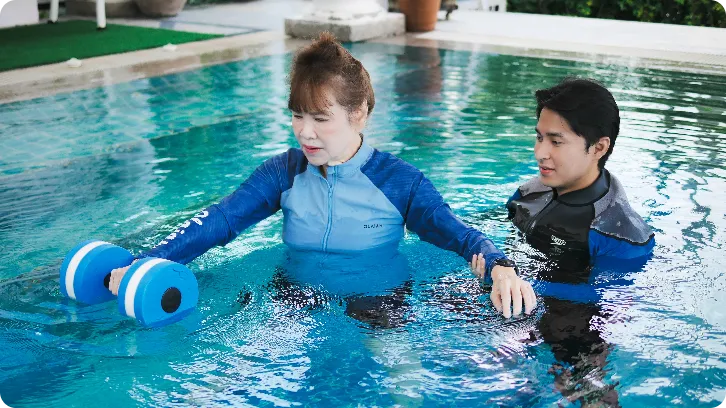
Hydrotherapy
Exercising in water reduces the impact on injured joints, so you can start moving and increase your range of motion sooner than with exercise on land.

Ergonomics and Posture Rehab
Correcting posture and movement mechanics to reduce re-injury.
Pain treatment without medication or surgery
at Rehab Care Clinic
Rehab Care Clinic, a specialist rehabilitation medicine and physical therapy clinic,
is committed to providing high-quality, high-standard care
to give you a stronger body and a better quality of life.
"Dedicated to caring for every kind of pain, with doctors and physical therapists,
modern equipment and service from the heart."
Preventing sports injuries
- Always warm up before and cool down after playing
- Stretch the main muscles you use most, such as the legs, back and shoulders
- Wear protective equipment suitable for your sport
- Increase training intensity gradually
- Get enough rest and always listen to your body
- If you feel pain, stop playing and see a doctor or physical therapist immediately
Preventing sports injuries and basic self-care
- Warm-up and cool-down: before and after sport, always spend 10–15 minutes warming up (to raise muscle temperature) and cooling down (stretching)
- Stretch the main muscles you use most, such as the legs, back and shoulders
- Wear suitable equipment: use standard sports equipment that suits your body, such as sports shoes suited to your foot shape and sport
- Increase training intensity gradually
- Get enough rest and always listen to your body
- If you feel pain, stop playing and see a doctor or physical therapist immediately
Don't let injury stop you doing what you love
If you are suffering from chronic pain or a sports injury, Rehab Care Clinic offers holistic care — from diagnosis and treatment with modern technology to restoring strength, correcting posture and training correct movement — so you can return to sport with confidence, free from worry and at your best.
Pain treatment without drugs or surgery at Rehab Care Clinic
Pain treatment without drugs or surgery
at Rehab Care Clinic
Rehab Care Clinic is a specialist rehabilitation medicine and physical therapy clinic dedicated to high-quality, high-standard care, helping you to a stronger body and a better quality of life.
Contact a branch
-
Phetkasem
-
Rama 2
-
Muang Thong Thani
-
Ratchada
-
Sathorn
- Bahr, R., & Bahr, I. A. (1997). Incidence of acute and overuse injuries in elite Norwegian female football players. The American Journal of Sports Medicine, 25(6), 133–138.
- Bruin, E. D., & Zijlstra, A. E. (2020). Hydrotherapy: What is it and why does it work? The Journal of Rheumatology, 47(3), 11–13.
- Simons, D. G., Travell, J. G., & Simons, L. S. (1999). Myofascial Pain and Dysfunction: The Trigger Point Manual. Vol I. Lippincott Williams and Wilkins: Philadelphia. (Cited for the principles of myofascial pain and trigger points that underpin dry needling treatment)
- Cameron, M. H. (2013). Physical Agents in Rehabilitation: From Research to Practice. Elsevier Health Sciences. (Cited for the working principles of physical therapy equipment such as shockwave, laser and ultrasound)
- Mahidol University (Rama Channel). (2022). Sports injuries: what should you do? [Online]. (Cited for basic advice and the management of acute injuries)