

-
Image
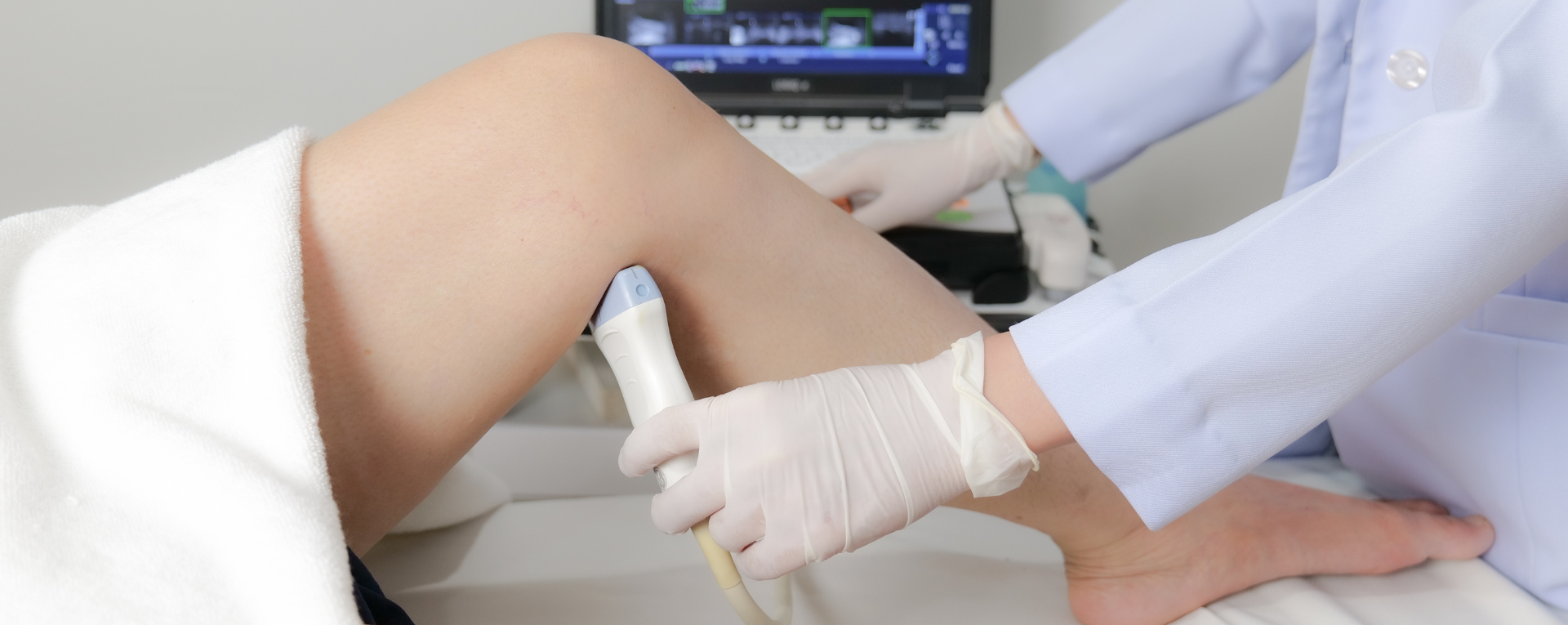

Musculoskeletal ultrasound screening and ultrasound-guided injection
- What is diagnostic ultrasound?
- Benefits of diagnostic ultrasound
- What can diagnostic ultrasound diagnose?
- Diagnostic ultrasound compared with other technologies Treatment with musculoskeletal ultrasound
- Pain treatment without relying on medication or surgery at Rehab Care Clinic
What is diagnostic ultrasound?
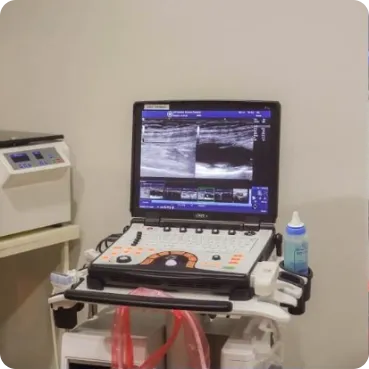
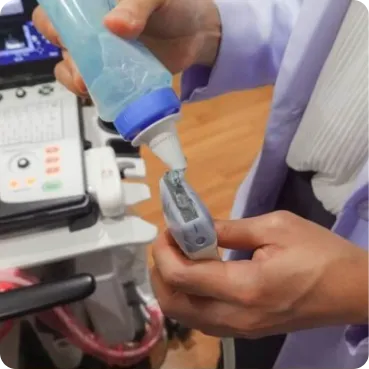
Musculoskeletal ultrasound (diagnostic ultrasound) is a technology that uses high-frequency sound waves to create images of structures inside the body, such as muscles, tendons, ligaments and joints. It helps diagnose problems and injuries of the musculoskeletal system, and also lets the doctor see the body’s structures while giving an injection.
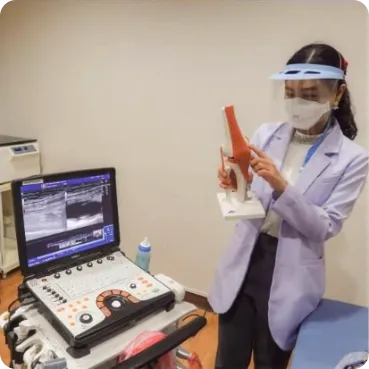
Benefits of diagnostic ultrasound
1. Accurate diagnosis of injuries
- Detects tendinitis or tendon tears
- Assesses arthritis and the condition of the cartilage
- Detects abnormal masses, fluid-filled sacs or cysts in the tissue
2. Real-time imaging
- Shows the movement of muscles and joints while the patient moves
- Used to detect abnormalities that occur in specific postures or activities
3. No radiation
- Unlike CT scans or X-rays, which use radiation, ultrasound uses sound waves that are harmless to the body
- Suitable for all ages, including pregnant women and children
4. Used to guide treatment (guided injection & therapy)
- Guides the needle for more accurate and safer treatment, for example steroid injections into a joint or tendon
- Reduces the risk of injecting in the wrong place
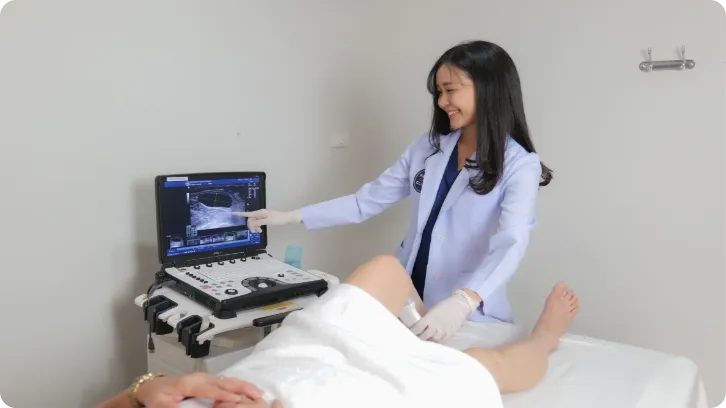
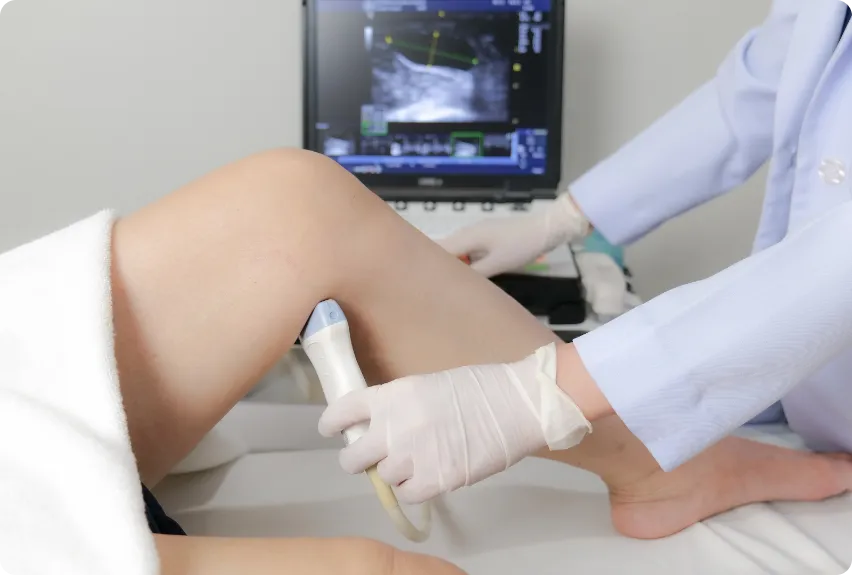
A rehabilitation physician using ultrasound to examine the muscles, tendons, bursae and joint of the knee at Rehab Care Clinic
What can diagnostic ultrasound diagnose?
1. Muscles: detects inflammation, tears or abscesses
2. Tendons: detects tendinitis, for example of the shoulder, elbow or knee tendons, plantar fasciitis and Achilles tendinitis
3. Joints: detects inflammatory fluid in the joint, to assess whether knee swelling is due to fluid or osteoarthritis and how much calcification is present
4. Nerves: detects nerve compression, such as carpal tunnel syndrome
5. Some bones: detects small bone spurs or deformities
Diagnostic ultrasound compared with other technologies
Technology | Advantages | Limitations | Best for |
|---|---|---|---|
| Ultrasound Diagnostic |
|
|
|
| MRI (Magnetic Resonance Imaging) |
|
|
|
| X-ray |
|
|
|
| CT Scan (Computed Tomography) |
|
|
|
Musculoskeletal ultrasound is an accurate and convenient technology that is well suited to diagnosing problems with muscles, joints, tendons and ligaments, helping doctors make effective treatment decisions.
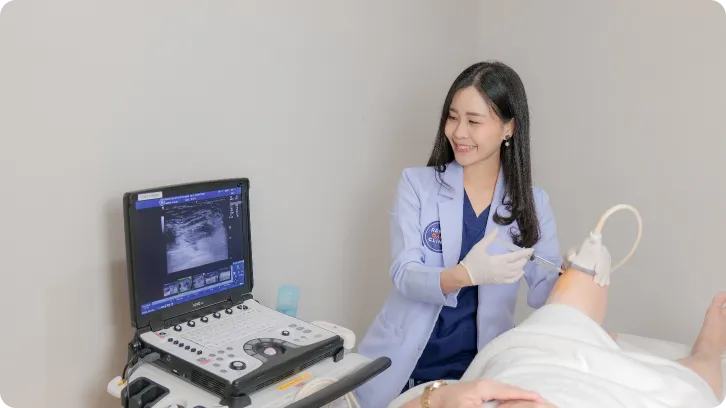
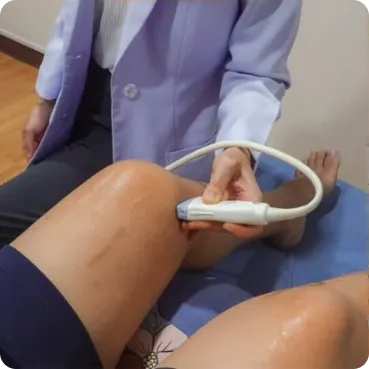
A rehabilitation physician using ultrasound to examine the muscles, tendons, bursae and joint of the knee at Rehab Care Clinic
Treatment with musculoskeletal ultrasound
At Rehab Care Clinic, we use diagnostic ultrasound for diagnosis and to guide injections, such as hyaluronic acid injections, directing the needle precisely to the problem area so that treatment is effective and safe. If you are looking for assessment and treatment for muscle or joint problems, do not wait until they become chronic. At Rehab Care Clinic, our rehabilitation physicians and team of physical therapists are ready to take care of you.
Pain treatment without drugs or surgery at Rehab Care Clinic
Pain treatment without drugs or surgery
at Rehab Care Clinic
Rehab Care Clinic is a specialist rehabilitation medicine and physical therapy clinic dedicated to high-quality, high-standard care, helping you to a stronger body and a better quality of life.
Contact a branch
-
Phetkasem
-
Rama 2
-
Muang Thong Thani
-
Ratchada
-
Sathorn
- Jacobson, J. A. (2018). Fundamentals of Musculoskeletal Ultrasound. Elsevier Health Sciences.
- Bianchi, S., & Martinoli, C. (2007). Ultrasound of the Musculoskeletal System. Springer.
- European Society of Musculoskeletal Radiology (ESSR). (2022). Musculoskeletal Ultrasound Guidelines. Retrieved from www.essr.org
- American Institute of Ultrasound in Medicine (AIUM). (2023). Practice Parameter for the Performance of a Musculoskeletal Ultrasound Examination. Retrieved from www.aium.org
- RadiologyInfo.org. (2024). CT Scan vs. MRI vs. Ultrasound: Which One is Right for You?. Retrieved from www.radiologyinfo.org