

-
Image
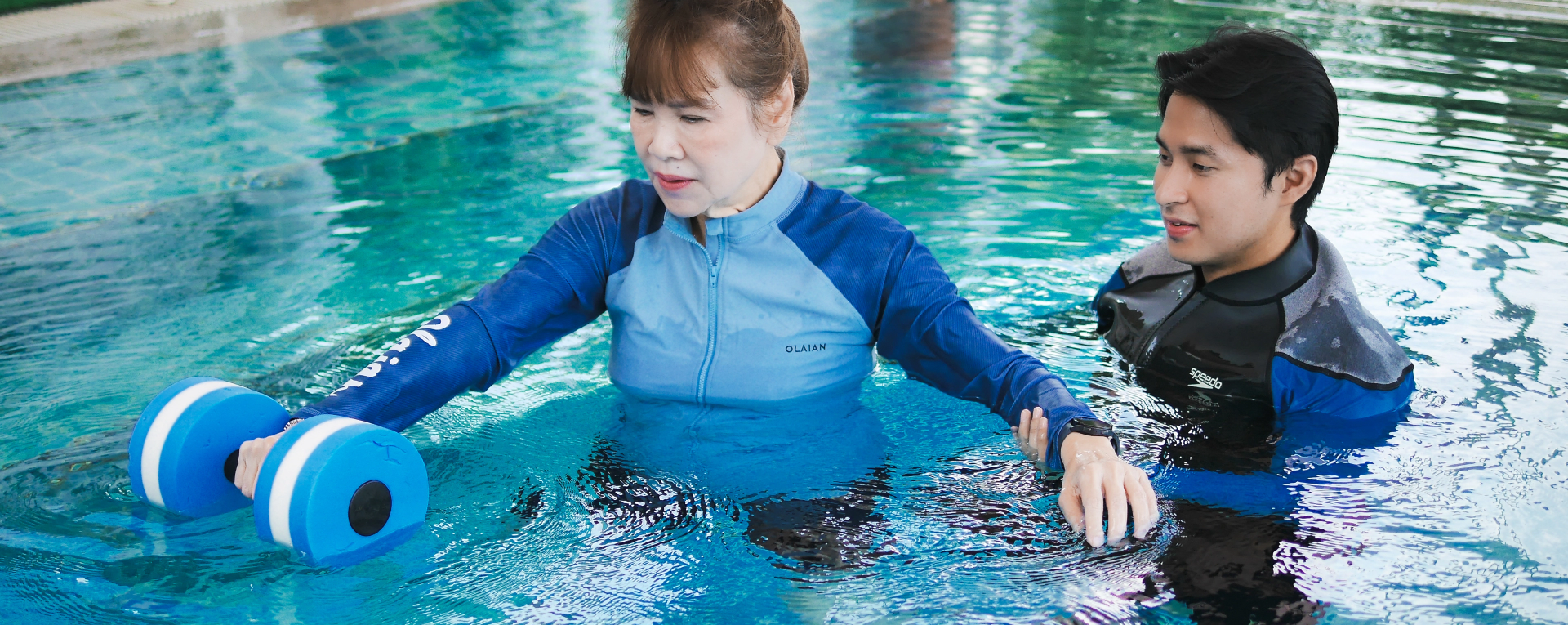

Hydrotherapy (aquatic exercise)
- What is hydrotherapy (aquatic exercise)?
- How hydrotherapy works (the healing power of water)
- Key benefits of hydrotherapy
- Who is hydrotherapy suitable for?
- Precautions and what to tell us
- Contraindications: when to avoid hydrotherapy
- How is hydrotherapy (aquatic exercise) different from exercise on land?
- Hydrotherapy at Rehab Care Clinic: personalised 1:1 rehabilitation programmes
- Pain treatment without relying on medication or surgery at Rehab Care Clinic
What is hydrotherapy (aquatic exercise)?
Hydrotherapy, sometimes called aquatic therapy, is
a form of physical therapy that uses water as the main medium for treating and rehabilitating the body. Hydrotherapy is not simply swimming or general exercise in water; it is
exercise following a specially designed programme that uses water as a treatment medium, taking advantage of water’s unique physical properties to support every part of the body, making movement easier and reducing pain.
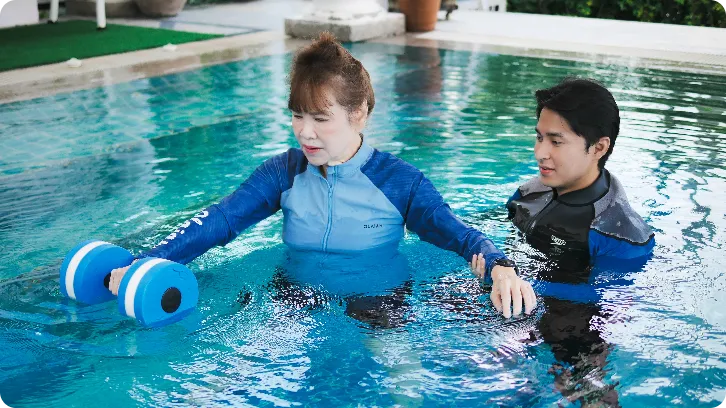
Aquatic exercise (hydrotherapy) at Rehab Care Clinic
How hydrotherapy works (the healing power of water)
Hydrotherapy works through three key properties of water that are especially beneficial for rehabilitating people with joint, muscle and balance problems:
1. Buoyancy:
- Water supports your body weight, greatly reducing the pressure on the joints (such as the knees, hips and spine).
- Benefit: people with severe pain or a high body weight can move more easily in water, with a lower risk of re-injury.
2. Resistance:
- Water has natural resistance, so every movement has to work against it.
- Benefit: it can be used to strengthen muscles effectively without weight-lifting equipment that may be harmful to the joints.
3. Temperature and pressure:
- Warm water helps relax muscles, reduce painful spasms and stimulate blood circulation.
- The hydrostatic pressure of water also helps reduce swelling (oedema) in the arms and legs.
Key benefits of hydrotherapy
Hydrotherapy offers many benefits that exercise on land cannot, especially in reducing the risk of re-injury and relieving pain:
- Reduces impact on the joints: the buoyancy of water supports your body weight, greatly reducing the impact on the joints, especially the knees and hips.
- Builds muscle strength: water resistance and exercise equipment are used to strengthen muscles effectively without adding load to the joints.
- Reduces pain and joint stiffness: helps reduce pain and joint stiffness, and the right water temperature helps you feel more relaxed.
- Improves balance and movement: helps improve balance and promotes coordinated movement of the body in water.
- Improves flexibility: helps improve the flexibility of muscles and joints.
Key benefits of hydrotherapy
- People with knee, back or shoulder pain or knee osteoarthritis
- People in rehabilitation after joint surgery (such as knee or hip replacement)
- People with excess body weight who want to exercise with less impact on their joints
- People with balance problems or a risk of falling
- People with sports injuries
- Older adults who want to exercise to reduce pain and build strength
- Expectant mothers who want to exercise to reduce back pain and build strength
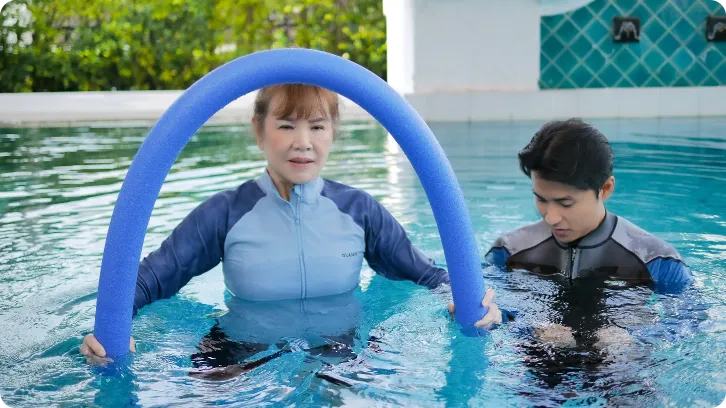
Aquatic exercise (hydrotherapy) at Rehab Care Clinic
Precautions and what to tell us
Patients in these groups can have hydrotherapy, but only under close supervision, and the sports scientist must adjust the water temperature and depth to suit the condition:
- People with serious underlying conditions, such as diabetes or stroke, should tell us their blood sugar level or most recent symptoms.
- People with psychological issues, such as a fear of water or high anxiety, should let us know.
- Water depth: the deeper the water, the greater the hydrostatic pressure on the body, so it must be adjusted to suit the condition (for example, for people with blood pressure problems).
- Tell us immediately: if you experience chest tightness, dizziness, nausea or light-headedness, treatment must stop at once.
Contraindications: when to avoid hydrotherapy
If you have any of the following conditions, you should not enter the hydrotherapy pool, or you must have your doctor’s approval and a strict assessment first:
- Open wounds or infection: people with open wounds, surgical wounds that have not fully healed, contagious skin diseases or an infection in the body, such as a fever
- Incontinence: inability to control the bowels or bladder, for pool hygiene reasons
- Serious circulatory conditions:
• Heart failure or serious circulation problems
• Uncontrolled high blood pressure or very low blood pressure - Respiratory disorders: such as limited chest expansion or severe breathing restrictions
- Conditions that may be dangerous in water: such as uncontrolled epilepsy
- Severe allergies: such as an allergy to chlorine (if the pool is chlorinated)
- Women who are menstruating
How is hydrotherapy (aquatic exercise) different from exercise on land?
The main difference lies in the properties of water, which are key to rehabilitating injuries.
Comparison | Hydrotherapy (aquatic exercise) | Exercise on land |
|---|---|---|
| Impact on the joints | Much lower (reduces the risk of re-injury) | Higher (full impact according to body weight) |
| Risk of injury | Low risk of injury for older adults or people with balance problems or a history of falls | High risk of injury for people with balance problems or recent surgery |
| Energy expenditure | Slower to tire, while still giving the muscles a full workout | Quicker to tire, and may cause joint pain |
| Restrictions after surgery | Rehabilitation can begin even with weight-bearing restrictions | Exercise is restricted and the risk of injury is high |
| Cardiovascular system | Improves cardiovascular function | Depends on the type of exercise |
Hydrotherapy at Rehab Care Clinic: personalised 1:1 rehabilitation programmes
Rehab Care Clinic offers hydrotherapy as one of our 1:1 physical therapy treatments. Assessment and treatment planning are carried out by our rehabilitation physicians and physical therapists, and the programme is designed by a sports scientist specifically for each patient’s condition. It is a safe and highly effective option for back, shoulder and knee pain and knee osteoarthritis, but the key to successful rehabilitation is a personalised programme and close supervision
1. Warm saltwater pool
- Warm water: we keep the water at the optimum temperature for therapy, which helps relax tight muscles, increase blood circulation and make you feel more relaxed, and is excellent for relieving joint and muscle tension.
- Saltwater system: a saltwater system reduces irritation to the skin and eyes, making it suitable for patients with sensitive skin or a chlorine allergy, so that therapy is as smooth and comfortable as possible.
2. One-to-one (1:1) care with a focus on safety and effectiveness
- A sports scientist looks after you 1:1 throughout the session, ensuring that every movement in the water follows the treatment principles and is safe for you.
- This level of care is especially important for people who have recently had surgery or who have balance problems and need precise assessment and posture correction throughout.
3. Personalised programmes designed by a sports scientist
- Your hydrotherapy programme is designed in detail by a sports scientist with experience in biomechanics and exercise physiology.
- We do not use off-the-shelf programmes. Instead, we assess your strength and pain to set the resistance, movements and water depth specifically for your condition (such as knee pain, back pain or knee osteoarthritis), so that you regain lasting physical function.
The results you can expect: faster recovery, less pain and strong muscles that are truly ready for daily life.
Hydrotherapy is a treatment approach that blends medical science with the natural properties of water, helping the body relax and recover naturally. If you have knee, back or shoulder pain or osteoarthritis, give your body the chance to recover under the care of experienced professionals such as the sports scientists at Rehab Care Clinic.
At Rehab Care Clinic, we are ready to look after you closely at every step of your rehabilitation, so that “good movement” becomes part of your life again. We believe that “good rehabilitation” does not end with treatment; it means restoring your ability to live independently with a lasting good quality of life. Let us help you begin this journey of recovery together.
Pain treatment without drugs or surgery at Rehab Care Clinic
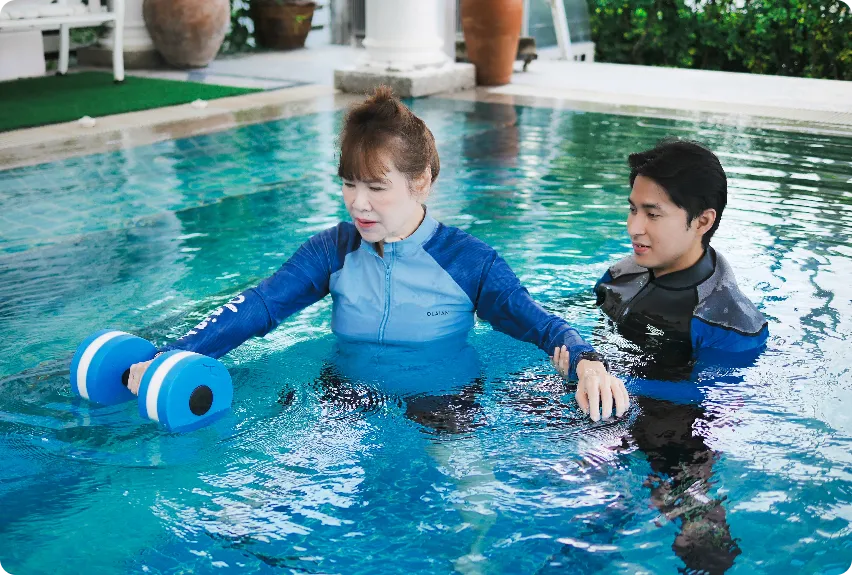
Pain treatment without drugs or surgery
at Rehab Care Clinic
Rehab Care Clinic is a specialist rehabilitation medicine and physical therapy clinic dedicated to high-quality, high-standard care, helping you to a stronger body and a better quality of life.
Contact a branch
-
Phetkasem
-
Rama 2
-
Muang Thong Thani
-
Ratchada
-
Sathorn
- Rachmat, A. A., & Wahyuni, W. (2023). The Efficacy of Aquatic Therapy for Pain in Knee Osteoarthritis: A Systematic Review and Meta-Analysis. The Indonesian Journal of Medicine, 8(3), 428-435.
- Silva, L. E., Valim, V., Pessanha, A. P. C., Oliveira, L. M., Miyamoto, S., Jones, A., & Natour, J. (2008). Hydrotherapy versus conventional land-based exercise for the management of patients with osteoarthritis of the knee: a randomized clinical trial. Physical Therapy, 88(1), 12-21.
- Becker, B. E. (2009). Aquatic therapy: Scientific foundations and clinical rehabilitation applications. PM & R: The Journal of Injury, Function, and Rehabilitation, 1(9), 859-872.
- Waller, B., Lambeck, J., & Daly, D. (2009). Therapeutic aquatic exercise in the treatment of low back pain: a systematic review. Clinical Rehabilitation, 23(1), 3-14.
- Faculty of Physical Therapy, Mahidol University. (2021). Aquatic therapy: what are its benefits and who is it suitable for? [Knowledge article]. (Accessed on 6 November 2025).