

-
Image

Plantar fasciitis: a common cause of heel pain
- Plantar fasciitis: a common cause of heel pain
- Plantar fasciitis
- Causes of plantar fasciitis
- Symptoms of plantar fasciitis
- Risk factors
- How is plantar fasciitis diagnosed?
- Treatment of plantar fasciitis
- Lifestyle changes
- Pain treatment without medication or surgery at Rehab Care Clinic
Plantar fasciitis: a common cause of heel pain
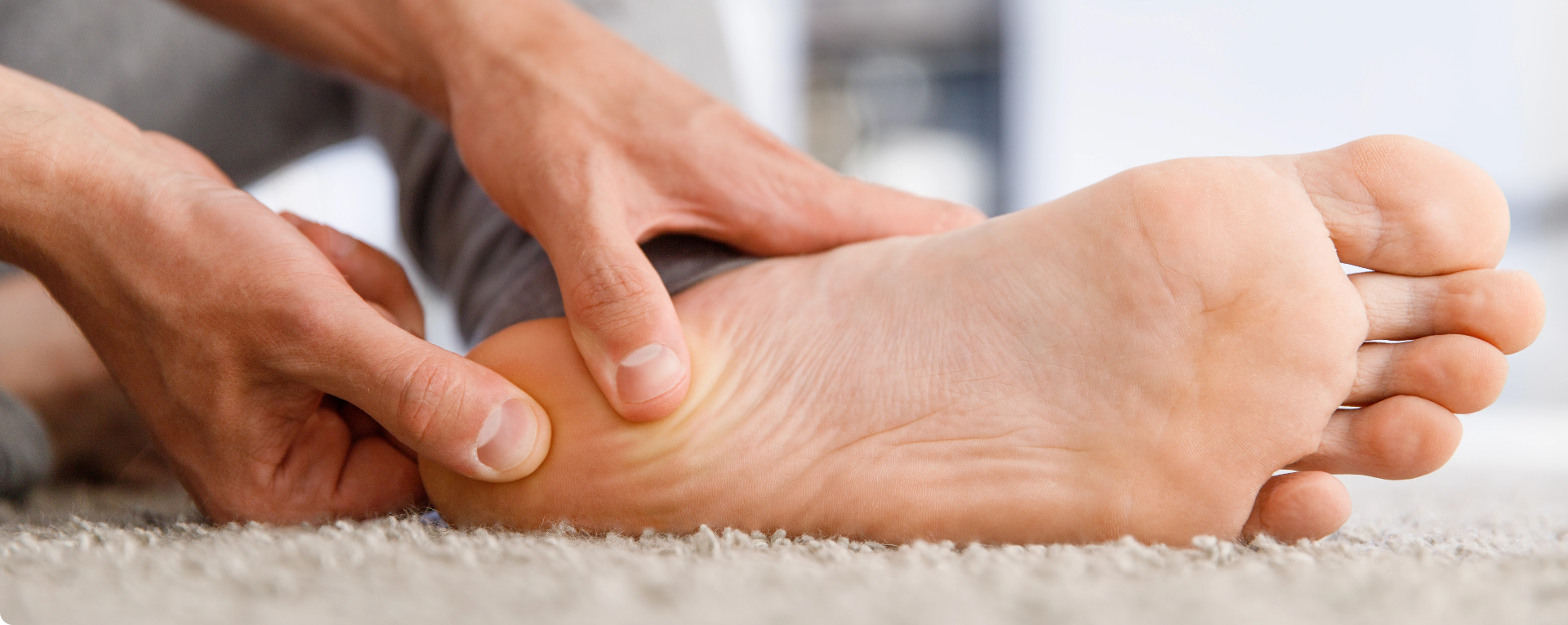
Do you ever wake up in the morning and feel heel pain as soon as you take your first step? Or after walking for a long time, does your heel hurt as if something sharp is stabbing it? If so, be careful: you may have plantar fasciitis, inflammation of the fascia on the sole of the foot. It may seem like a minor problem, but it can disrupt daily life more than you might think. If left untreated, it can become chronic and lead to pain in other parts of the body.
Plantar fasciitis
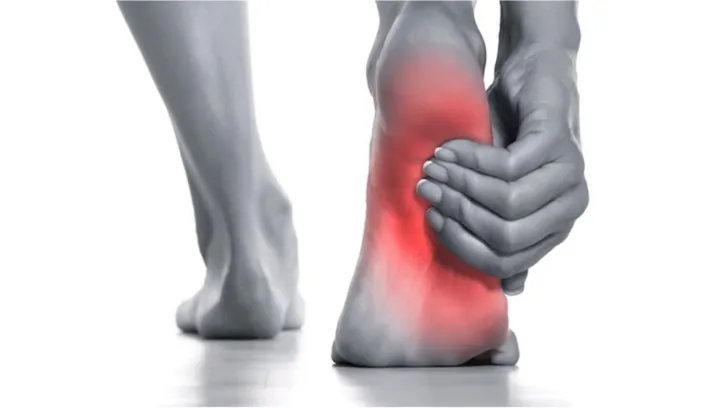
Plantar fasciitis, or inflammation of the plantar fascia, is one of the most common musculoskeletal conditions. It is usually caused by chronic inflammation of the plantar fascia, part of the normal structure of the foot that helps distribute weight evenly across the sole when standing or walking. When the plantar fascia becomes inflamed, it can significantly disrupt daily life because walking becomes difficult, and without proper treatment it may lead to injuries or pain in other parts of the body.
Causes of plantar fasciitis
When you stand, walk or run, the sole and arch of the foot bear the weight of the body pressing down, which flattens the arch. The plantar fascia stretches to help support the arch. When the sole of the foot bears weight continuously or excessively, the plantar fascia stays stretched for long periods. If this happens repeatedly, the plantar fascia can become injured and chronically inflamed.
Symptoms of plantar fasciitis
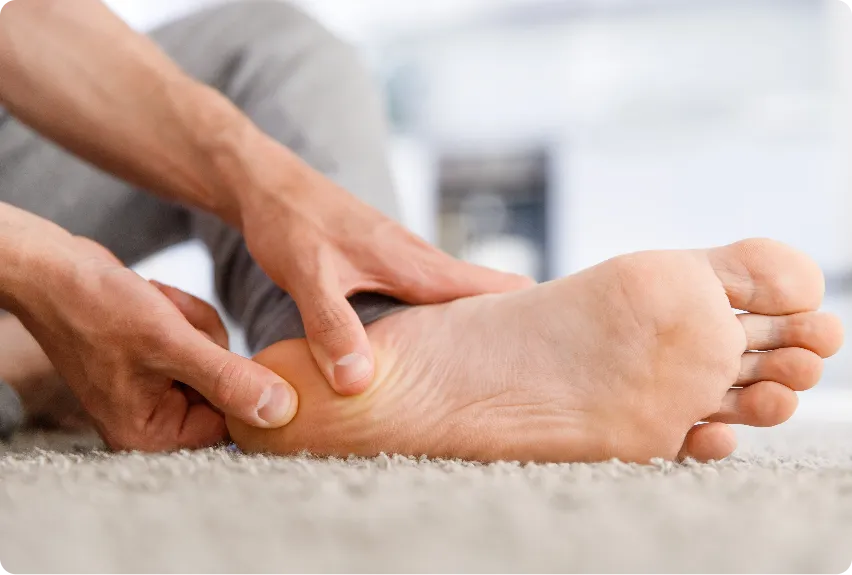
- Pain, tightness or a stabbing sensation in the heel, as if something sharp is pressing into it
- Pain may extend from the heel to the middle of the sole
- Heel pain, especially with the "first step after waking up (morning pain)" or the "first step after sitting for a long time (first-step pain)", which eases after walking for a while
- The pain may return if your daily routine involves "standing or walking for long periods"
- Tenderness on the inner side of the heel

Pain treatment without medication or surgery
at Rehab Care Clinic
Rehab Care Clinic, a specialist rehabilitation medicine and physical therapy clinic,
is committed to providing high-quality, high-standard care
to give you a stronger body and a better quality of life.
"Dedicated to caring for every kind of pain, with doctors and physical therapists,
modern equipment and service from the heart."
Risk factors
- Ageing, which reduces the flexibility of the plantar fascia
- Regularly wearing high heels
- A tight, inflexible Achilles tendon or plantar fascia, which may result from not stretching after prolonged use, such as standing or walking for long periods or regularly wearing high heels
- Being overweight, which increases the load on the plantar fascia
- Wearing unsuitable shoes, such as shoes with hard soles or that do not fit properly, leading to poor weight distribution across the foot and making the muscles and plantar fascia work harder
- Flat feet or high arches: with flat feet, the plantar fascia may be continually stretched more than normal, while with high arches the plantar fascia is more contracted than normal. Both cause the muscles and plantar fascia to sit outside their normal length, increasing the risk of plantar fasciitis
- Rheumatoid arthritis or spondyloarthritis, which can cause inflammation where tendons attach to bone, increasing the chance of plantar fasciitis
How is plantar fasciitis diagnosed?
Plantar fasciitis is diagnosed by the doctor taking a history and performing a physical examination. The doctor will ask about where it hurts, what the pain feels like, which activities make it worse and which make it better. The examination involves looking at the shape of the foot, moving the foot and feeling for tender points. In some cases, further tests such as an X-ray or MRI of the foot may be ordered if another condition is suspected. In addition, Rehab Care Clinic uses musculoskeletal ultrasound, another tool that can show whether the plantar fascia is inflamed. In people with plantar fasciitis, ultrasound shows that the plantar fascia is swollen and thicker than normal; a thickness of more than 4.5 mm indicates that the plantar fascia is inflamed.
In some patients whose plantar fascia has been inflamed at its attachment point for many years, the body lays down calcium deposits. An ultrasound scan may then reveal a bone spur on the heel where the fascia attaches.
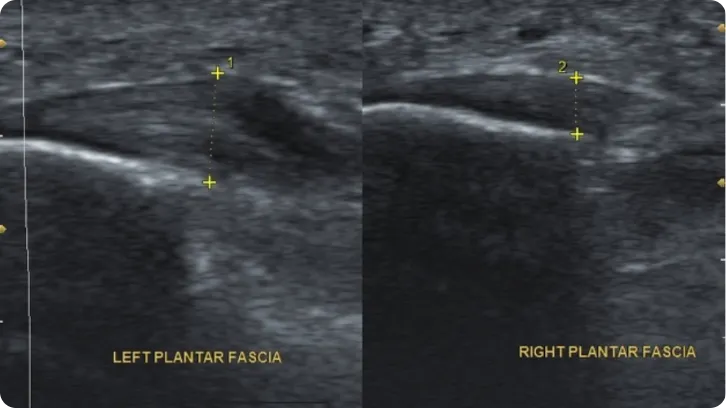
Image: thickening of an inflamed plantar fascia (left) compared with a normal plantar fascia (right). Source: https://radiopaedia.org/cases/82218/studies/96273
Pain treatment without medication or surgery
at Rehab Care Clinic
Rehab Care Clinic, a specialist rehabilitation medicine and physical therapy clinic,
is committed to providing high-quality, high-standard care
to give you a stronger body and a better quality of life.
"Dedicated to caring for every kind of pain, with doctors and physical therapists,
modern equipment and service from the heart."
Treatment of plantar fasciitis
- Physical therapy treatment – research shows that focused shockwave therapy can effectively treat plantar fasciitis. The physical therapist uses focused shockwave to deliver energy deep into the plantar fascia. This energy stimulates the fascia tissue to repair itself and regenerate, reducing the tension caused by chronic inflammation and relieving the pain of plantar fasciitis. This is combined with high-power laser therapy, which energises cells to help stimulate the body's repair of inflammation and soreness. Most importantly, treatment of plantar fasciitis includes exercises to improve the flexibility and strength of the plantar fascia and calf muscles to prevent recurrence.
- Injections are another treatment option for plantar fasciitis, especially for people with severe pain for whom other treatments, such as physical therapy, changing footwear or anti-inflammatory medication, have not worked. The doctor may consider an injection to reduce inflammation and relieve pain.
- Surgery should be considered only as a last resort, and only for patients with severe plantar fasciitis that has not responded to other treatments.
Lifestyle changes
- Avoid walking barefoot, both indoors and outdoors
- Wear shoes that suit your feet: shoes that fit the length and width of your feet, made of comfortable materials, with an arch
- support that fits your arch, and soles that absorb impact well when walking or exercising
- Use soft insoles that fit and support your arch, to cushion the heel and reduce impact
- Cut down on standing or walking a lot, or walking for long stretches at a time
- Warm compresses or soaking your feet in warm water can relieve tightness and muscle aches, as the heat helps improve blood circulation
- Do regular calf and sole stretching exercises
Plantar fasciitis may not seem dangerous, but it should not be left untreated, as it can affect your daily life in the long term. Surgery is generally not the preferred treatment for plantar fasciitis because it increases the risk of complications. If you are in pain, we recommend consulting a specialist to plan suitable treatment. So don't wait until the pain becomes chronic; look after your feet today. If you are dealing with plantar fasciitis, Rehab Care Clinic is ready to advise you and care for you closely, so you can get back to a pain-free life.
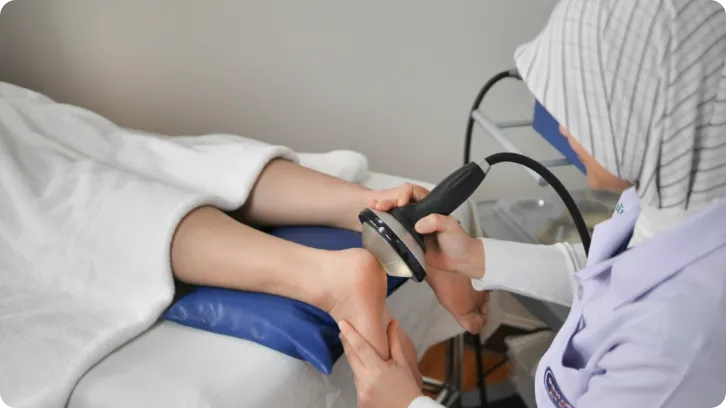
Image: treating plantar fasciitis with focused shockwave therapy at Rehab Care Clinic
Pain treatment without drugs or surgery at Rehab Care Clinic
Pain treatment without drugs or surgery
at Rehab Care Clinic
Rehab Care Clinic is a specialist rehabilitation medicine and physical therapy clinic dedicated to high-quality, high-standard care, helping you to a stronger body and a better quality of life.
Contact a branch
-
Phetkasem
-
Rama 2
-
Muang Thong Thani
-
Ratchada
-
Sathorn
- American Academy of Orthopaedic Surgeons. Plantar Fasciitis: Causes, Symptoms, and Treatment. 2023.
- Mayo Clinic. “Plantar Fasciitis: Symptoms and Causes.” Updated 2023. Available at: https://www.mayoclinic.org
- National Institute of Arthritis and Musculoskeletal and Skin Diseases (NIAMS). Foot Pain and Common Foot Problems. 2022.