
-
Image

Focused shockwave therapy
- What is focused shockwave therapy?
- How shockwave therapy works
- Why does focused shockwave therapy need to trigger inflammation?
- Conditions that can be treated with focused shockwave therapy
- Who is focused shockwave therapy suitable for?
- Contraindications for focused shockwave therapy
- Frequently asked questions about focused shockwave therapy
- Treat pain without drugs or surgery at Rehab Care Clinic
What is focused shockwave therapy?
Focused shockwave therapy is a technology that effectively helps with chronic pain and stimulates tissue recovery by delivering high-energy shockwaves directly to the problem area. Unlike radial shockwave, whose waves spread over a wider area, focused shockwave can penetrate deeper and treat the target more precisely.
How shockwave therapy works
A shockwave is an energy wave that travels faster than the speed of sound, compressing into concentric circles along the direction of travel of its source. Shockwave treatment uses this energy to create a new micro-injury in the painful area. The injured tissue then goes through a fresh repair process, which reduces pain by lowering the amount of neurotransmitters that send pain signals and stimulating the body to release pain-relieving substances. Shockwave therapy comes in two types:
1. Radial shockwave – the shockwaves spread out widely, covering a large area but not penetrating very deep.
2. Focused shockwave – the shockwaves are delivered precisely to the treatment area and can penetrate deeper.
At Rehab Care Clinic, we use modern technology imported from abroad, such as focused shockwave therapy, for effective treatment.
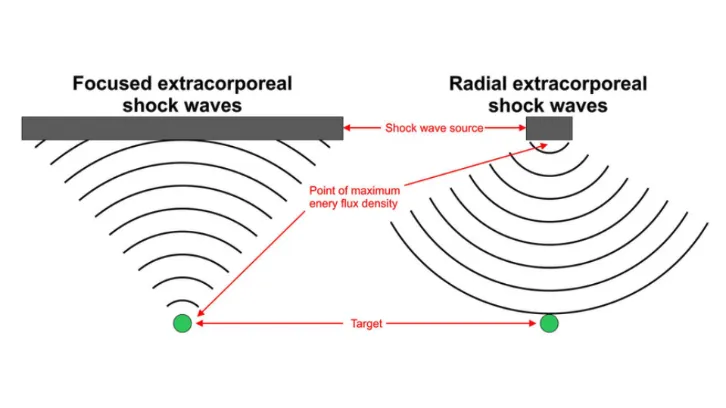
How shockwave energy penetrates: focused (left) and radial (right)
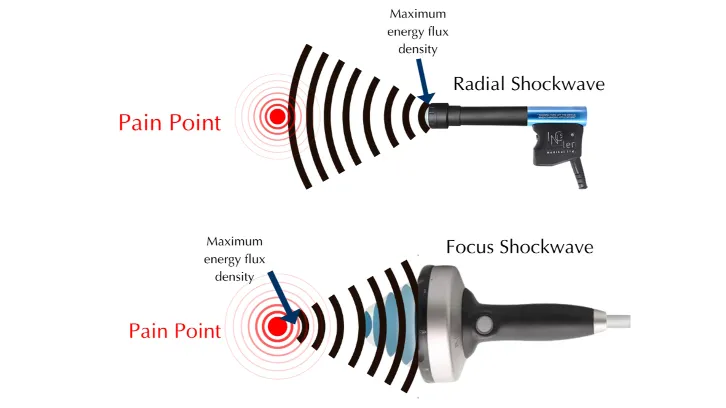
How shockwave energy penetrates: radial (top) and focused (bottom)
Why does focused shockwave therapy need to trigger inflammation?
Although inflammation is usually something we want to avoid, when focused shockwave therapy is used to treat chronic pain, the inflammation it creates is a key mechanism that stimulates the body's repair. In other words, the treatment deliberately causes inflammation in the tissue or treatment area, but at a very small, cellular level, which is different from the inflammation caused by an ordinary injury. It has the following physiological effects:
1. Increases cell membrane permeability (cell membrane permeability), helping cells exchange nutrients more effectively and improving blood circulation.
2. Stimulates cell activity (fibroblasts), which helps tissue repair and recovery.
3. Breaks down abnormal calcium deposits by causing gas bubbles in the tissue to expand and contract.
4. Reduces pain through the body's own pain-relief mechanism known as the gate control theory, stimulating the body to release natural pain-relieving substances.
However, because inflammation occurs, you may feel sore after treatment, especially after the first 1–2 sessions. This is a good sign that the body has started its recovery process and is repairing the injured tissue, which helps reduce pain and release muscle tension. If you feel sore, apply a cold compress for 15 minutes at a time, 2–3 times a day. You may take painkillers, but avoid anti-inflammatory drugs, which may reduce the effectiveness of the treatment, and avoid exercise or heavy use of the sore area for at least 2 days or until the soreness has gone.
Conditions that can be treated with focused shockwave therapy
1. Muscle injuries such as neck and shoulder pain, back pain, shoulder pain, office syndrome, sports injuries and herniated discs pressing on a nerve.
2. Tendon injuries such as elbow tendinitis (tennis elbow), plantar fasciitis, Achilles tendinitis and trigger finger.
3. Joint injuries such as knee osteoarthritis and frozen shoulder.
4. Peripheral nerve conditions such as carpal tunnel syndrome and piriformis syndrome (an inflamed hip muscle compressing the nerve).
Who is focused shockwave therapy suitable for?
- People with chronic pain that has not responded to other treatments
- Athletes or people who exercise intensively and have injuries from repetitive muscle use
- People who want to reduce pain without painkillers or surgery
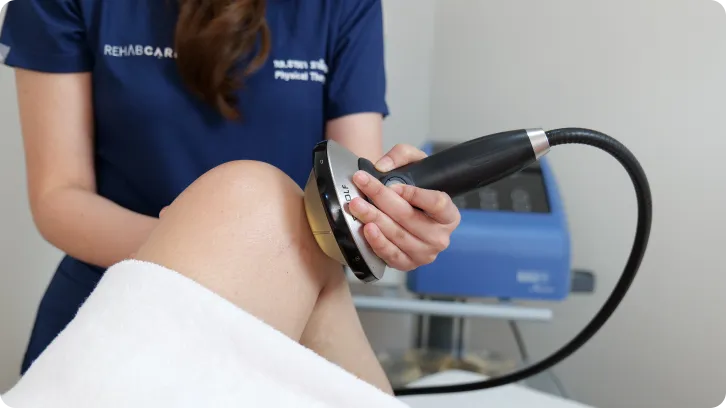
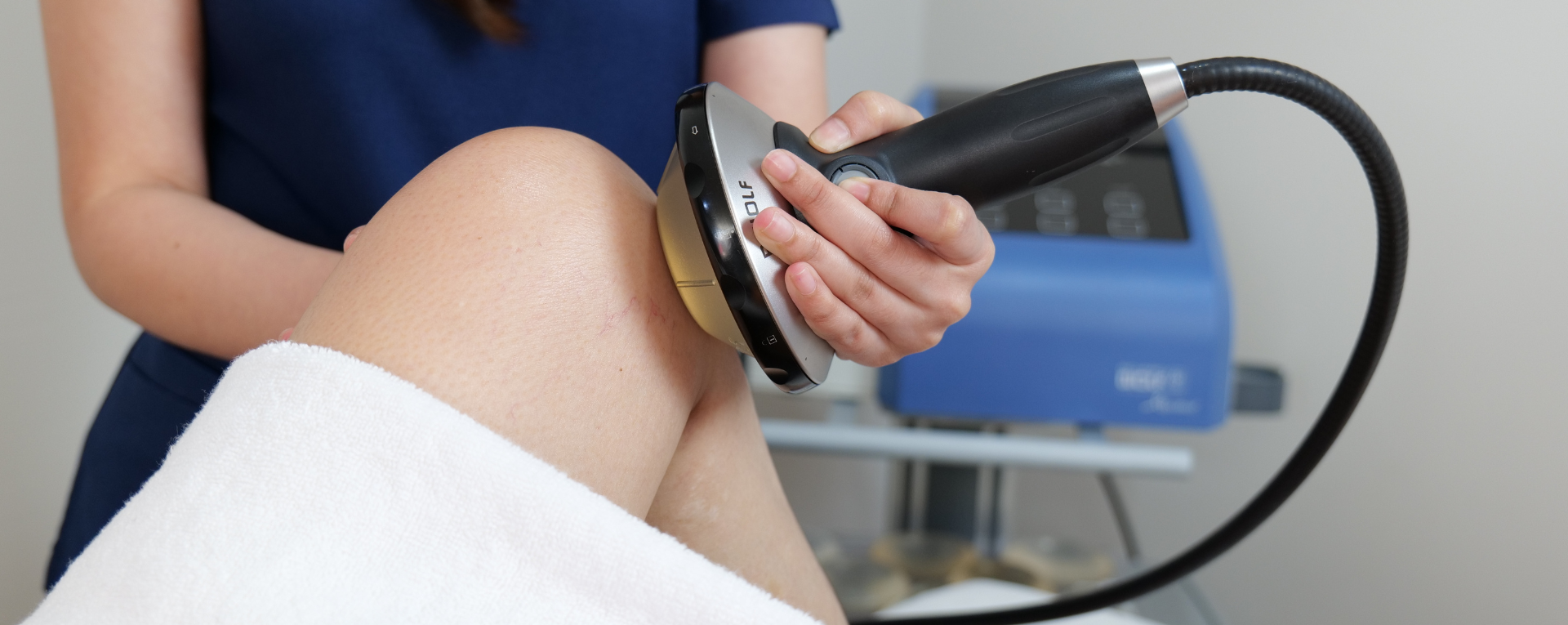
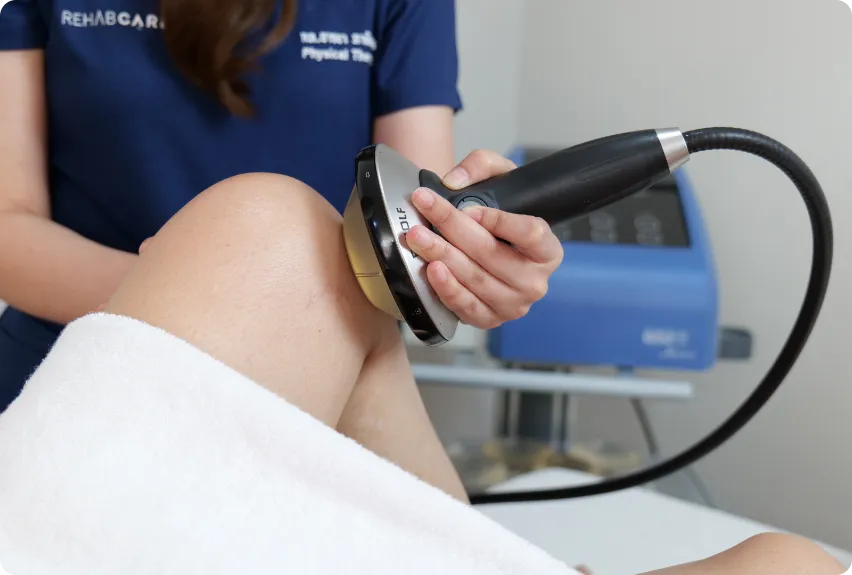
Focused shockwave therapy being used to treat knee pain at Rehab Care Clinic
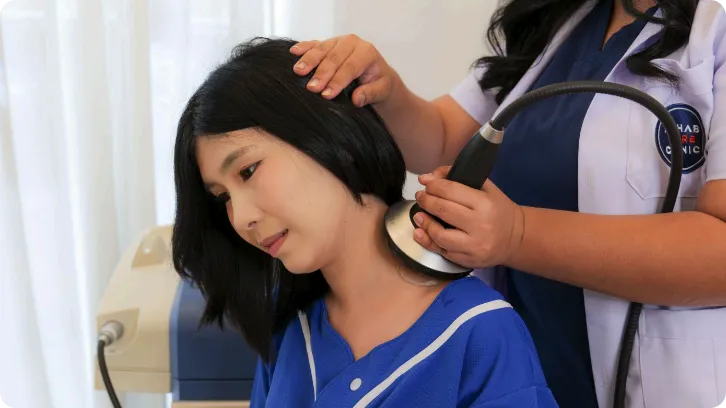
Focused shockwave therapy being used to treat chronic neck, shoulder and shoulder-blade muscle pain (office syndrome) at Rehab Care Clinic
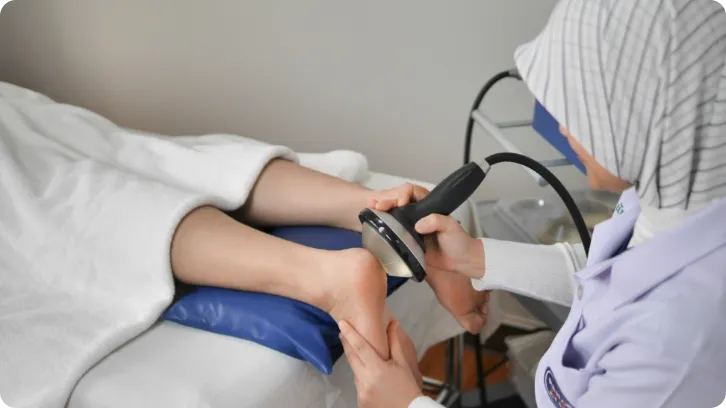
Focused shockwave therapy being used to treat plantar fasciitis at Rehab Care Clinic
Contraindications for focused shockwave therapy
- Areas with open or infected wounds
- Areas with an aneurysm
- People with an infection, or who feel weak, unwell or feverish
- People with tumours or undergoing cancer treatment
- Avoid the torso and back of pregnant women
- Acute trauma/inflammation that is still painful, swollen, red and hot
Always inform the doctor and physical therapist of any underlying conditions, history of accidents or previous surgery before every treatment.
Frequently asked questions about focused shockwave therapy
Q: How does shockwave therapy treat pain?
A: Shockwave therapy creates new micro-injuries in the affected muscles and tendons, triggering the repair process, stimulating new tissue growth, lowering the amount of neurotransmitters that send pain signals and releasing pain-relieving substances, which reduces pain.
Q: Is shockwave therapy dangerous?
A: Shockwave devices are approved by the US FDA and the Thai Food and Drug Administration as a treatment that does not cause heat or radiation to build up in the body, so it is not harmful to the body.
Q: What should shockwave treatment feel like? Is it true that the more it hurts, the better?
A: Research shows that pain during treatment should be mild to moderate for the best results. Enduring a lot of pain during treatment may cause side effects.
Q: Can shockwave therapy cure the problem in a single session?
A: With mild pain or early-stage symptoms, pain usually decreases immediately after the first session, but treatment needs to continue until the symptoms have gone.
Q: How often should focused shockwave therapy be done?
A: For muscles, treatment should be done 1–2 times a week on the same spot; for joints and tendons, once a week on the same spot. The gap gives the body time to carry out the repair process. However, treatment also depends on the individual.
Q: What are the side effects of shockwave therapy?
A: You may feel sore after shockwave therapy, especially after the first 1–2 sessions. The soreness usually lasts about 1–2 days.
Q: What should I do if I feel sore?
A: Apply a cold compress to the sore area for 15 minutes at a time, 2–3 times a day. You may take painkillers such as paracetamol, but avoid anti-inflammatory drugs (NSAIDs), as they may reduce the effectiveness of the treatment.
Q: Can shockwave therapy break down calcium deposits?
A: Focused shockwave therapy can help break down calcium deposits in the tendons, but only when the calcium has recently formed and has not yet combined into large calcifications. The choice of equipment and treatment approach is at the doctor's discretion.
Focused Shockwave Therapy is an effective option for treating chronic pain and musculoskeletal injuries. It stimulates the body's natural repair process, reducing pain and restoring tissue without surgery. If you have chronic pain or muscle and tendon problems, Rehab Care Clinic's rehabilitation physicians and physical therapists experienced in shockwave therapy are ready to advise you and look after you closely, so you can get back to living pain-free.
Pain treatment without drugs or surgery at Rehab Care Clinic
Pain treatment without drugs or surgery
at Rehab Care Clinic
Rehab Care Clinic is a specialist rehabilitation medicine and physical therapy clinic dedicated to high-quality, high-standard care, helping you to a stronger body and a better quality of life.
Contact a branch
-
Phetkasem
-
Rama 2
-
Muang Thong Thani
-
Ratchada
-
Sathorn
- Moya, D., Ramón, S., & Schaden, W. (2018). The Role of Extracorporeal Shockwave Treatment in Musculoskeletal Disorders. Journal of Bone and Joint Surgery, 100(3), 251-263. https://doi.org/10.2106/JBJS.17.00698
- Wang, C. J. (2012). Extracorporeal Shockwave Therapy in Musculoskeletal Disorders. Journal of Orthopaedic Surgery and Research, 7(11), 1-10. https://doi.org/10.1186/1749-799X-7-11
- Notarnicola, A., & Moretti, B. (2012). The Biological Effects of Extracorporeal Shock Wave Therapy (ESWT) on Tendon Tissue. Muscles, Ligaments and Tendons Journal, 2(1), 33-37.
- Ogden, J. A., Toth-Kischkat, A., & Schultheiss, R. (2001). Principles of Shock Wave Therapy. Clinical Orthopaedics and Related Research, 387, 8-17.
- Loew, M., Daecke, W., Kusnierczak, D., Rahmanzadeh, M., & Ewerbeck, V. (2001). Shock-wave Therapy Is Effective for Chronic Calcifying Tendinitis of the Shoulder. Journal of Bone and Joint Surgery, 83(3), 396-400.
- Vetrano, M., d’Alessandro, F., Torrisi, M. R., Ferretti, A., Vulpiani, M. C., & Visco, V. (2011). Extracorporeal Shock Wave Therapy Promotes Cell Proliferation and Collagen Synthesis of Primary Human Tenocytes. Muscles, Ligaments and Tendons Journal, 1(2), 34-39.
- Speed, C. A. (2004). Extracorporeal Shock-Wave Therapy in the Management of Chronic Soft-Tissue Conditions. Journal of Bone and Joint Surgery, 86(2), 165-171.