
-
Image



Office syndrome: symptoms, causes and holistic treatment
- What is office syndrome?
- Main causes of office syndrome
- Warning signs that you may have office syndrome
- Office syndrome treatment at Rehab Care Clinic
- Medical treatment by rehabilitation medicine specialists
- Physical therapy treatment
- Prevention and self-care tips
- Left untreated, chronic pain may become more serious than you think
- Pain treatment without medication or surgery at Rehab Care Clinic
What is office syndrome?
Office syndrome is a condition many people are familiar with, especially those who spend most of their day in front of a computer screen or work in repetitive postures for long periods. It is not just ordinary aches and pains; if left untreated, it can seriously affect your quality of life and your work.
Office syndrome is a group of musculoskeletal pain symptoms caused by working in unsuitable ways or by injury from repetitive work over long periods, leading to inflammation and muscle knots (trigger points).

Main causes of office syndrome
- Sitting and working in the same position for more than 6–8 hours at a time
- Incorrect sitting posture (crossing your legs, a hunched back, rounded shoulders, forward head posture)
- An unsuitable work environment (screen height, desk, chair)
- Work-related stress, which makes the muscles tense up without you realising
- Repetitive muscle use, such as raising the shoulders, tensing the arms while typing, or using a mouse
- Weak or imbalanced muscles, with some muscle groups overworking while others are underused
Warning signs that you may have office syndrome
The symptoms of office syndrome vary, but the most common include:
- Neck, shoulder and upper back pain: usually a chronic, tight ache that may radiate up to the head, causing migraines or tension headaches
- Upper and lower back pain: often a dull ache or sharp, stabbing pain when sitting or standing for long periods
- Numbness or pain in the arms, hands or fingers: caused by nerve compression, for example numbness from compression of the nerve at the wrist (carpal tunnel syndrome)
- Pain radiating down the leg: severe back pain together with numbness may be a sign of a herniated disc pressing on a nerve
- Blurred vision or eye strain and fatigue
Office syndrome treatment at Rehab Care Clinic
At Rehab Care Clinic, we focus on treatment that addresses the root cause of office syndrome pain. Our rehabilitation physicians and physical therapists work together to plan and design a comprehensive treatment programme tailored to each person's symptoms.

Pain treatment without medication or surgery
at Rehab Care Clinic
Rehab Care Clinic, a specialist rehabilitation medicine and physical therapy clinic,
is committed to providing high-quality, high-standard care
to give you a stronger body and a better quality of life.
"Dedicated to caring for every kind of pain, with doctors and physical therapists,
modern equipment and service from the heart."
Medical treatment by rehabilitation medicine specialists

Dry needling to release muscle knots
Releases the muscle knots (trigger points) that are the main source of pain, helping to stimulate blood circulation and reduce pain.
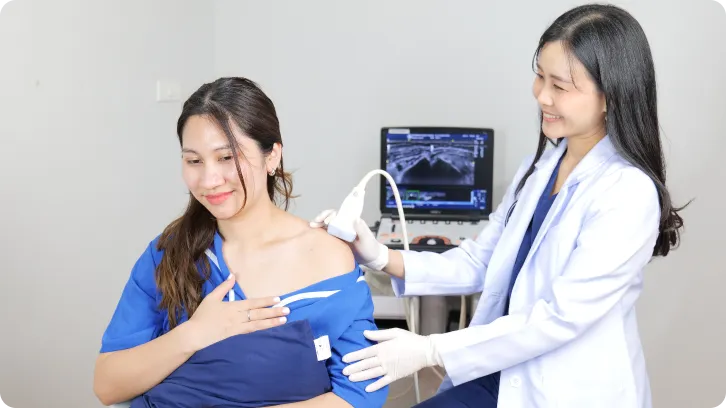
Regenerative injection therapy
For example, prolotherapy injections or concentrated plasma (PRP) injections using ultrasound guidance (US-guided injection with prolotherapy) to speed up the repair of injured tendons and joints, stimulating repair and accelerating the body's natural healing and recovery process.
Rehab Care Clinic uses diagnostic ultrasound to guide every injection precisely to the affected spot. This increases safety and accuracy, makes treatment more effective and reduces the risk of hitting blood vessels or nerves.
Physical therapy treatment
Physical therapy at Rehab Care Clinic treats office syndrome by addressing the root cause. Painkillers only provide temporary relief, whereas physical therapy focuses on restoring the body's structure and changing habits so that you can break free of the pain cycle for good. The clinic uses modern pain-relief physical therapy equipment imported from abroad.

Focused shockwave therapy
High-energy shockwaves are delivered precisely to the injured area to reduce inflammation and pain, while also stimulating the body's repair process and treating chronic pain.
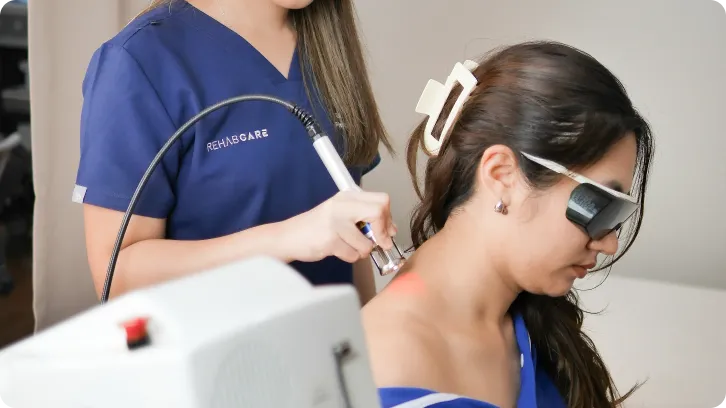
High-power laser therapy
Helps energise cells and stimulates the body's repair process, rapidly reducing inflammation. It also helps reduce nerve-ending irritation such as numbness and burning, and relieves muscle spasm.
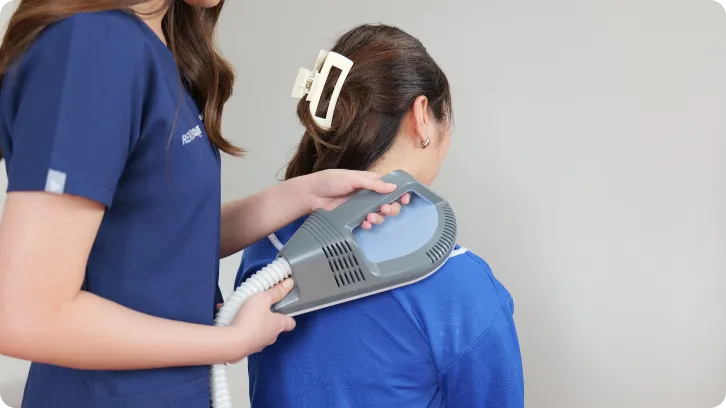
Peripheral magnetic stimulation (PMS)
Stimulates the nervous system with electromagnetic waves that penetrate up to 10 centimetres deep, improving blood circulation and promoting tissue repair, which reduces injury, pain and numbness. It also helps build strength and slow muscle wasting.
Therapeutic ultrasound (deep heat)
Helps treat injuries to tendons and soft tissue and speeds up the repair process by increasing blood flow and the flexibility of connective tissue, while reducing pain and tension in the muscles and tendons.
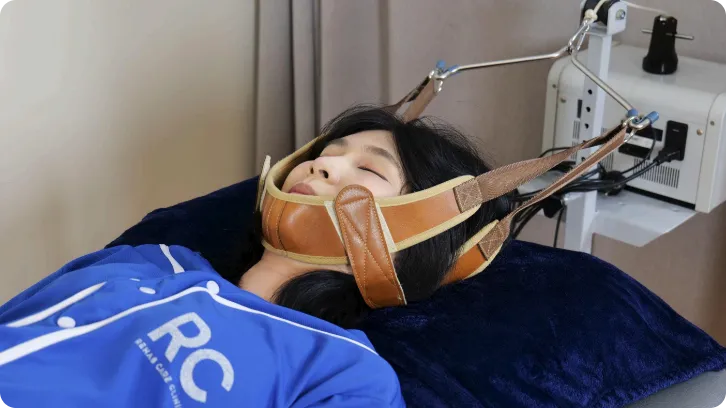
Cervical or lumbar traction
Relaxes the muscles of the neck or back, using a traction force calculated to suit your body weight for safety and more effective pain relief.
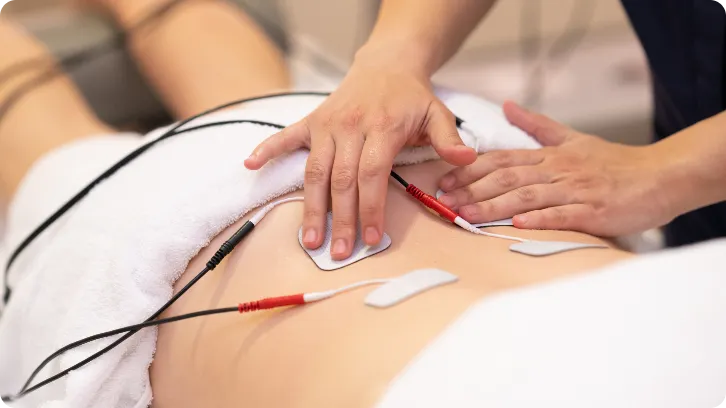
Electrical stimulation (TENS)
Transcutaneous electrical nerve stimulation that helps reduce pain.
As well as using modern technology, our physical therapists use specialised techniques to treat chronic pain, correcting posture and restoring strength so that the pain does not come back.
- Therapeutic Exercise : an exercise programme designed to strengthen the core muscles and rebalance the body to suit each person's condition
- Hydrotherapy (water therapy) : exercise in water to reduce impact, making it easier for people with severe pain to move
- Ergonomics & Posture Rehab : adjusting working posture and setting up the work environment according to ergonomic principles to prevent the pain from returning, for long-lasting results
Pain treatment without medication or surgery
at Rehab Care Clinic
Rehab Care Clinic, a specialist rehabilitation medicine and physical therapy clinic,
is committed to providing high-quality, high-standard care
to give you a stronger body and a better quality of life.
"Dedicated to caring for every kind of pain, with doctors and physical therapists,
modern equipment and service from the heart."
Prevention and self-care tips
Besides treatment, changing your habits is the key to preventing office syndrome from coming back.
- The 20-20-20 rule: every 20 minutes, look away from the screen at something 20 feet away for 20 seconds
- Move every hour: stand up, walk around or do some gentle stretching every hour
- Correct your posture: adjust your chair and desk to suit your body, sit up straight against the backrest with your feet flat on the floor and the screen at eye level
- Exercise regularly: focus on exercises that strengthen the core and back muscles
Left untreated, chronic pain may become more serious than you think
Many people think it is "just stiffness" that will go away on its own. But if it is left for a long time without correcting your posture or getting the right treatment, it can develop into more serious conditions, such as:
- Muscle fibrosis and tender points causing pain that radiates across the neck, shoulders or shoulder blades
- Nerve compression leading to numb hands, arm weakness or pain radiating down the leg
- Premature disc degeneration from accumulated pressure
- Chronic pain that affects quality of life stress, fatigue and difficulty sleeping
Office syndrome is "not just stiffness" but a warning sign that your body is out of balance. If you start to feel pain, get assessed and treated early so you can recover faster, reduce the chance of it becoming chronic and get back to working effectively.
If you have followed the self-care advice above and are still in pain, we recommend consulting a specialist to plan suitable treatment and prevent the condition from becoming chronic.
Rehab Care Clinic has modern equipment and pain-relief technology from abroad, together with rehabilitation medicine specialists and physical therapists ready to care for you at every step and plan the right treatment for you, so you can get back to living life to the full.
Pain treatment without drugs or surgery at Rehab Care Clinic

Pain treatment without drugs or surgery
at Rehab Care Clinic
Rehab Care Clinic is a specialist rehabilitation medicine and physical therapy clinic dedicated to high-quality, high-standard care, helping you to a stronger body and a better quality of life.
Contact a branch
-
Phetkasem
-
Rama 2
-
Muang Thong Thani
-
Ratchada
-
Sathorn
- Office Syndrome: Preventable and Treatable Pain. (2013). Training materials on "Aches and Pains from Office Syndrome Are Preventable". Bangkok: Mahidol University.
- Siriraj Hospital. (2022). Guidelines for treating neck, shoulder and upper back pain from office syndrome. Retrieved from https://www.sirirajhospital.com
- National Institutes of Health (NIH). (n.d.). Musculoskeletal Disorders and Workplace Factors. Retrieved from https://www.nih.gov
- World Health Organization (WHO). (2021). Global Burden of Musculoskeletal Conditions. Retrieved from https://www.who.int
- American Chiropractic Association (ACA). (2020). Neck Pain and Posture-related Disorders. Retrieved from https://www.acatoday.org
- Davies, C. (2013). The Trigger Point Therapy Workbook: Your Self-Treatment Guide for Pain Relief. New Harbinger Publications.
- Journal of Orthopaedic & Sports Physical Therapy (JOSPT). (2020). Ergonomics and Postural Syndrome in Office Workers. Retrieved from https://www.jospt.org
- Basford JR, GD Baxter. (2010). Therapeutic physical agents, in DeLisa’s physical medicine & rehabilitation. WR Frontera, JA DeLisa. Lippincott Williaim & Wilkins: Philadelphia.p.1706-1707.
- Cameron MH. (1999). Physical agents in rehabilitation: from research to practice. W.B. Saunders Co: Philadelphia.