-
Image

Back pain, spinal degeneration and herniated discs
- Back pain, spinal degeneration and herniated discs
- 1. Muscular back pain
- 2. Spinal back pain
- Causes of spinal degeneration
- Symptoms of spinal degeneration
- Rehab Care Clinic and advanced physical therapy technology
- Rehab Care Clinic and medical treatment
- Pain treatment without medication or surgery at Rehab Care Clinic
Back pain, spinal degeneration and herniated discs
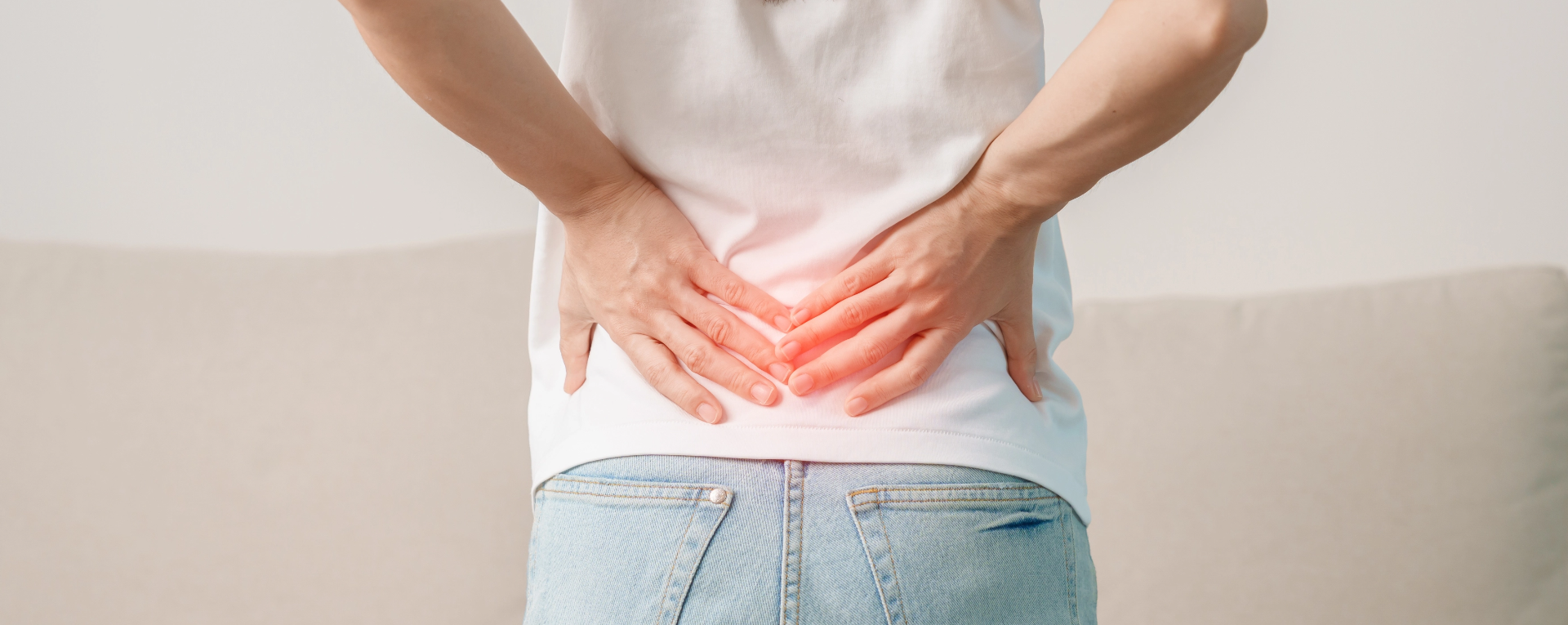
Back pain may seem like a normal part of everyday life for many people, but did you know that if left untreated for a long time, it can become a major problem that affects your quality of life in unexpected ways?
Back pain can be divided into 2 types:
1. Muscular back pain
2. Spinal back pain
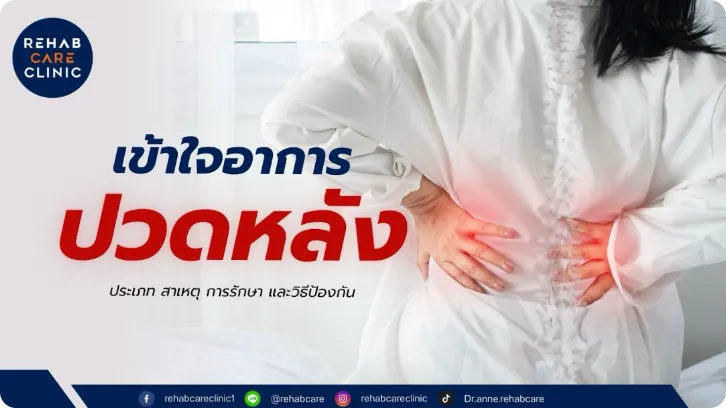
1. Muscular back pain
Back pain from the quadratus lumborum muscle The quadratus lumborum, or QL, hitches the hip, bends the body sideways and arches the back, and also helps stabilise the lumbar spine. If you sit at work or drive for long periods and get lower back pain or a deep ache around the waist, the cause may be an overworked QL muscle that has built up tension. The QL muscle lies in the lower back, attaching to the ribs and spine and to the pelvis, as shown in the picture.
Habits that make the QL muscle tight and painful:
Standing with an arched back and the buttocks pushed out (anterior pelvic tilt), which makes the QL work constantly; always standing or sitting leaning to one side, sitting with knees raised, or always sitting with your legs folded to one side, because the QL on that side works on its own.
Sleeping on your side on a high pillow all night, which keeps the upper side of the waist bent and the QL constantly contracted; when the muscle becomes very tight, it causes pain. Weakness of the gluteus medius, the muscle at the side of the hip that keeps the pelvis level, also forces the QL to help out.
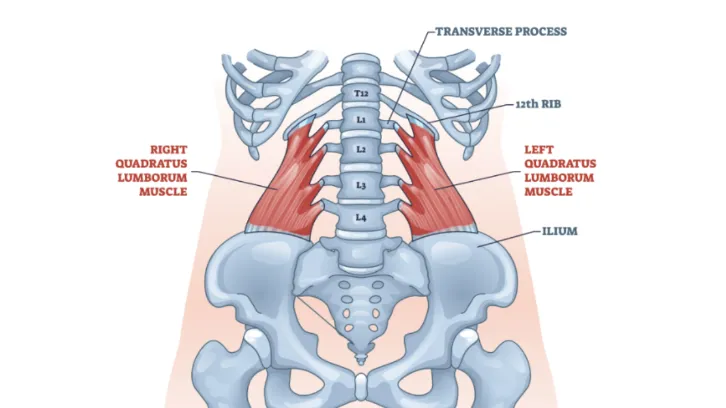
2. Spinal back pain
2.1 Herniated disc pressing on a nerve
This is common in people with back pain radiating down the leg. The lower spine bears a lot of weight and moves more than other parts of the spine, so a disc may bulge out and press on a nerve, causing pain in the lower back and hip that radiates down the leg, usually on one side. There may also be numbness or weakness in the leg or foot.
Causes of a herniated disc pressing on a nerve
- Lifting heavy objects incorrectly
- Being overweight
- Sitting at work in poor posture and for long periods
- Accidents or injuries to the spine
Symptoms can appear in both the back and the legs. Most people think there is only back pain, but in fact the leg symptoms are more important and more specific to this condition, as they show that the spinal nerves supplying the leg are affected. A herniated disc usually causes sudden symptoms because of severe inflammation.
- Lower back pain: usually felt in the lower back, on one or both sides. Symptoms mostly occur when sitting or bending forward while seated, the position in which the disc is under the most pressure.
- Leg numbness: the most prominent leg symptoms come in 3 forms: pain, numbness or muscle weakness.
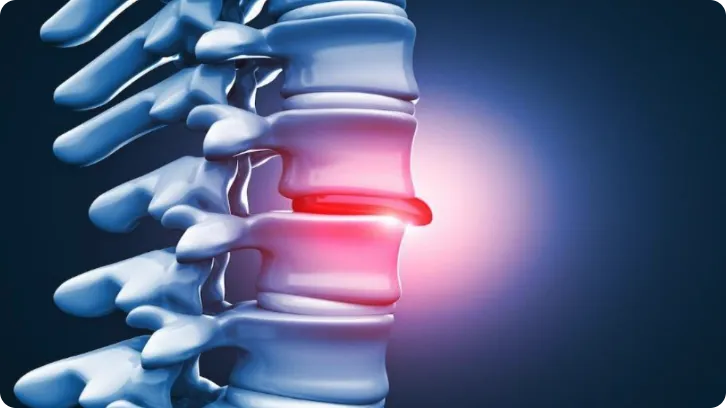
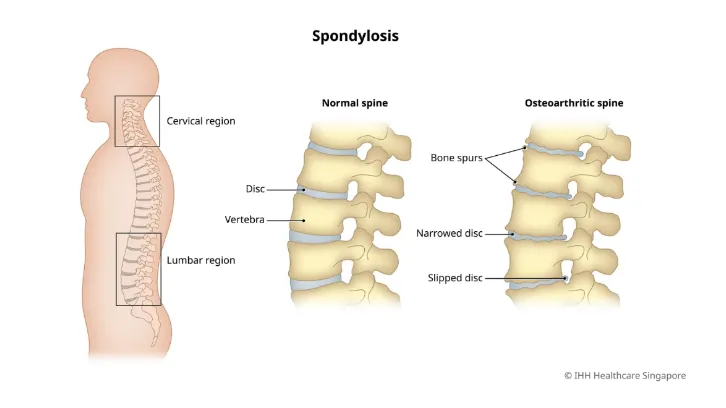
2.2 Spinal degeneration (spondylosis)
This is when the vertebrae, discs, joints, ligaments and back muscles degenerate, making the spine less flexible and stiffer. It most often affects the neck and lower back. Spinal degeneration is caused by wear and tear with age and is generally seen in people aged 40 and over, but it is increasingly found in younger people who put heavy strain on their bodies over long periods, causing the spine and discs to degenerate. This makes the joints stiff and inflexible and may compress nerves. If your ability to move becomes abnormal or you have problems such as numbness and weakness in the hands, arms, feet or legs, see a doctor promptly for treatment and to help prevent further degeneration.
Pain treatment without medication or surgery
at Rehab Care Clinic
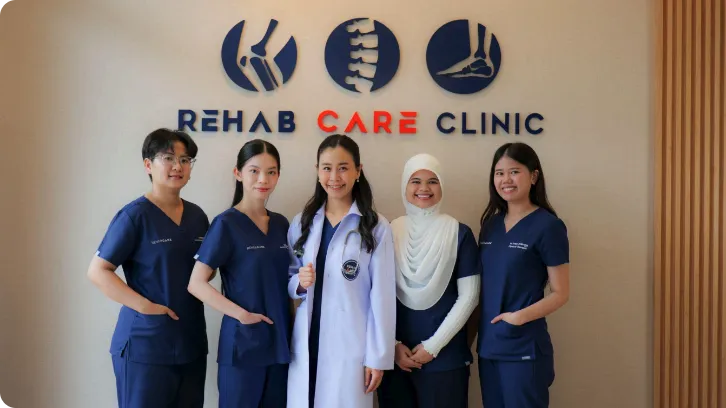
Rehab Care Clinic, a specialist rehabilitation medicine and physical therapy clinic,
is committed to providing high-quality, high-standard care
to give you a stronger body and a better quality of life.
"Dedicated to caring for every kind of pain, with doctors and physical therapists,
modern equipment and service from the heart."
Causes of spinal degeneration
- Being aged 40 or over
- Heavy physical strain over long periods, such as lifting heavy objects or frequently bending and straightening, which may increase pressure on the spine
- Sitting at work in poor posture and for long periods, especially with a hunched back; when you get up from the chair, the spine straightens suddenly, causing friction
- Being overweight, which puts more load on the spine and makes it degenerate faster
- Lack of exercise, as weak muscles cannot support the spine well, leading to pain and faster degeneration
Symptoms of spinal degeneration
- Lower back pain
- A stiff spine and difficulty moving
- Numbness, weakness or pins and needles in the hands, arms, feet or legs, on one or both sides
- Difficulty controlling the bladder or bowels
- Severe nerve compression can make walking difficult and unsteady, as if you are about to fall, especially when climbing stairs
Pain treatment without medication or surgery
at Rehab Care Clinic
Rehab Care Clinic, a specialist rehabilitation medicine and physical therapy clinic,
is committed to providing high-quality, high-standard care
to give you a stronger body and a better quality of life.
"Dedicated to caring for every kind of pain, with doctors and physical therapists,
modern equipment and service from the heart."
Rehab Care Clinic and advanced physical therapy technology
Rehab Care Clinic uses the latest, modern, high-standard pain-relief physical therapy equipment imported from countries such as Germany, Italy and the UK.
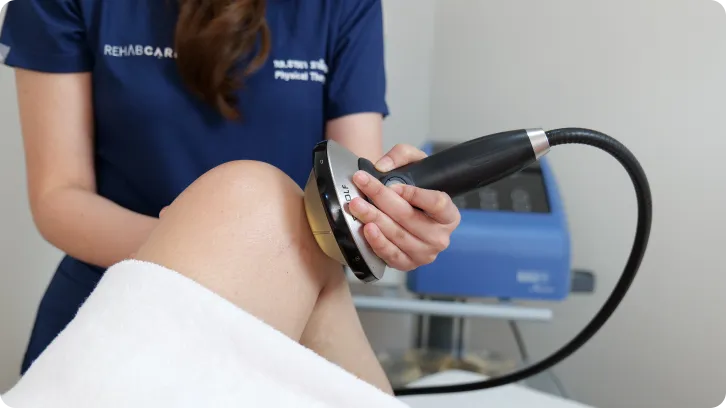
1. Focused shockwave therapy
Delivers energy through shockwaves to the injured area to reduce inflammation and pain, while also stimulating the body's repair process and treating chronic pain.
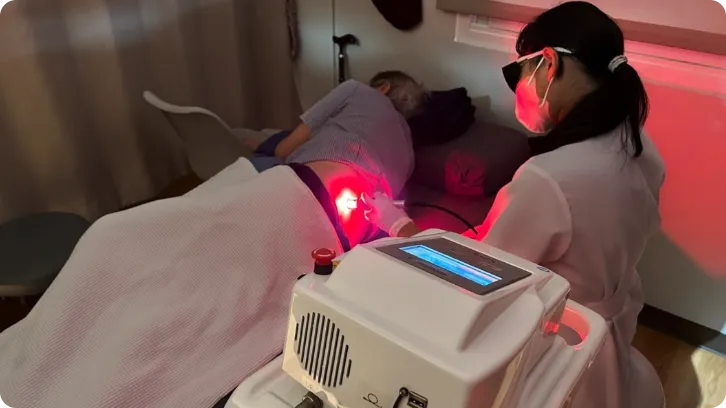
2. High-power laser therapy
Helps energise cells and stimulates the body's repair process, rapidly reducing inflammation. It also helps reduce nerve-ending irritation such as numbness and burning.
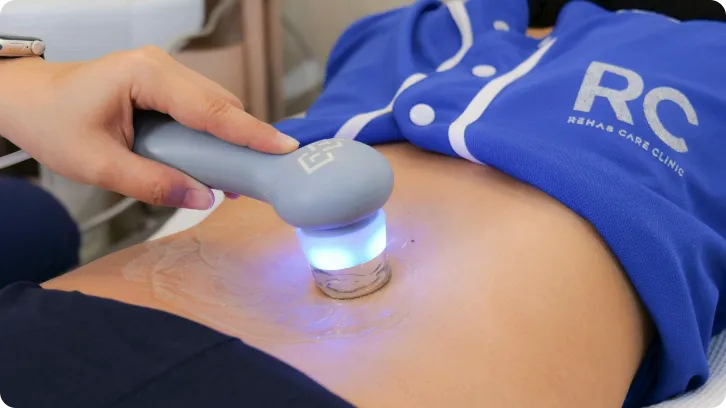
3. Therapeutic ultrasound (deep heat)
Helps treat injuries to tendons and soft tissue and speeds up the repair process by increasing blood flow and the flexibility of connective tissue, while reducing pain and muscle tension.
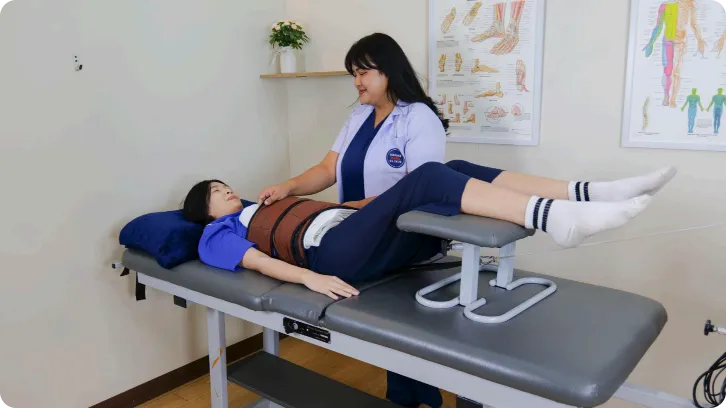
4. Lumbar traction
Relaxes the muscles of the neck or back. The traction force is calculated according to body weight, and the pull and release times are set appropriately for safety and more effective treatment.
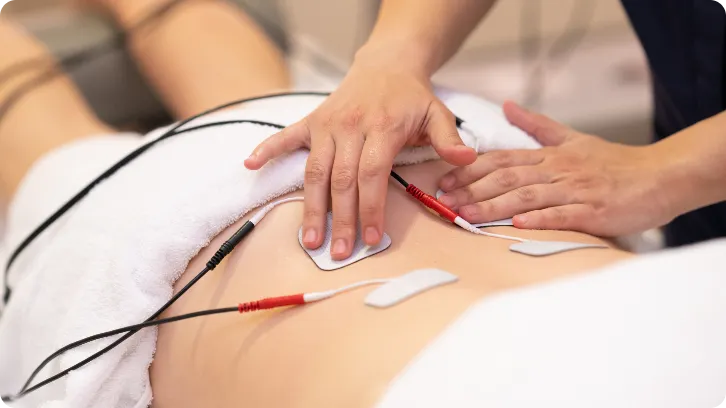
5. Electrical stimulation (TENS)
Transcutaneous electrical nerve stimulation that helps reduce pain.
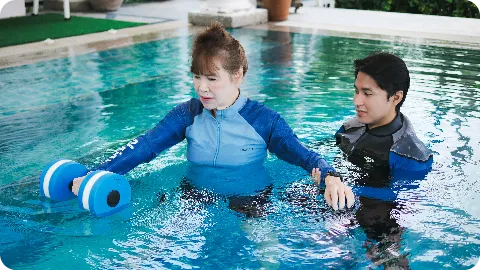
6. Therapeutic exercise and hydrotherapy
To correct posture and restore strength so that the pain does not come back.
Rehab Care Clinic and medical treatment
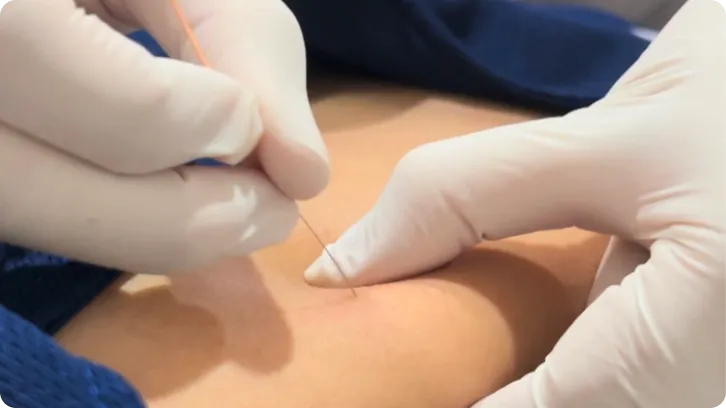
1. Dry needling
Relieves pain and releases tight spots in the muscle known as myofascial trigger points, using a fine needle to make the trigger point relax.
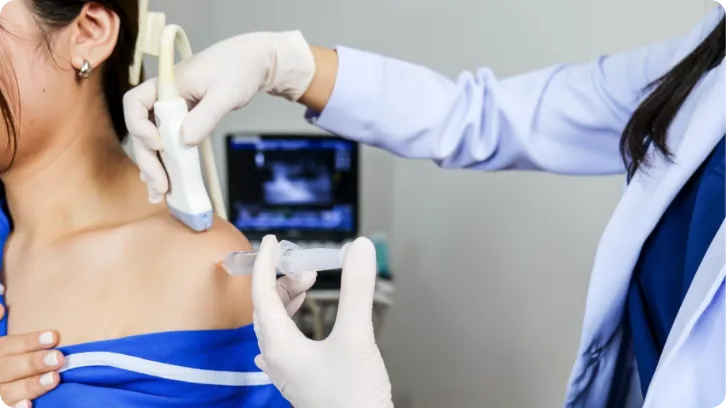
2. Injections (prolotherapy)
A concentrated solution such as glucose is injected into the injured or inflamed muscle area to stimulate repair and accelerate the body's natural healing and recovery. Ultrasound is used to guide the injection so that it reaches the exact problem spot accurately, reducing the risk of hitting a nerve.
Don't let back pain hold you back
The key to preventing back pain is exercise to build strength, along with stretching and strengthening of the core and hip muscles. Choose a good sitting posture and avoid habits that put pressure on the spine, or be careful with positions that trigger pain, such as bending your back, sitting for long periods or regularly lifting heavy objects. If you have aches or stiffness, a warm compress with an electric heating pad can help relieve the pain. But if the pain stops you from carrying out daily activities or has been going on for a long time, don't wait. Rehab Care Clinic is ready to advise and care for you, with doctors and physical therapists who will design a treatment programme that suits you.
Pain treatment without drugs or surgery at Rehab Care Clinic
Pain treatment without drugs or surgery
at Rehab Care Clinic
Rehab Care Clinic is a specialist rehabilitation medicine and physical therapy clinic dedicated to high-quality, high-standard care, helping you to a stronger body and a better quality of life.
Contact a branch
-
Phetkasem
-
Rama 2
-
Muang Thong Thani
-
Ratchada
-
Sathorn
- Deyo, R. A., & Mirza, S. K. (2016). Clinical practice. Herniated lumbar intervertebral disk. New England Journal of Medicine, 374(18), 1763–1772.
- National Institute of Neurological Disorders and Stroke. (2023). Low Back Pain Fact Sheet. Retrieved from https://www.ninds.nih.gov
- Foster, N. E., et al. (2018). Prevention and treatment of low back pain: evidence, challenges, and promising directions. The Lancet, 391(10137), 2368–2383.
- National Institute of Neurological Disorders and Stroke (NINDS). (2021). Low Back Pain Fact Sheet. Retrieved from https://www.ninds.nih.gov
- American Academy of Orthopaedic Surgeons. (2023). Spondylosis (Spinal Osteoarthritis). Retrieved from https://www.aaos.org
- van Tulder, M., et al. (2023). Noninvasive Treatments for Acute, Subacute, and Chronic Low Back Pain: A Clinical Practice Guideline. Journal of Pain. doi:10.1016/j.jpain.2023.01.004