
What to do after a sports injury, and what happens if you keep playing
- What to do after a sports injury, and what happens if you keep playing
- What RICE means in detail
- Frequently asked questions
What to do after a sports injury, and what happens if you keep playing
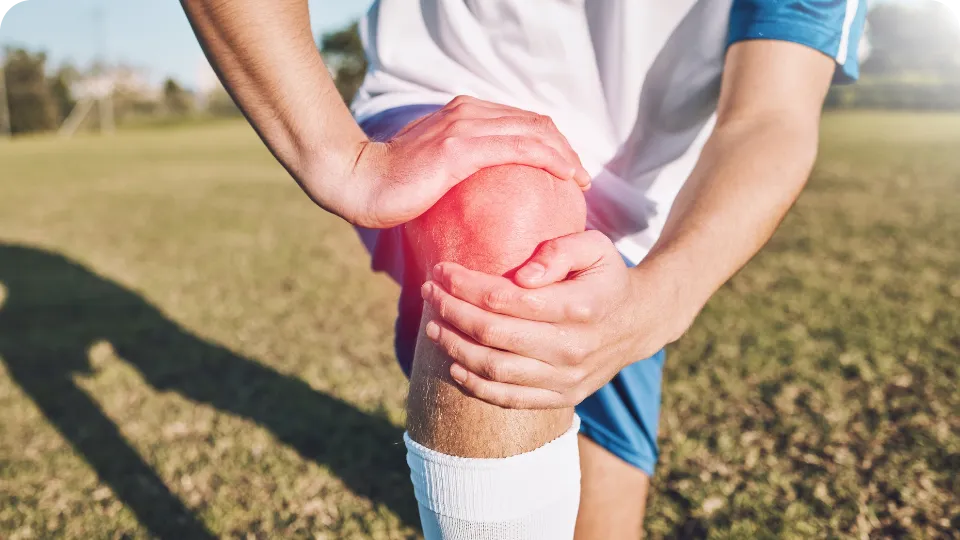
Playing sport or exercising is beneficial and suitable for people of all genders and ages, helping the body stay strong. However, exercising incorrectly, in a way that does not suit the player's physical condition, or in an unsuitable environment can lead to injury, ranging from minor injuries to severe, even life-threatening ones. If the injury is not too severe, we can look after ourselves, so knowing how to care for yourself after an exercise or sports injury is important.
Exercise injuries are generally caused by 2 main factors:
1. Sudden, forceful impact (contact and acute injury)
2. Excessive or repetitive use of a body part until it becomes injured (overused injury)
The approach to take after an exercise or sports injury follows a principle called “RICE”, especially for sports injuries in the first 1–3 days. Each letter stands for the following:
R stands for Rest
I stands for Ice
C stands for Compression
E stands for Elevation
What RICE means in detail
1. Rest means stopping the use of the injured part of the body immediately, i.e. stopping play, especially during the first 6 hours after the injury. This is a crucial period when the area should be rested, because if you do not stop after an injury, inflammation in the injured area will increase and may lead to chronic pain, so that your sporting performance is not as good as before or may even decline further.
2. Ice Applying a cold compress aims to reduce bleeding in the tissues, swelling and pain. The duration of cold application should suit the injured area. In general, apply cold for 10 to 20 minutes at a time, then stop for 5 minutes, and repeat until the swelling subsides, or do this 2 to 3 times a day. Popular methods of cold application include cold packs, ice bags and cooling sprays.
3. Compression (elastic bandaging) applies pressure to limit bleeding into the tissues. It is usually used together with cold therapy, and the bandage should be wrapped snugly around the injured part, covering the areas above and below it.
4. Elevation means raising the injured part of the body above the level of the heart so that blood can flow back to the heart more easily. When an injury occurs, blood flow to the injured area increases, which can cause swelling, so elevation is recommended to reduce blood flow to that area, which helps reduce pain and swelling.
Importantly, avoid using any form of heat in the early phase (the first 48 hours) of the injury, as it dilates the blood vessels and increases bleeding in the area, leading to swelling of the surrounding tissues, which may increase pain and slow healing.
So if you are injured, the most important thing is to stop playing immediately. Do not push through, as this may cause a more serious injury and lead to a chronic one.
If you have followed the advice above for 5–7 days and your symptoms have not improved, you should consult a doctor or physical therapist for further examination and treatment. A physical therapy programme is another option that not only helps restore the body to normal after an injury but also helps reduce chronic pain.
Even once the pain has eased and the injury has improved, you cannot go straight back to your sport, because the body needs to be prepared to return to play in the early period after an injury. The focus should be on
building flexibility, of both the muscles and the soft tissues around the injured joint
training muscle strength
training muscle endurance. Appropriate training helps the muscles and joints bear load, helps you perform well and can prevent re-injury of the same area. Physical therapy helps the body recover so you can return to activity more quickly, and also helps reduce chronic pain in the future. In addition, when athletes are injured and stop exercising, their cardiovascular fitness (heart and lung capacity and endurance) declines. During recovery, aerobic exercise should be done to maintain circulatory endurance and lung function, so that you do not tire easily when you return to sport. You may also undergo physical therapy as recommended by your doctor to rehabilitate the painful muscles until they return to normal.
Frequently asked questions
1. When should I use ice, and when should I use heat?
- Cold compress or ice: use during the first 48 hours after the injury to reduce inflammation and swelling.
- Heat: use once the inflammation, swelling and warmth have subsided (after 48 hours) to help relax the muscles and increase blood flow to stimulate repair.
**Do not apply heat immediately after an injury, as it may worsen the inflammation.
2. Which symptoms mean I should see a doctor immediately?
- Severe pain that prevents movement
- A deformed joint, or abnormal sounds when moving
- Unusually severe swelling and bruising
- Numbness or weakness in the injured area
- Symptoms that do not improve within 48–72 hours
3. Can I exercise while recovering?
Yes, but choose exercise that does not increase impact on the injured area, such as swimming, light cycling, or physical therapy exercises to build muscle strength. To avoid re-injury, consult a physical therapist or doctor before starting to exercise.
4. Does massage help reduce injury symptoms? Massage may help reduce muscle tightness and increase blood flow, but **do not massage immediately after an injury. Wait until the first 48 hours have passed to avoid aggravating the inflammation. 5. If I have been injured before, am I likely to be injured again? Having been injured before increases the chance of re-injury compared with people who have never been injured, especially if the muscles and joints are not yet strong enough. You should therefore undergo physical therapy and rebuild muscle strength before returning to sport.

Information provided by
Dr. Apiporn Garnjanagoonchorn (Dr. Ann)
Rehabilitation physician
- National Institutes of Health (NIH). (n.d.). Musculoskeletal Disorders and Workplace Factors. Retrieved from https://www.nih.gov
- World Health Organization (WHO). (2021). Global Burden of Musculoskeletal Conditions. Retrieved from https://www.who.int
- American Chiropractic Association (ACA). (2020). Neck Pain and Posture-related Disorders. Retrieved from https://www.acatoday.org
- Davies, C. (2013). The Trigger Point Therapy Workbook: Your Self-Treatment Guide for Pain Relief. New Harbinger Publications.
- Journal of Orthopaedic & Sports Physical Therapy (JOSPT). (2020). Ergonomics and Postural Syndrome in Office Workers. Retrieved from https://www.jospt.org
- Siriraj Hospital. (2022). Guidelines for treating neck, shoulder and upper back pain from office syndrome. Retrieved from https://www.sirirajhospital.com
- Physical Therapy Association of Thailand. (2021). Physical therapy for people with chronic muscle pain. Retrieved from https://www.pt.or.th