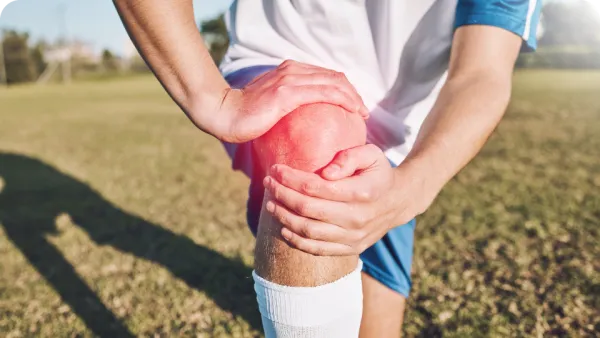

The 3 most common injuries in football players
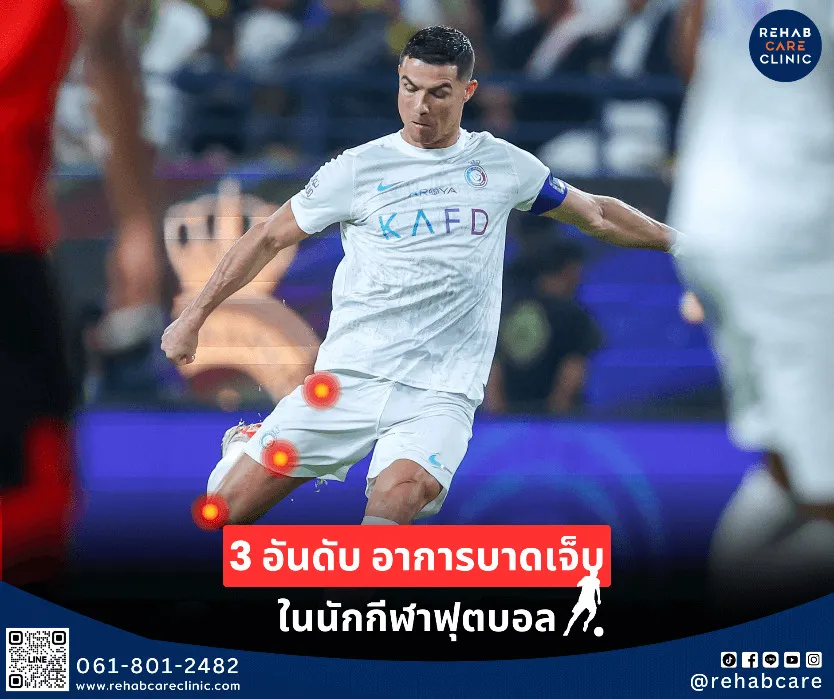
Athletes and people who love sport can hardly avoid the injuries that may occur. Football is one of the sports that most easily causes injury, because it involves speed, sudden changes of direction and physical contact, which can lead to the following injuries.
1. Knee ligament injury (Knee ligaments sprain) There are 4 knee ligaments (knee ligaments):
- Anterior cruciate ligament (ACL; Anterior Cruciate Ligament)
- Posterior cruciate ligament (PCL; Posterior Cruciate Ligament)
- Medial collateral ligament (MCL; Medial Collateral Ligament)
- Lateral collateral ligament (LCL; Lataral Collateral Ligament)
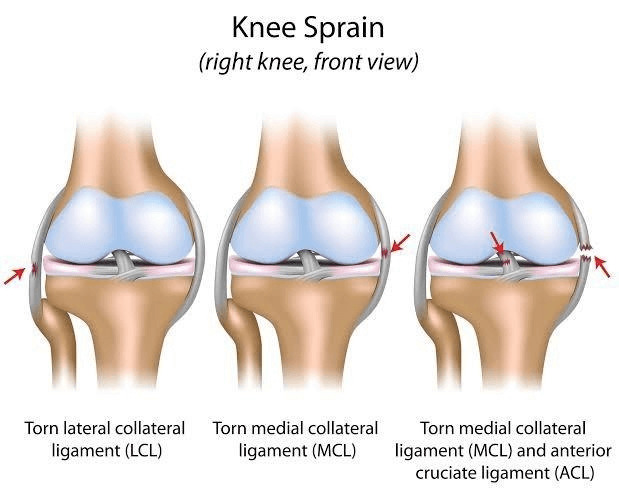
The knee ligaments connect the thigh bone to the shin bone and help maintain and support the stability of the knee during activity. In football, running, jumping, impacts, sudden changes of direction and collisions can cause the knee to be struck or twisted, creating forces inside the knee joint that may inflame or tear the knee ligaments. Symptoms include knee pain (depending on which ligament is injured), swelling and a feeling that the knee is unstable.
2. Meniscus injury or tear (Meniscus tear) The knee has 2 menisci:
- Inner meniscus (Medial meniscus)
- Outer meniscus (Lateral meniscus)
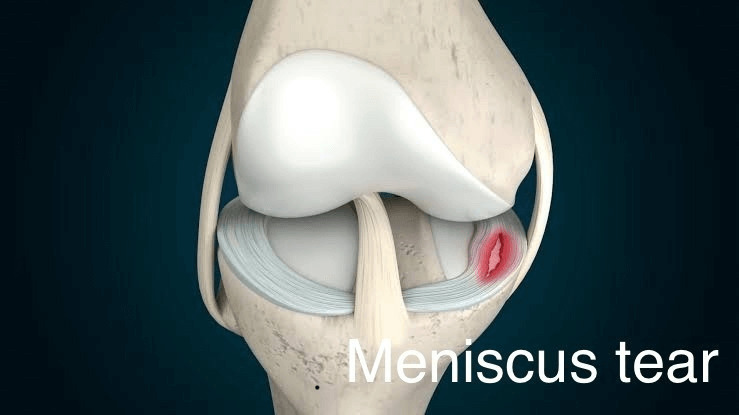
The menisci sit inside the knee joint between the thigh bone and the shin bone. They help support the knee and absorb impact within the joint, preventing the bones from rubbing against each other. In football, running, jumping, sudden changes of direction or accidents during play can twist the knee, creating forces inside the joint that can injure, inflame or tear the meniscus. Symptoms include pain inside the knee, swelling and tightness, or a feeling that the knee locks or catches, with severe pain when bearing weight.
3. Thigh muscle injury (Muscle strain)
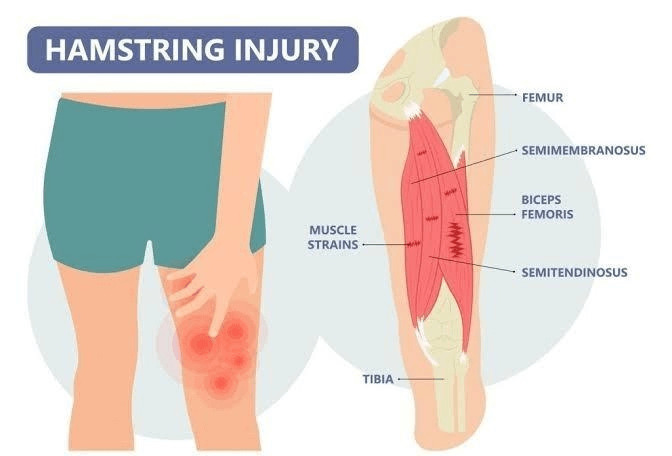
The thigh has many muscles, but those most commonly injured are the back of the thigh (Hamstrings) and the groin muscles (Groin). These are large muscles that generate power for running and kicking. Sometimes, if too much force or speed is used, the muscle may be jerked, causing it to overstretch and tear suddenly. Symptoms include pain at the back of the thigh or in the groin, which is severe when moving the leg or walking with weight on it.
These injuries can be prevented with good enough preparation, such as stretching before and after playing, warming up and cooling down, strengthening the lower body muscles, wearing protective equipment and suitable clothing, eating nutritious food and getting enough rest. If you still get injured, first rest and apply a cold compress immediately. If you have an accident while playing, we recommend a further examination by a specialist doctor for assessment and correct, appropriate treatment, to prevent a chronic injury and help you return to sport as soon as possible.
Thanaphon (Oil), PT
Reference
https://he01.tci-thaijo.org/index.php/KBJ/article/download/248045/167992/899052
https://www.orthocarolina.com/media/the-3-big-football-injuries-you-should-know-about
https://www.bupa.co.uk/newsroom/ourviews/common-football-injuries
https://www.physio-pedia.com/Meniscal_Lesions
https://www.physio-pedia.com/Hamstring_Strain
https://www.physio-pedia.com/Category:Knee_Injuries

Information provided by
Dr. Apiporn Garnjanagoonchorn (Dr. Ann)
Rehabilitation physician