
The 3 most common injuries in golfers
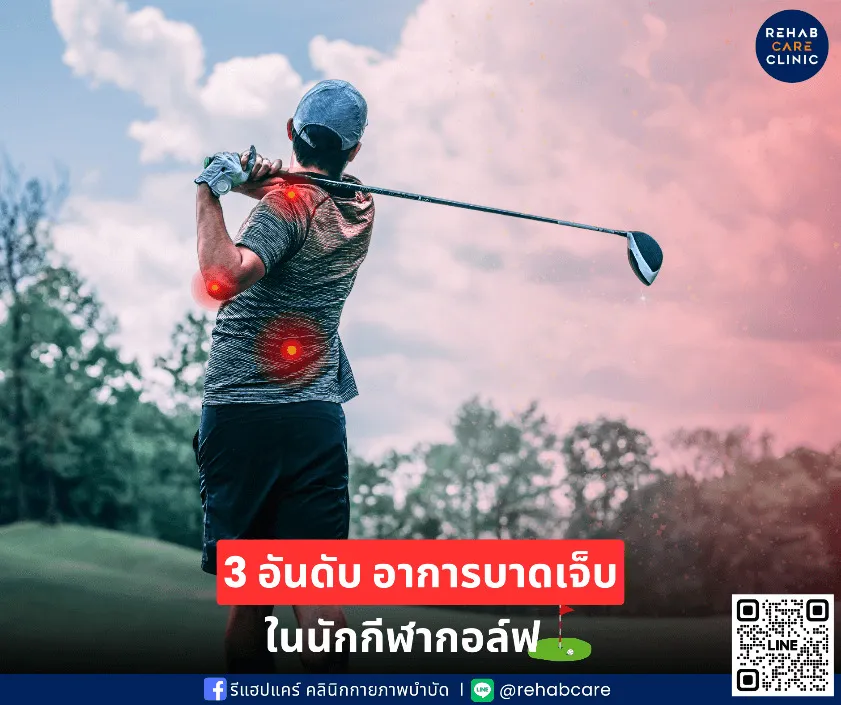
Although golf requires little strength, no speed and no physical contact, the golf swing involves movement of many body parts, including the trunk, waist, shoulders and arms, as well as jerking and twisting forces within a fraction of a second. So if your muscles are weak, you skip a proper warm-up and stretching, or you play with poor technique, injuries can follow.
Injuries in professional golfers are usually caused by repeating the same movement or by overtraining, whereas in amateur golfers they are usually due to poor physical condition, lack of flexibility, not preparing or warming up, incorrect technique or swing, hitting posture, and even the surface they hit from. The 3 most common injury sites for professional golfers are the lower back, wrist and shoulder, while for amateur golfers they are the lower back, elbow and wrist.
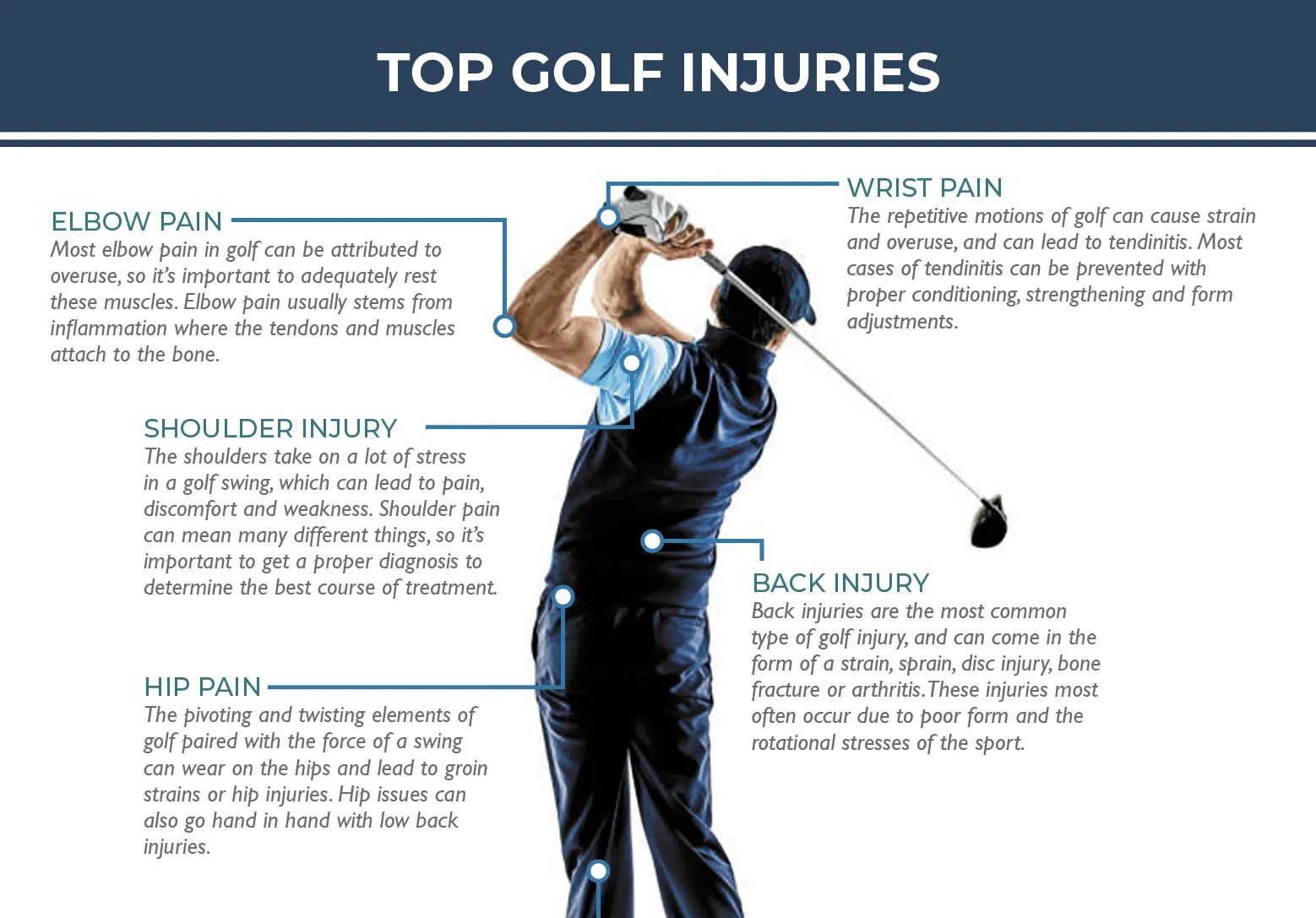
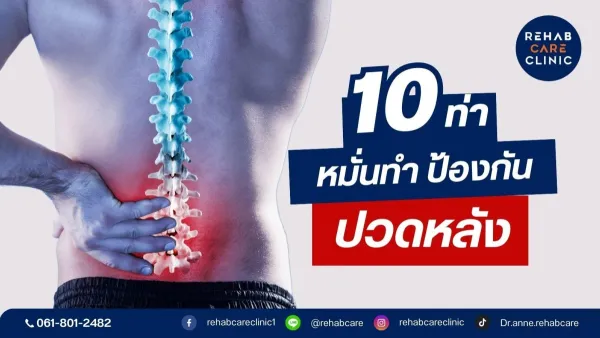
1. Lower back (Low back pain) This is the most commonly injured area, because the muscles here play a key role in swinging the club. The so-called “Classic Swing” is a relatively flat swing (relatively flat swing) that finishes with the back straight (I position). The “Modern Swing”, by contrast, involves a wide shoulder turn, restricts hip rotation during the backswing (back swing) and finishes with the back arched (reverse C), which places more twisting force (torque) on the back and shoulders. The Modern Swing therefore carries a greater risk of lower back injury, which may lead to back muscle inflammation, a herniated disc, spinal degeneration or spondylolisthesis.
2. Shoulder (Shoulder pain) The shoulder is at risk of injury because the joint works in a complex way and the golf swing requires a wide range of motion. This puts force on the shoulder and stretches it, which can lead to shoulder impingement or a torn shoulder tendon.
3. Elbow (Elbow tendinosis) The impact as the club strikes the ball puts strain on the tendons around the elbow, which can lead to injury and inflammation. This is common in professional golfers. Common conditions include golfer's elbow and tennis elbow.
If you are injured playing golf, rest and apply a cold compress immediately after the injury. If it does not improve within 1 week, consult a doctor or physical therapist for appropriate treatment. Treatment ranges from medication and physical therapy with equipment such as Focus shockwave and high power laser to reduce pain and speed up repair, to injections such as concentrated platelet injections (PRP), which are suited to long-standing, chronic cases and help reduce inflammation and speed up recovery. Treatment depends on your symptoms. If you are injured, don't leave it: the longer you leave it, the harder it is to treat.
Phatcharaphon (Pinky), PT
Reference
https://simonmoyes.com/magazine/sports-medicine/the-common-golf-injuries/
https://www.rehabmed.or.th/main/wp-content/uploads/2015/01/L-180.pdf.
https://www.thaiscience.info/journals/Article/SRMJ/10823954.pdf.
https://www.professionalevents.co.uk/_images/_products2downloads/109_317.pdf

Information provided by
Dr. Apiporn Garnjanagoonchorn (Dr. Ann)
Rehabilitation physician