
5 common causes of knee pain
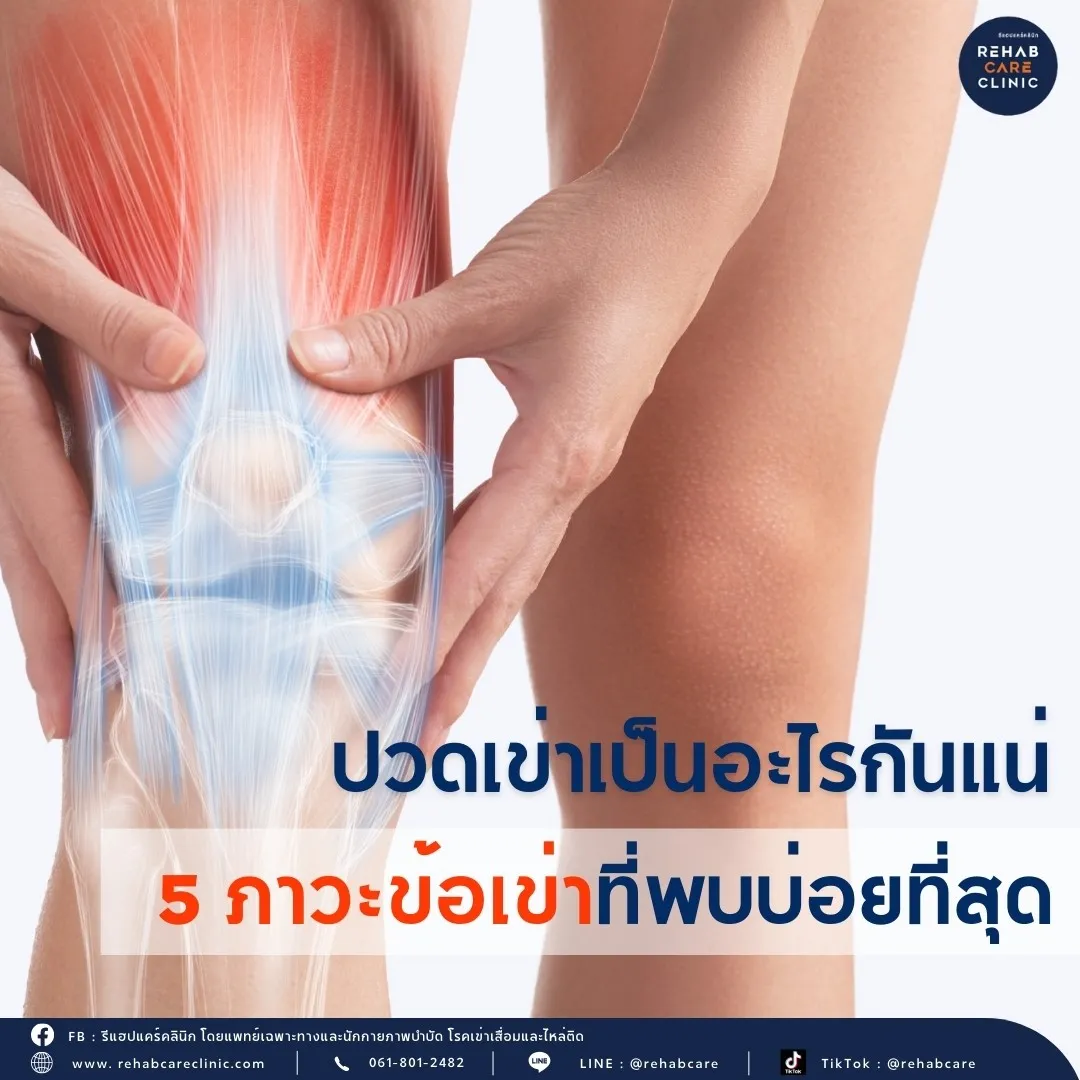
Knee pain can have many causes, and diagnosis is essential for treatment. Initially, a medical history and physical examination can be carried out. For greater accuracy and clarity, the diagnosis can be confirmed with diagnostic ultrasound (musculoskeletal ultrasound / MSK US). The 5 common conditions causing knee pain that are seen on diagnostic ultrasound are:
1. Knee osteoarthritis The ultrasound image shows a narrower than normal space between the thigh bone and the shin bone, and there may also be bone spurs. Symptoms include stiffness and twinges in the knee and a crunching or cracking sound.
Knee osteoarthritis seen on ultrasound
2. Knee arthritis The ultrasound image shows black areas inside the knee joint, indicating inflammatory fluid. This causes pain when bearing weight or bending and straightening the knee.
Knee arthritis seen on ultrasound
3. Pes anserine bursitis The ultrasound image shows a black area at the bursa. The symptom is pain on the inner side of the knee, caused by inflammation of the bursa (bursitis) between the shin bone (tibia) and the tendons (pes anserinus).
Inflamed bursa on the inner side of the knee seen on ultrasound
4. Baker's cyst The ultrasound image shows a black lump in the layer beneath the skin at the back of the knee. In some cases a bulge can be felt below the back of the knee. There may also be pain when moving the knee, or limited movement, with the knee unable to bend fully.
Inflamed cyst at the back of the knee seen on ultrasound
5. Patellar tendinitis The ultrasound image shows abnormalities in the tendon, such as fibres that are thicker than normal, tears, and black areas of inflammatory fluid beneath the tendon. The symptom is pain at the front of the knee, especially when bending the knee a lot, such as when jumping, squatting or climbing stairs.
Inflamed tendon at the front of the knee seen on ultrasound
Treatment options for knee pain
Once the cause of the pain has been accurately identified with diagnostic ultrasound, a treatment plan can be made as follows:
1. Artificial joint fluid injections Synthetic hyaluronic acid, made to mimic the natural substance, is injected to fill the space between the joint surfaces of the knee. This reduces the forces acting on the knee (as a shock absorber), lubricates the joint surfaces, reduces friction and relieves pain. It is suitable for people with knee osteoarthritis, as it can help slow degeneration and delay knee replacement surgery.
2. Platelet-rich plasma (PRP) injections This is an injection of highly concentrated platelets, made by processing the patient's own blood to extract substances that repair tissue and reduce inflammation. It is suitable for people with knee arthritis, knee osteoarthritis, tendinitis, tendon tears or muscle inflammation. The substances extracted and used in treatment are:
- Platelets, which help stimulate white blood cells and other cells to repair injured or torn tissue
- Growth factors, which stimulate wound healing and the formation of tissue and collagen, leading to rapid repair
PRP at Rehab Care Clinic is special and very safe, in the form of pure concentrated platelets (pure PRP). It is prepared with a standard extraction device certified by the Thai Food and Drug Administration (FDA). The concentrated platelets are passed through small glass capillary tubes, creating friction that raises growth factor levels by up to 2 times, with a platelet concentration of up to 10–17 times. As a result, after injection the body's repair process is faster, injury symptoms are reduced and recovery is quicker than with ordinary PRP. Improvement is usually seen from the very first injection.
3. Physical therapy This uses various devices, such as focused shockwave therapy (shockwave energy) to stimulate repair of injured muscles and tendons around the knee, and high-power laser therapy to reduce inflammation and energise cells to speed up repair, along with individual exercise programmes and hydrotherapy to strengthen the body and muscles and prevent re-injury.
Using all 3 types of treatment together gives even better results, and following the advice of your physical therapist and doctor greatly reduces the chance of the pain coming back.
Rehab Care Clinic has particular expertise in ultrasound-guided injections, performed by rehabilitation medicine specialists, making them accurate, precisely targeted, safe and highly effective.

Information provided by
Dr. Apiporn Garnjanagoonchorn (Dr. Ann)
Rehabilitation physician