
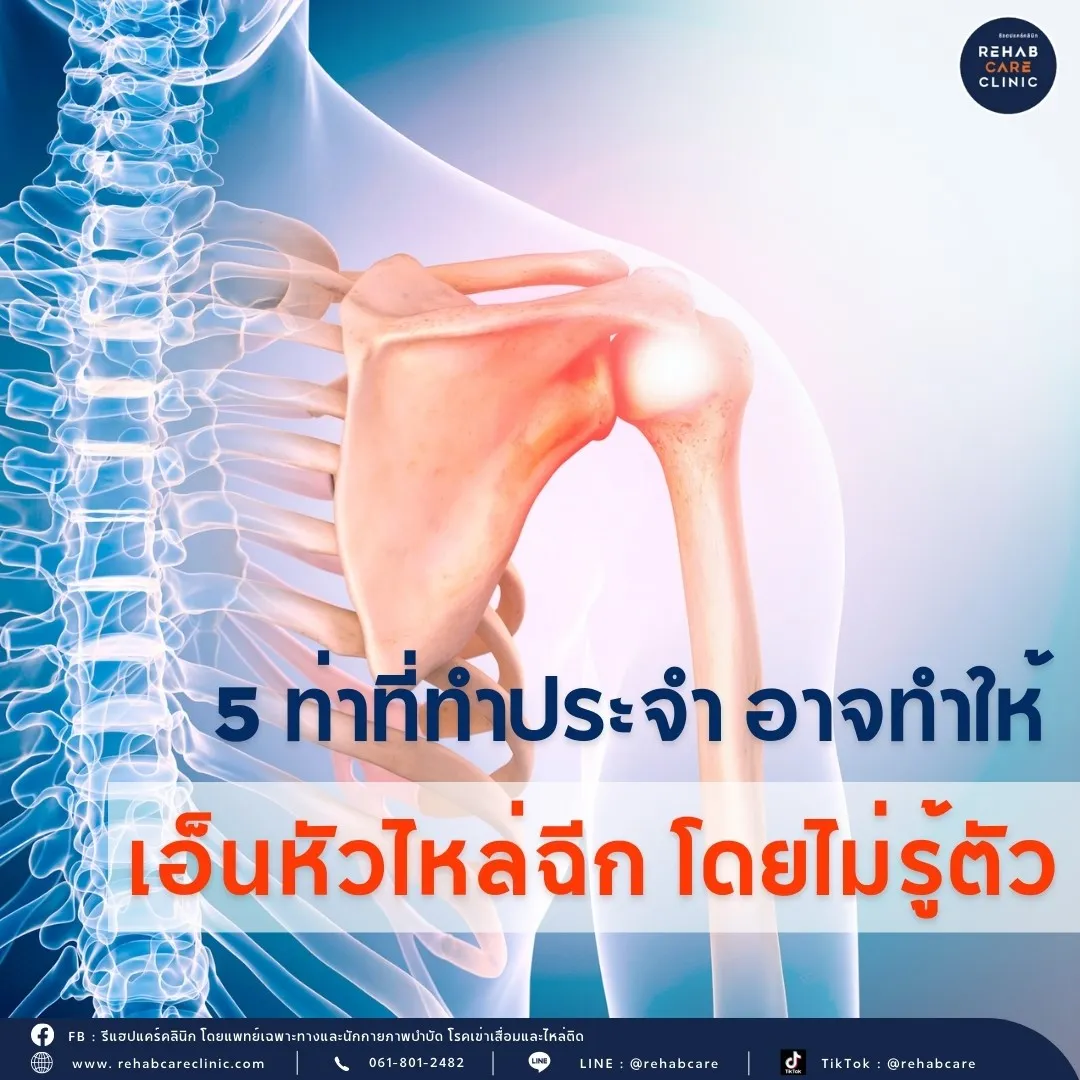
5 everyday postures that could be tearing your shoulder tendons without you knowing
The shoulder is one of the body's most important joints and can move in many directions, making it one of the most mobile and most used joints in our daily activities and routines. The shoulder is made up of various muscles and tendons that work together to produce movement, and if we move in the wrong way, we may be damaging the shoulder without realising it. Today, let's look at the wrong postures we often slip into that harm the shoulder joint, leading to painful shoulder conditions or even a torn shoulder tendon.
5 postures that cause shoulder pain without you realising
Posture 1: Sleeping on your side on top of your arm This compresses the shoulder joint and puts pressure on the shoulder muscles and tendons, which can lead to shoulder pain from inflammation of the muscles and tendons in that area.
The correct side-sleeping position is to avoid lying on your arm: extend the arm slightly forward and hug a pillow or bolster to reduce pressure on the shoulder.
Posture 2: Carrying heavy objects Because the muscles are working hard (overuse), the tendons are pulled and jerked by the extra weight, which can injure the shoulder muscle tendons, for example when carrying a heavy bucket of water or a heavy bag of fruit for a long time.
The correct way is to split the load into lighter portions and hold items as close to your body as possible to reduce the work of the shoulder muscles.
Posture 3: Arm swinging as exercise You may be swinging your arms the wrong way. Avoid swinging with your palms facing down, or swinging fast, hard and repeatedly. Swinging with palms facing down rotates the shoulder inwards and can cause impingement between the shoulder bones and the muscles or tendons, leading to severe inflammation and shoulder pain, or even a serious shoulder tendon tear that requires surgery.
The correct way is to swing your arms with your palms facing your body or facing up, and to swing slowly rather than flinging the arms quickly. Count your repetitions, divide them into sets and rest between sets so the shoulder does not overwork.
Posture 4: Reaching or raising your arms overhead for long periods for example reaching for things in the back of the car, reaching up to clean windows, or reaching to lift heavy objects. When raising their arms overhead repeatedly, many people do so with their palms facing down, which is a very poor posture. Turning the palm down rotates the shoulder inwards, and raising the arm high in that position causes impingement between the shoulder bones and the muscles or tendons, which can also lead to inflammation and shoulder pain.
The correct way is to raise your arm with your palm facing towards you or facing up. This position avoids impingement between the shoulder bones and the muscles and tendons. If you need to use your shoulder for repetitive activities, take regular breaks to prevent injury.
Posture 5: Doing push-ups incorrectly Pushing up from the floor or taking your entire body weight through the shoulders creates a crushing force (crush injury) on the tendons between the shoulder joint and the upper arm bone, which can cause inflammation or a tear of the shoulder tendons.
For safe exercise, start gradually and do not increase the number of repetitions too much, to avoid putting excessive force on the tendons.
If you have shoulder pain and cannot raise your arm fully, we recommend a diagnostic ultrasound scan (musculoskeletal ultrasound) to look for abnormalities of the structures inside the shoulder. It can show the tendons, muscles and joints, revealing inflammation, tears and other abnormalities within the shoulder.
For treatment, the physical therapist will choose the equipment best suited to the patient's symptoms, including Focus Shockwave, High Power Laser, Ultrasound and Electrical Stimulation, to reduce pain and inflammation. This is combined with individually tailored exercises and stretches to build strength, maintain shoulder mobility, improve stability and compensate for the injured tendons or muscles.

Information provided by
Dr. Apiporn Garnjanagoonchorn (Dr. Ann)
Rehabilitation physician