Achilles tendinitis: how to prevent and treat it
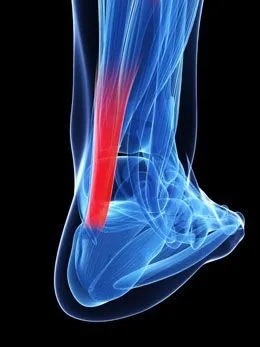
Achilles tendinitis is mostly caused by repetitive use that puts stress on the tendon, such as running too much or increasing distance and time too quickly without giving the body time to adapt. Other causes include insufficient stretching and weak calf muscles that become very tight during exercise, which increases the force and stress on the Achilles tendon. In addition, people with a bone spur at the heel may experience friction against the Achilles tendon, which can cause pain or inflammation.
How to treat Achilles tendinitis
There are many treatment options, which fall into two categories: surgical and non-surgical.
1. Non-surgical treatment
Initial treatment: patients with only mild symptoms from a minor cause may be able to relieve them by following the RICE principle to help reduce pain and swelling in the early stage, as follows.
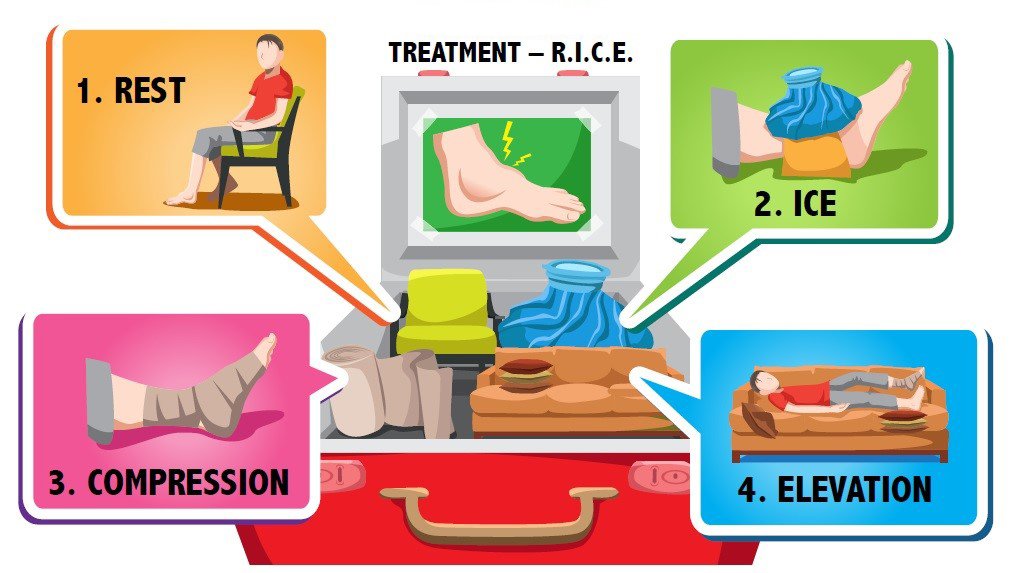
- Rest: avoid exercise that places load on the tendon, and do not press on the area until symptoms improve. If the patient can reduce the tension on the tendon, it will heal more quickly.
- Ice: apply an ice pack to the inflamed tendon for about 15–20 minutes. Ice helps reduce the injury and swelling.
- Compression: wrap the tendon area with a bandage to reduce swelling and limit movement of the tendon, but do not wrap it too tightly, as this may restrict blood flow.
- Elevation: raise the foot above the level of the heart. You can lie flat on the floor and rest your foot on a pillow. This helps blood flow back to the heart and reduces swelling.
However, if symptoms do not ease or become more severe after initial self-care, the patient may need to see a doctor, who may use other treatments in combination, such as the following.
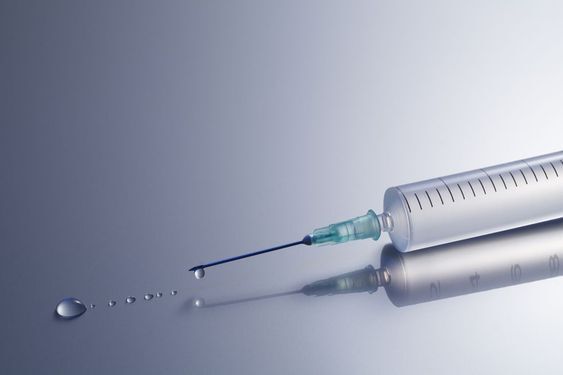
- Non-steroidal anti-inflammatory drugs (NSAIDs), such as ibuprofen or naproxen, to reduce pain and swelling.
- Cortisone injections: steroid injections that act as anti-inflammatories, but they may increase the risk of tendon rupture.
- Other treatments: glyceryl trinitrate patches, prolotherapy, and aprotinin injections
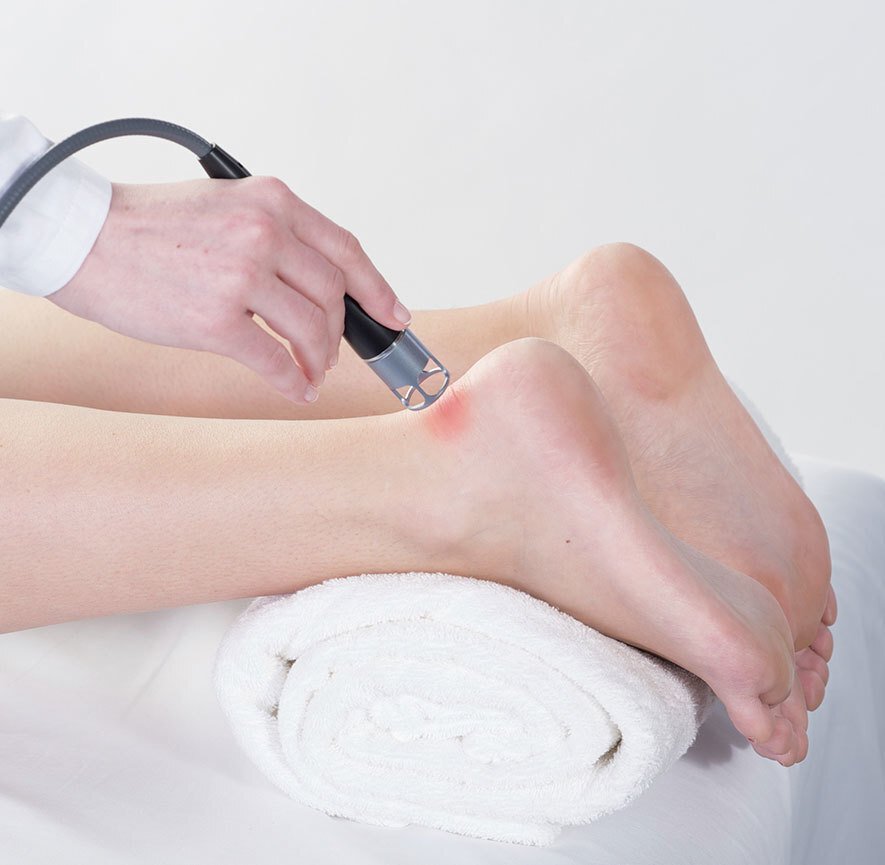
- Physical therapy: treatment using exercise to help improve the flexibility and strength of the inflamed Achilles tendon, or using various devices to reduce pain.
2. Surgical treatment
If symptoms do not improve after other treatments, or there is a risk of the tendon tearing, the doctor may need to operate on the affected Achilles tendon.
Surgical procedures
- percutaneous tenotomies
Indication: mild to moderate
Procedure: the Achilles tendon is operated on through the skin to lengthen it, to treat equinus foot (Equinus feet).
- open excision of the degenerative tendon with tubularization
Indication: moderate to severe
- tendon transfer (FHL, FDL, or PB)
Indication: degeneration of >50% of the Achilles tendon, age over 55, and MRI showing thickening of the Achilles tendon
How to prevent Achilles tendinitis
o Stretch every morning to stretch the calf muscles and Achilles tendon, and also before or after every exercise session.
o Do exercises to build the calf muscles to increase strength, reduce tension on the Achilles tendon and help you exercise better.
o Choose suitable footwear, for example by putting heel pads in your shoes to slacken the Achilles tendon, or using pads at the back of the heel where it rubs against the edge of the shoe.
o Modify your activities: avoid exercise that loads the Achilles tendon, such as running, jumping or walking long distances, and switch to exercise that does not, such as swimming, cycling or weight training that does not involve the calf muscles.
Exercises
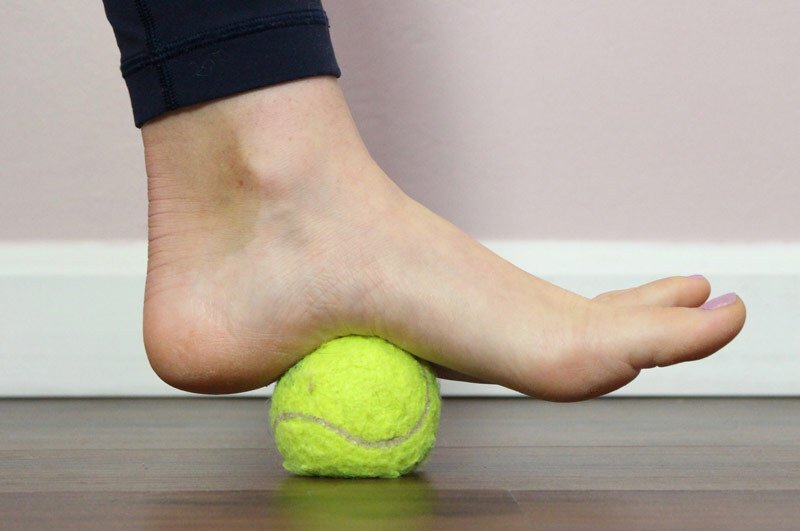
1. Roll a ball or tennis ball under the sole of your foot for 30–60 seconds. Do 5 rounds.
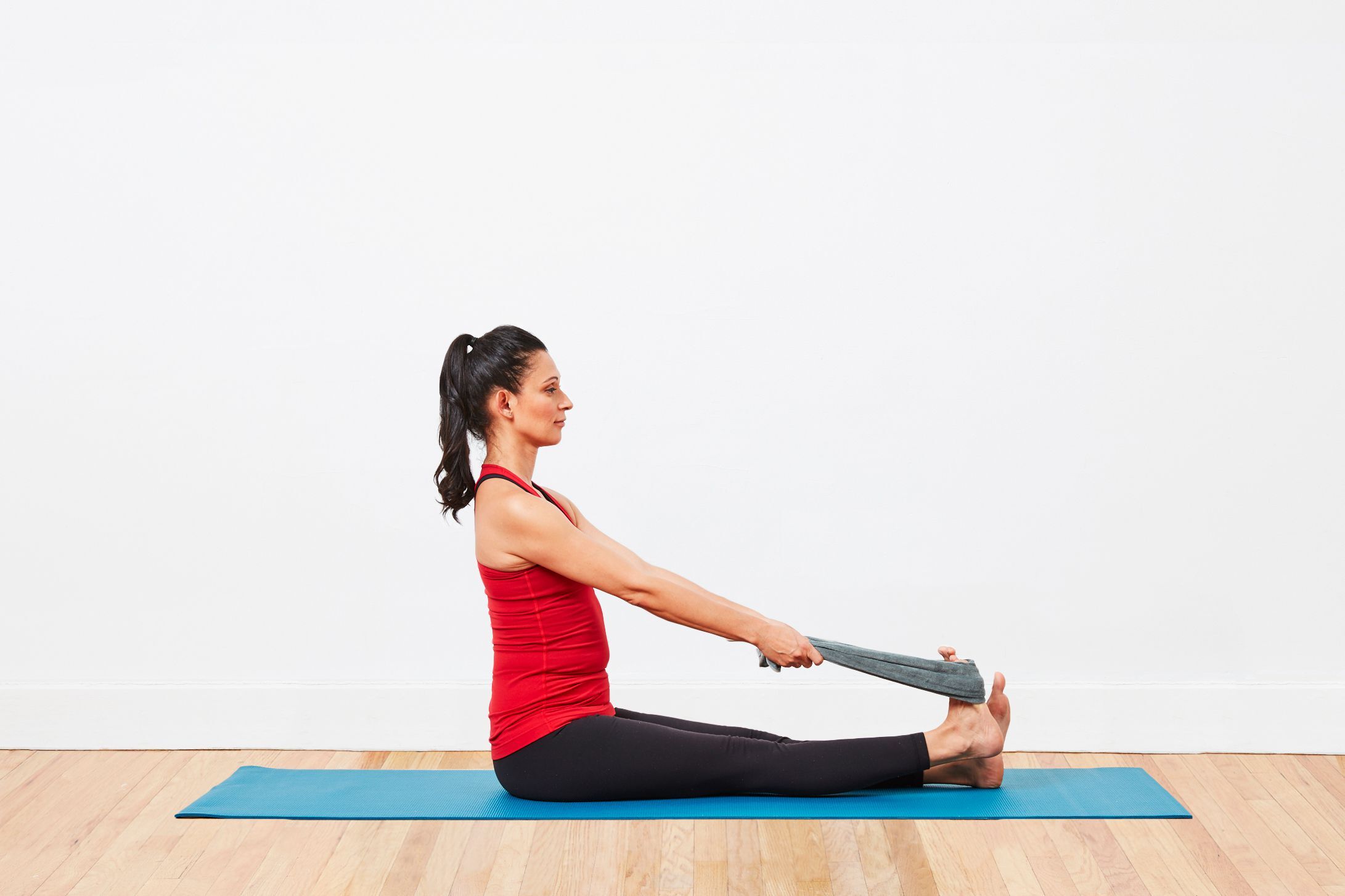
2. Sit with a towel looped around the sole of your foot and pull it towards you. Hold for 15 seconds. Repeat 5 times.
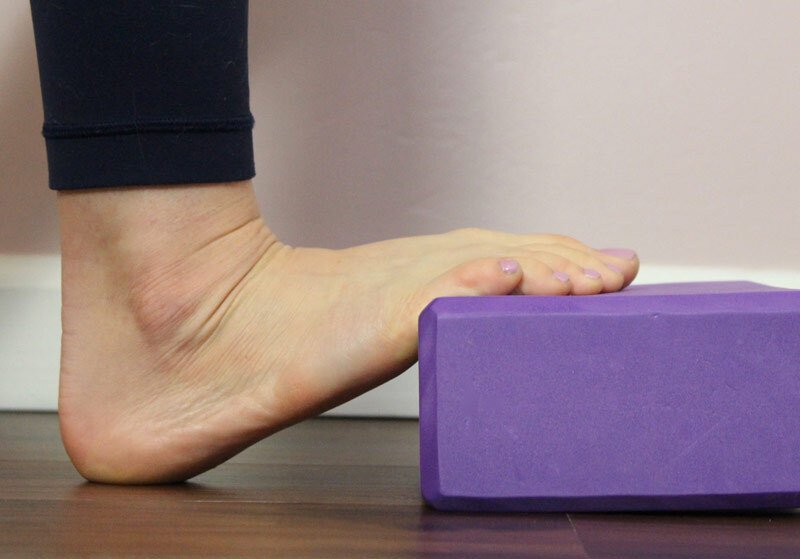
3. Stretch the sole of the foot by placing it on a step or yoga block as shown. Stand up straight and press down until you feel a stretch. Hold for 15 seconds. Repeat 5 times.
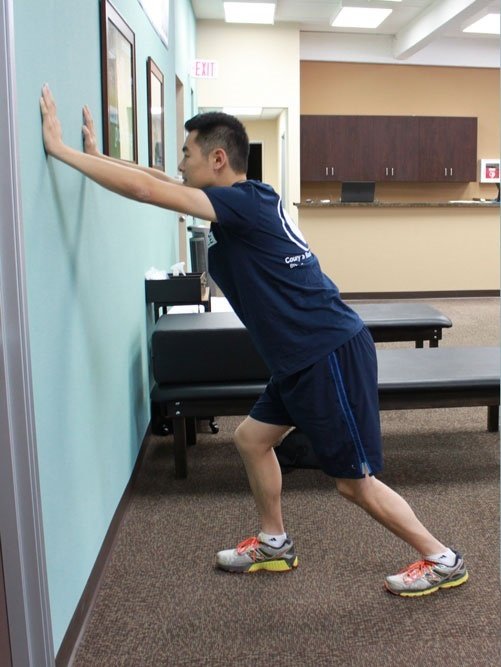
4. Stand facing a wall with one leg behind you, knee bent and the sole flat on the floor; bend the knee of the other leg slightly. Hold for 15 seconds.
Then return to standing upright. Repeat 3–5 times.
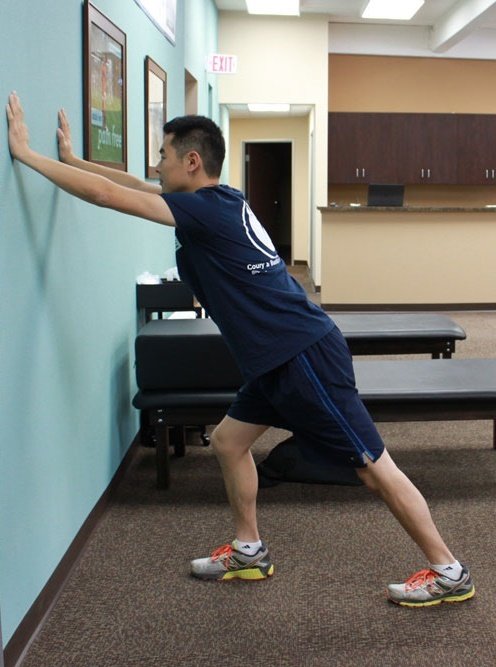
5. Stand facing a wall with one leg straight behind you and the sole flat on the floor; keep the knee of the other leg straight. Hold for 15 seconds, then return to standing upright. Repeat 3–5 times.
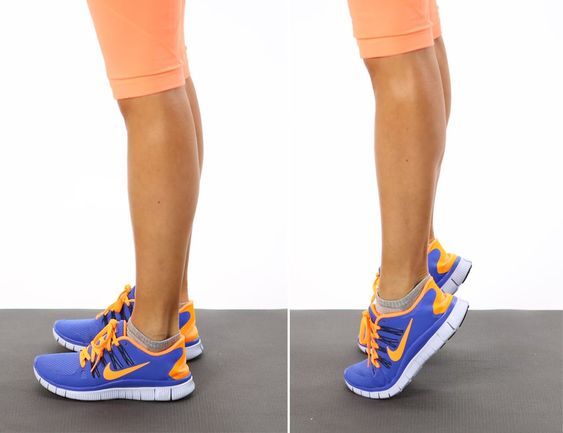
6. Stand upright and slowly rise up onto your toes and lower back down. Do 15 repetitions per set, 3 sets.
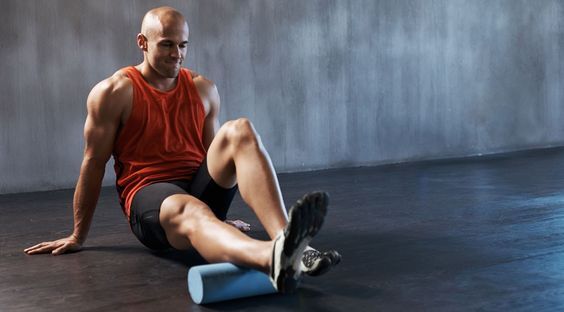
7. Use a foam roller on the calf, rolling back and forth. Do 10 rolls per set, 3–5 sets, then switch sides.
As you can see, initial self-care is simple. However, if you are unsure or your symptoms do not improve, you can consult Rehab Care Clinic directly. The clinic has rehabilitation physicians and physical therapists who are always available to advise you.
For more information
Address: 423 Phetkasem Road, Bang Wa, Phasi Charoen, Bangkok (inside Kanari Sports Center, before Seacon Bang Khae) ? 061-801-2482 Line ID : @rehabcare

Information provided by
Dr. Apiporn Garnjanagoonchorn (Dr. Ann)
Rehabilitation physician