
Arm swinging: a popular exercise that risks tearing your shoulder tendons
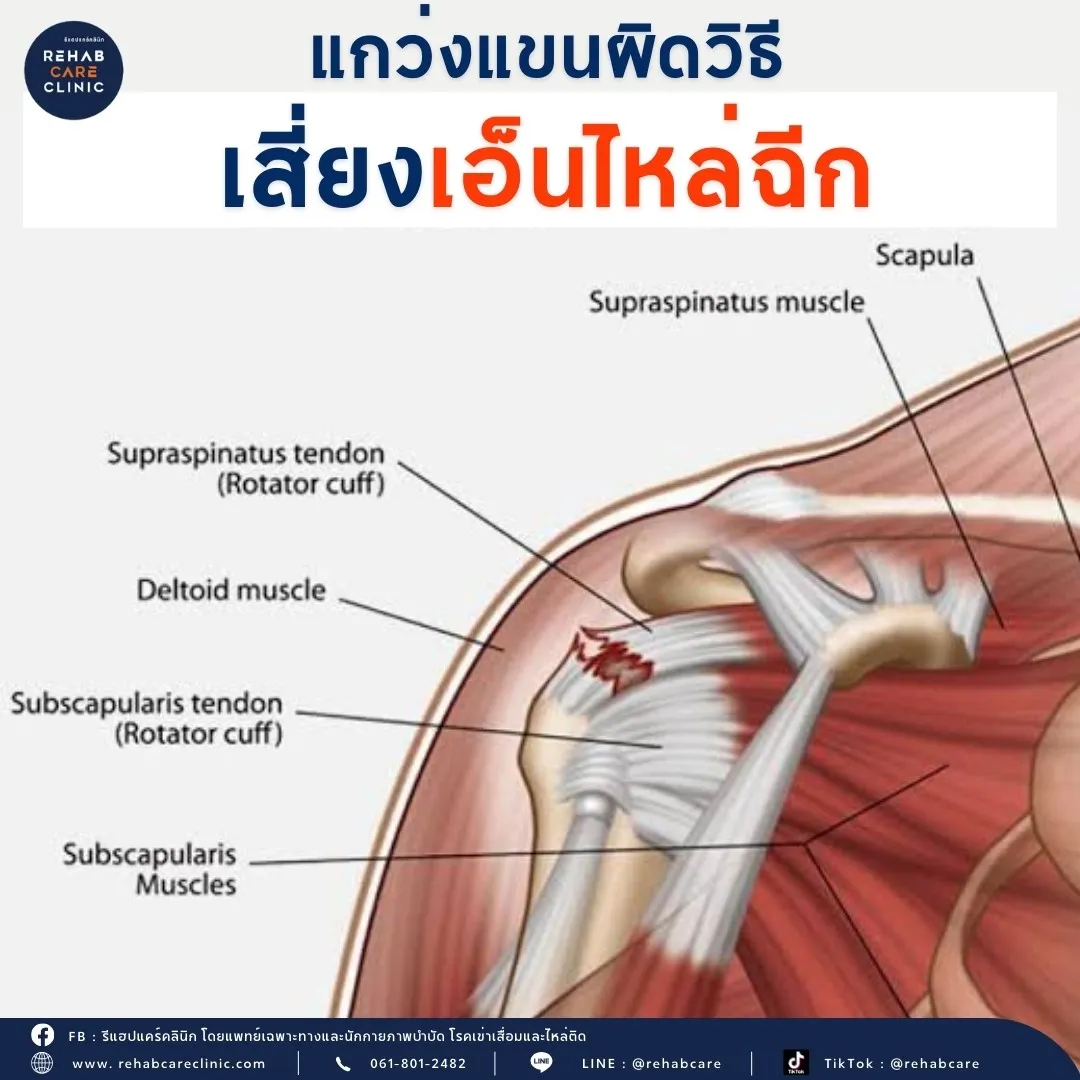
How can arm swinging tear the shoulder tendons? First, let's get to know the structure of the shoulder joint. Our shoulder joint normally consists of 3 bones: the upper arm bone (humerus), the shoulder blade (scapula) and the collarbone (clavicle).
Components of the shoulder joint
1. The joint capsule, which is fairly flexible and can expand or contract as the shoulder moves
2. The rotator cuff, made up of 4 muscles and tendons that stabilise the shoulder joint, act as a pivot and help move the shoulder
3. The bursa, which provides lubrication and prevents friction between the rotator cuff tendons and the top of the shoulder bone (acromion). When the rotator cuff is inflamed or torn, the bursa also becomes inflamed (bursitis) and painful.
Swinging your arms the wrong way, that is, with your palms facing down and swinging “fast, hard and repetitively”, can tear the shoulder tendons because of the incorrect posture. The head of the upper arm bone presses against the socket, so the rotator cuff tendons passing through that area rub against the bone, causing injury and inflammation. If the injury is severe, it may even lead to a rotator cuff tear.
Symptoms seen in people with a rotator cuff tear
1. Shoulder pain at night, or pain when lying on the affected side
2. Inability to move the shoulder fully, or catching pain when moving in certain positions, especially twisting or reaching behind the back
3. Weakness and inability to lift or move the shoulder
Rehab Care Clinic therefore recommends that if you want to swing your arms for exercise, do it with your palms facing up, raising and lowering your arms slowly. This alone will strengthen the muscles around the shoulder joint and reduce the risk of shoulder injury.
The correct way to swing your arms
If you have shoulder pain, the clinic initially recommends avoiding strenuous exercise and movements that trigger pain, and being careful with shoulder movements, for example avoiding lifting heavy objects and reaching, rotating or twisting the shoulder, so that the injury does not get worse. See a doctor promptly for assessment and treatment.
Rehab Care Clinic offers a quick and easy assessment using diagnostic ultrasound (musculoskeletal ultrasound), which shows abnormalities of the shoulder tendons such as inflammation, tears or shoulder degeneration.
Treatment options for shoulder pain and torn shoulder tendons
After assessment and diagnosis, the doctor will plan appropriate treatment, including:
1. Physical therapy This uses various devices, such as focused shockwave therapy (shockwave energy) on the inflamed tendons and muscles to promote good repair and recovery, high-power laser therapy to reduce inflammation and speed up repair of the injured area, and exercise.
2. Ultrasound-guided injections such as concentrated platelet-rich plasma (PRP) or glucose injections (prolotherapy), which make treatment precisely targeted, faster and more effective.
Most importantly, however, be careful with postures that cause pain and swing your arms correctly to avoid injury. If you are already injured, see a doctor promptly for treatment and do not let it become chronic.

Information provided by
Dr. Apiporn Garnjanagoonchorn (Dr. Ann)
Rehabilitation physician