
Back pain radiating down the leg and sharp pain when coughing or sneezing: symptoms of a herniated disc pressing on a nerve
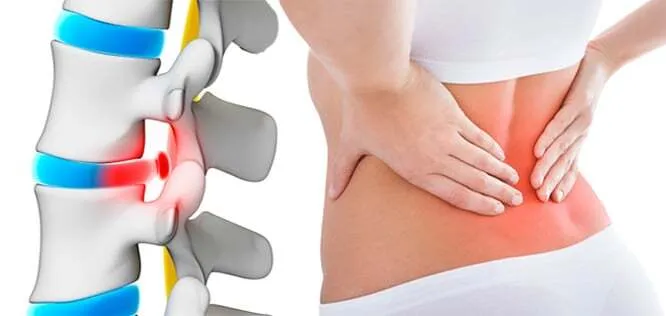
What is a herniated disc pressing on a nerve?
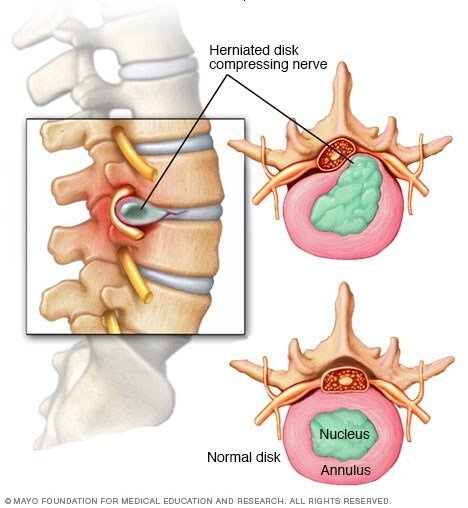
Intervertebral discs act as cushions that support and distribute the load on the spine.
A herniated disc occurs when the outer layer of the disc (Annulus fibrosus) tears, allowing the gel-like inner part (Nucleus pulposus) in the centre to push out and press on a nerve (Nerve root). This can cause pain and numbness radiating down the leg.
Who can get a herniated disc pressing on a nerve?
- It is most common between the ages of 21 and 50.
- It is more common in men than in women.
- 90% of cases occur in the lower back.
- Causes include bending over to lift heavy objects, driving for long periods, frequently bending forward and back, twisting, and accidents.
Patients usually see a doctor because of...
- Back pain radiating down one leg
- In more severe cases, numbness or weakness in the leg or foot
- In some severe cases, back pain radiating down both legs, numbness and weakness in both legs, inability to pass urine, and constipation. These require prompt surgery to prevent permanent disability.
- Pain when coughing, sneezing or straining
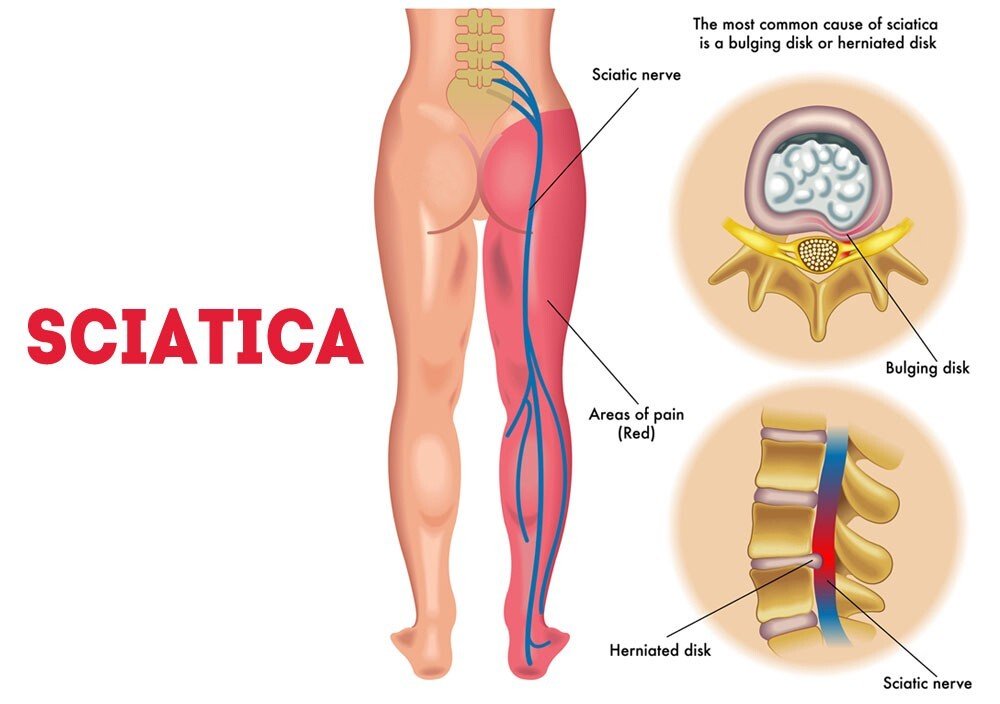
90% of patients improve without needing surgery
Non-surgical treatment
- Painkillers / muscle relaxants
- Injections
- Physical therapy
How can physical therapy help patients with a herniated disc pressing on a nerve?
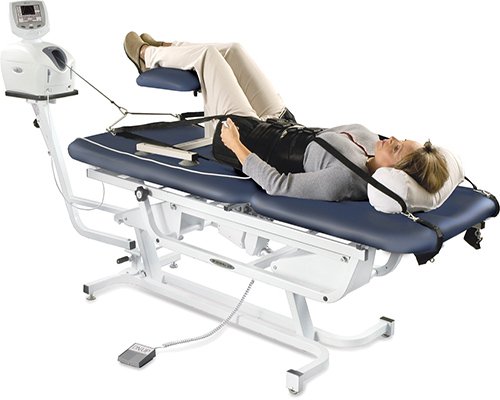
- Spinal traction using a traction machine helps the disc move back into place by gently separating the vertebrae, which reduces the pressure on the disc.
- Pain relief using physical therapy equipment
- Core muscle strengthening combined with breathing exercises, with treatment and guidance from a physical therapist
Basic self-care
1. Apply a warm compress to the painful area for about 15–20 minutes, morning and evening.
2. Starting position: lie on your front, then slowly prop yourself up on your elbows at 90 degrees while keeping your hips on the floor. Hold for 10–15 seconds. Repeat 10 times, then gradually increase the time.
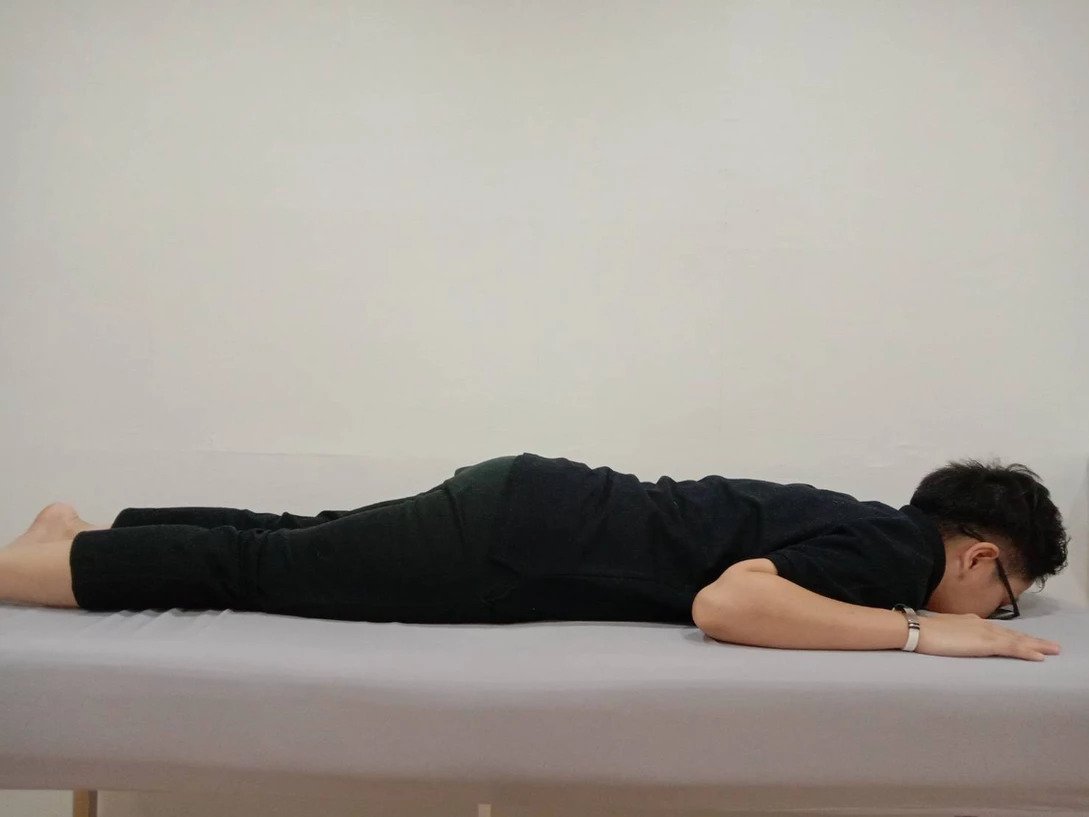
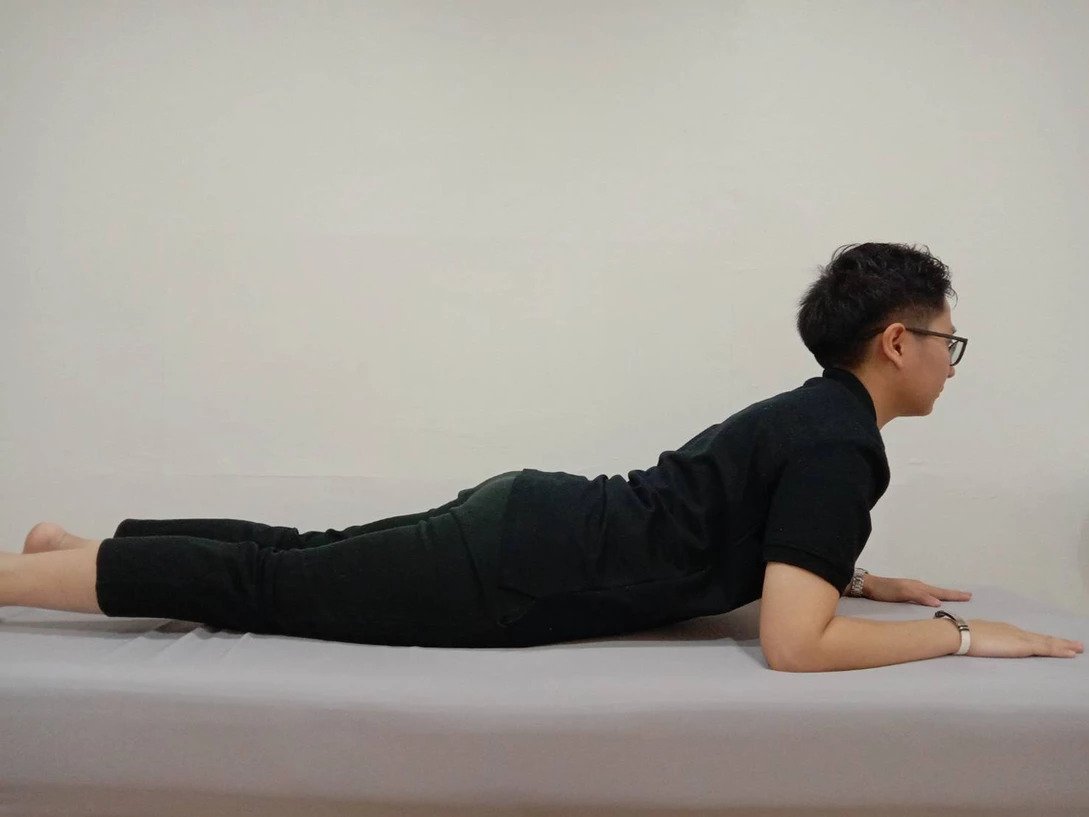
3. Starting position: lie on your front, then slowly push yourself up with your elbows straight while keeping your hips on the floor. Hold for 10–15 seconds. Repeat 10 times, then gradually increase the time.
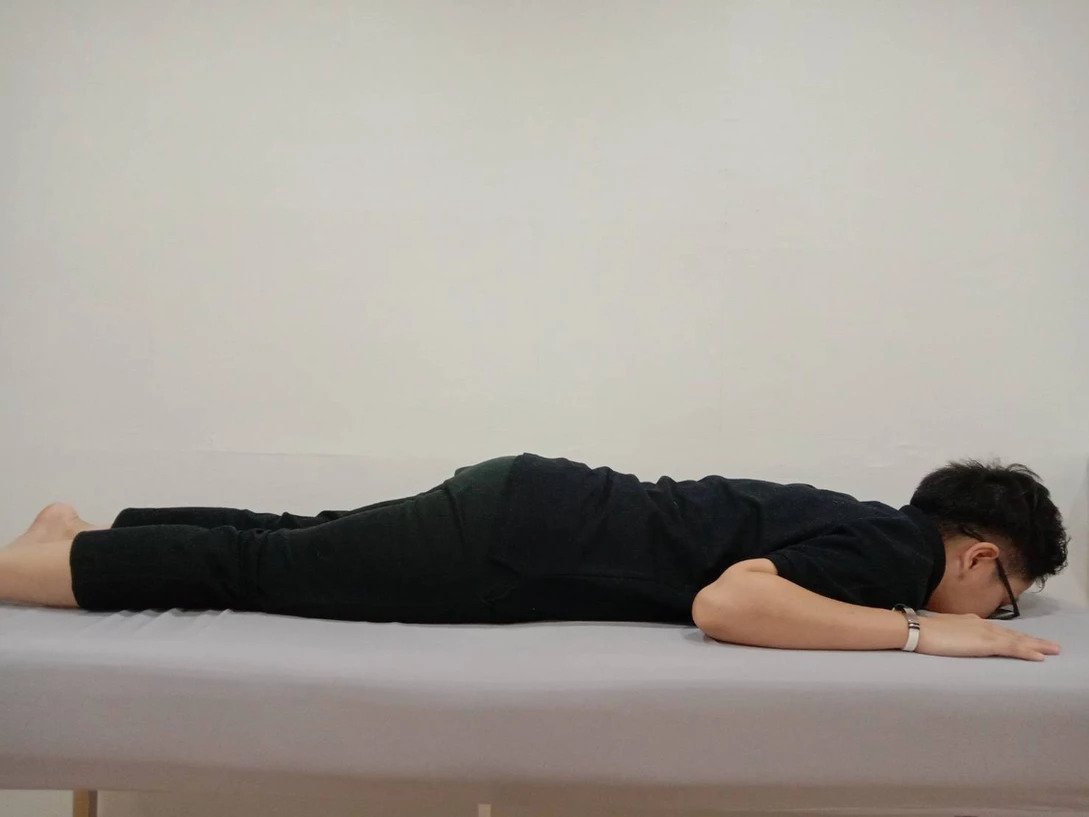
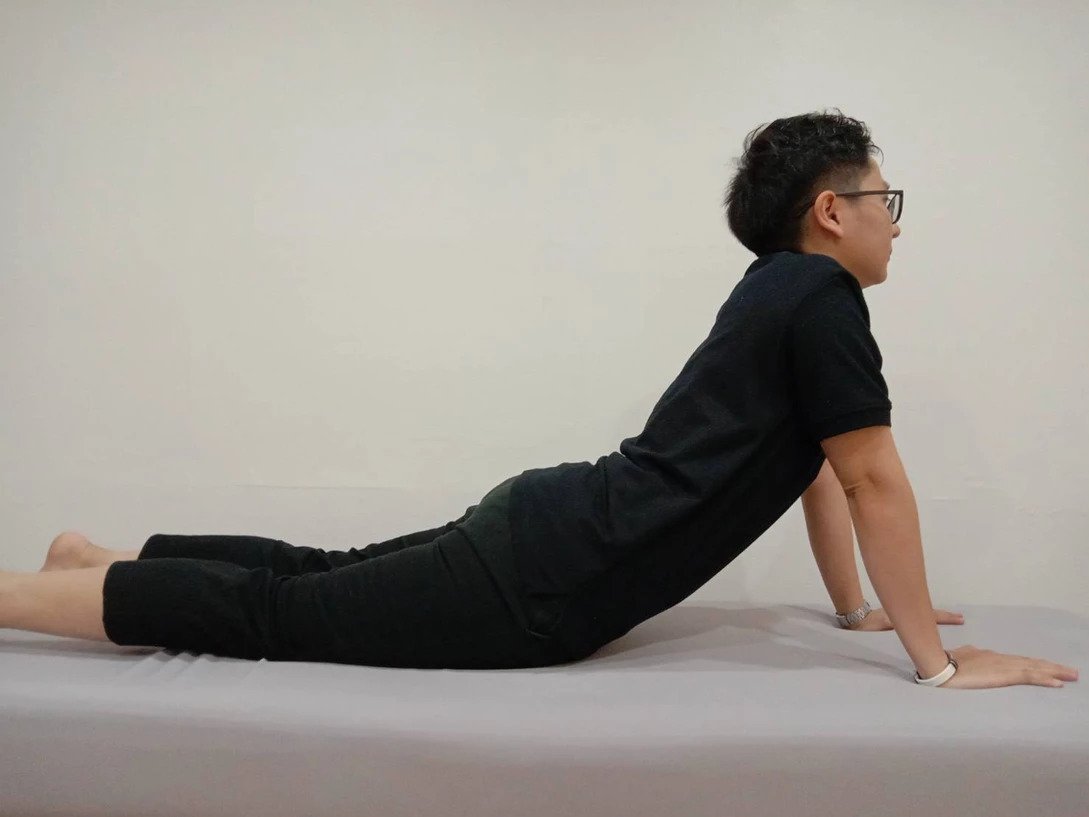
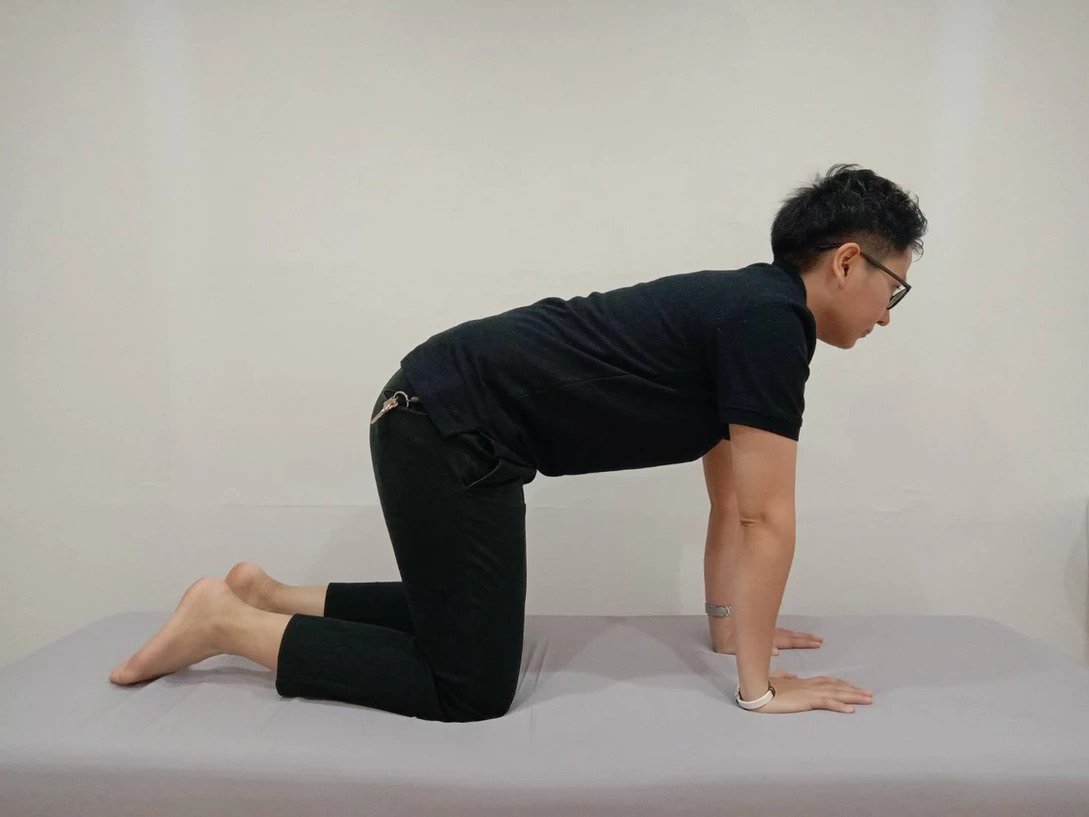
4. Starting position: on all fours. Slowly arch your back upwards and lower your head while breathing in. Then slowly curve your back downwards, lowering your stomach as close to the floor as possible and lifting your head while breathing out. Do 10 repetitions per set, 2–3 sets.
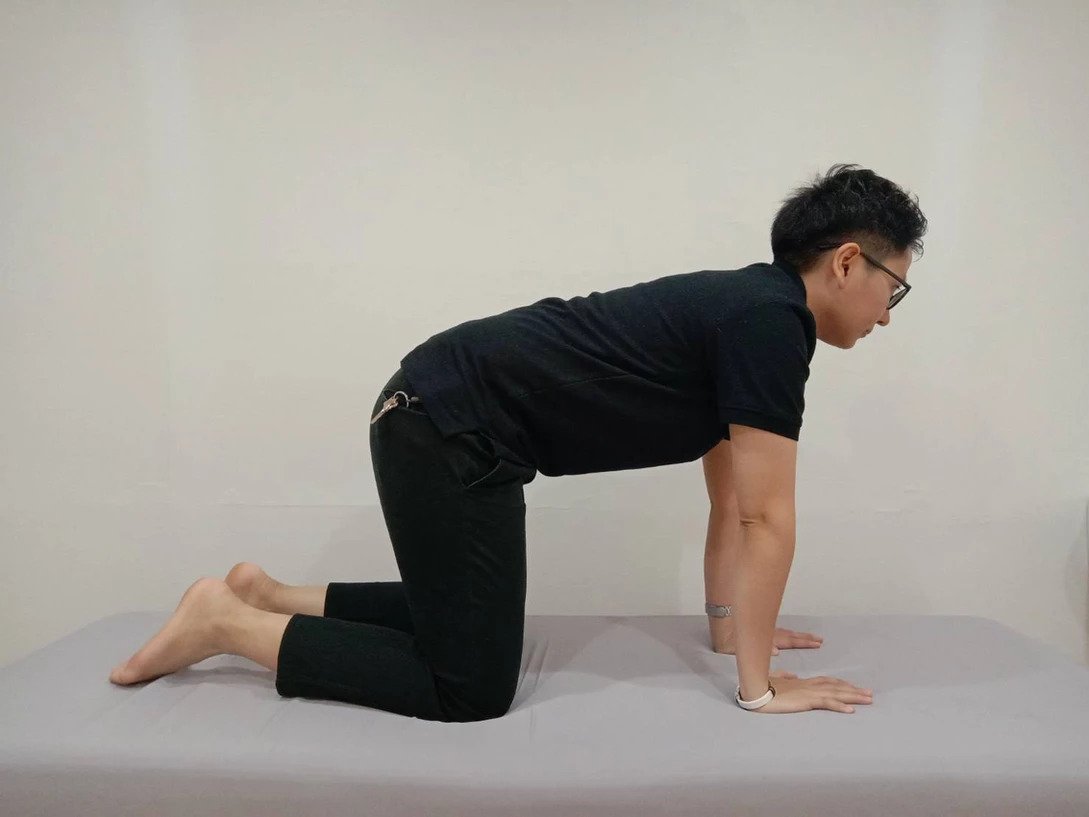
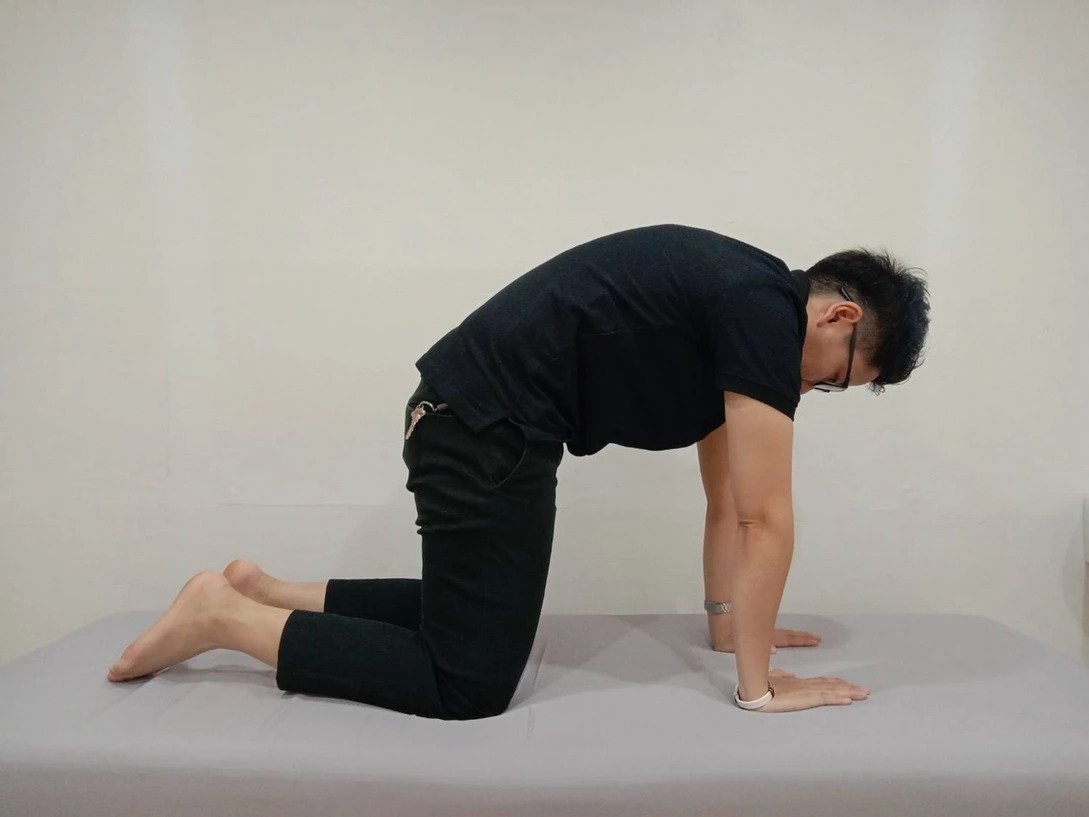
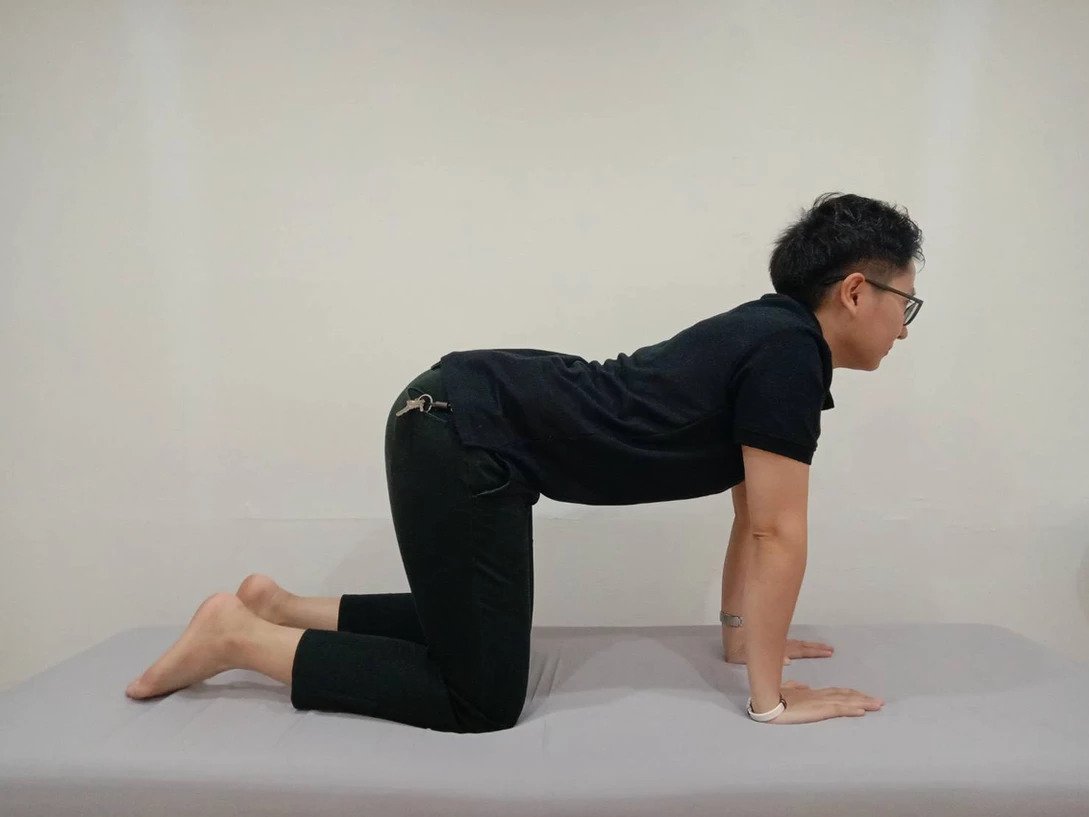
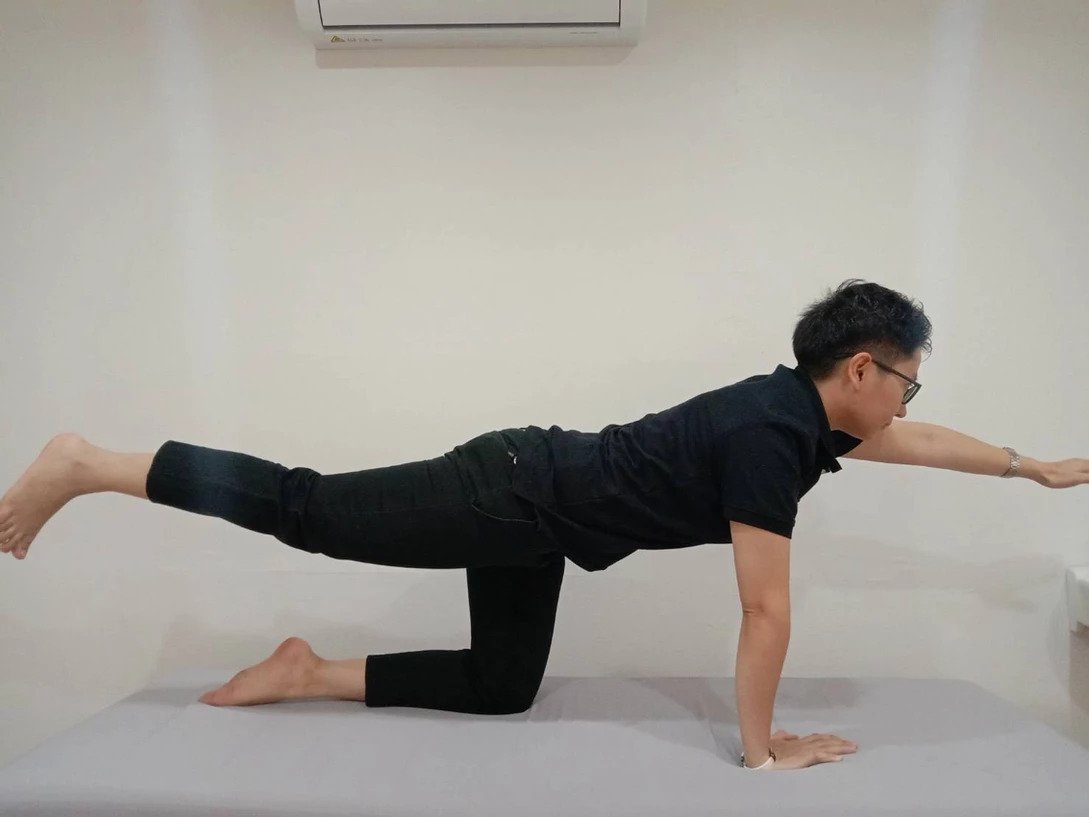
5. Starting position: on all fours. Slowly raise your left arm in front of you and extend your right leg behind you. Hold for 10–15 seconds, then slowly return to all fours. Repeat 10 times, then switch sides.
Even after a herniated disc has improved or healed, it can herniate again. Self-care is therefore essential to prevent these symptoms from returning in the future: exercise your core muscles and take care with driving for long periods, and with regularly bending, twisting or lifting heavy objects.
If you have any questions, you can consult Rehab Care Clinic directly. The clinic has rehabilitation physicians and physical therapists who are always available to advise you.
For more information
Address: 423 Phetkasem Road, Bang Wa, Phasi Charoen, Bangkok (inside Kanari Sports Center, before Seacon Bang Khae) ? 061-801-2482 Line ID : @rehabcare

Information provided by
Dr. Apiporn Garnjanagoonchorn (Dr. Ann)
Rehabilitation physician