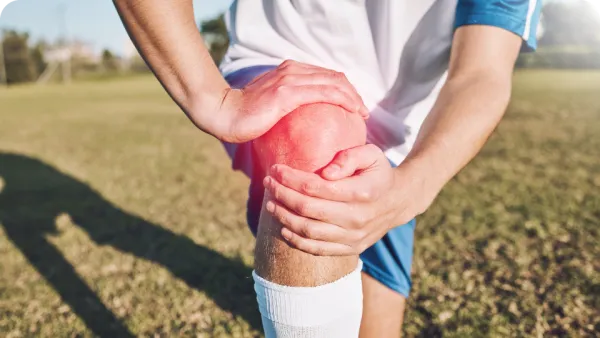

Does sitting on the floor with your knees bent for long periods really cause knee pain?
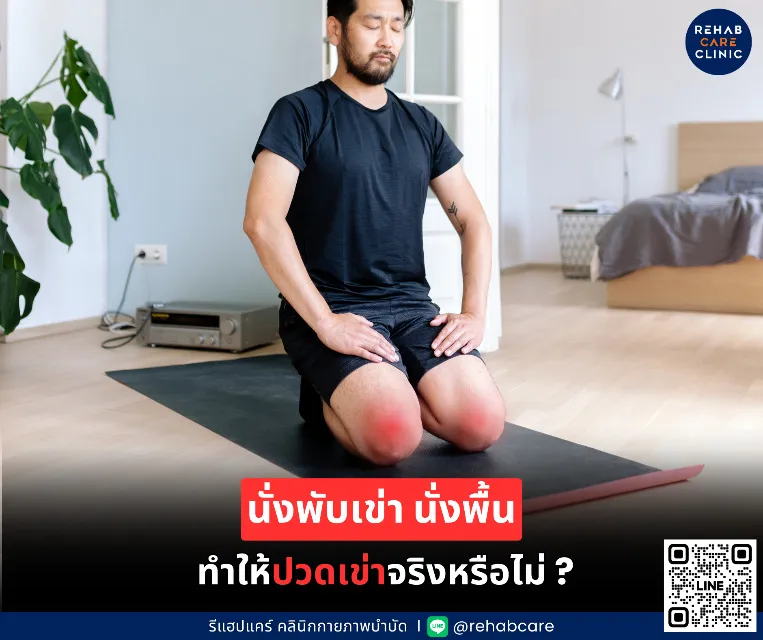
Kneeling occasionally for short periods generally does little harm to the body. But did you know that some sitting positions, if used often, may speed up knee osteoarthritis? For example:
* Sitting cross-legged
* Sitting with legs folded to one side
* Kneeling
* Squatting
* Sitting with your knees bent and tucked under the chair
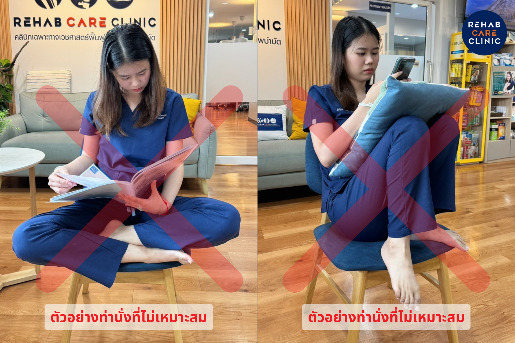
Image: Examples of unsuitable sitting positions
These positions put a load of up to 5–10 times your body weight on the knee joint surfaces, causing the cartilage on the joint surfaces to wear away faster and increasing the risk of knee osteoarthritis and subsequent knee pain.
Knee pain from sitting with the knees folded comes from pressure on the joint surfaces, which causes repeated friction in the knee until it wears down, followed by inflammation around the knee. It is not only sitting with the knees folded that puts you at risk of knee pain, but also sitting in the same position for a long time. Staying in one position for a long time reduces blood flow to various areas, which can make the muscles and tendons around the knee tense and tight. When combined with weakness in the surrounding muscles, such as the hip, thigh or calf muscles, this further increases the pressure inside the joint and can also cause inflammation of the muscles around the knee.
Avoiding sitting with your knees folded, or sitting in the same position for long periods, will therefore help reduce the risk of knee pain and knee osteoarthritis.
Preventing knee pain from sitting
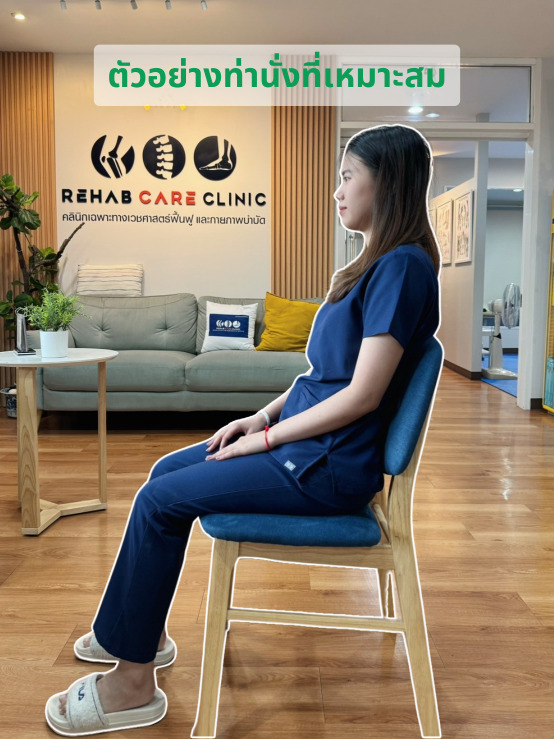
Image: Examples of suitable sitting positions
1. Sit correctly
Sit on a stable chair with your hips and knees bent at about 90 degrees and both feet flat on the floor, or use a footrest so your feet are not left dangling off the floor.
2. Get up from your chair every hour
This stops the muscles of your back, hips and knees from working in the same position for too long, helps reduce muscle tightness and also improves blood circulation.
3. Stretch and exercise regularly
Stretch your hip and thigh muscles regularly to reduce tightness, and exercise the hip and thigh muscles to strengthen them and prevent injury.
4. Apply heat to the knee and the muscles around it
To help relax the muscles around the knee, you can use a warm compress for about 20–30 minutes every day.
If the pain persists or gets worse, we recommend consulting a doctor for a physical assessment and correct, appropriate treatment.
By Phatthridaphon (Gift), PT
Reference
* https://www.healthline.com/health/sitting-on-knees
* Demura S, et al. (2005). Effect of Japanese sitting style (seiza) on the center of foot pressure after standing.https://www.jstage.jst.go.jp/article/jpa/24/2/24_2_167/_pdf/-char/ja

Information provided by
Dr. Apiporn Garnjanagoonchorn (Dr. Ann)
Rehabilitation physician