

Exercises for back pain
On exercise for back pain
It is well known that back pain is one of the most common complaints today. Today we will look at how to look after yourself and exercises to relieve back pain.
Core muscle exercises to reduce back pain
Many people have recurring back pain because their core muscles are weak, which means they cannot cope with various activities and easily injure their spine. So we will recommend some exercises to strengthen your core muscles.
First, let's understand the core muscles. The core muscles are the muscles close to the centre of the trunk. They move the spine, enabling activities such as twisting to pick something up or lifting objects. In addition, when you move your arms or legs, the core muscles maintain your posture, keeping the trunk stable and increasing the stability of the spine. Exercises to strengthen the core muscles are therefore important for preventing spinal injuries.
The key core muscles that support the structure of the spine are:
1. Transverse abdominis muscle (deep abdominal muscle)
2. Multifidus muscle (deep back muscle)
3. Diaphragm
4. Pelvic floor (pelvic floor muscles)
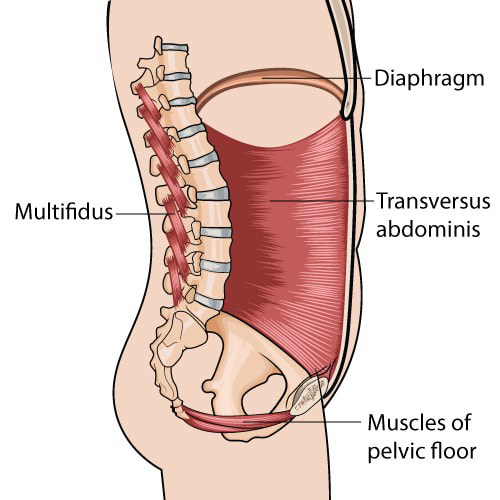
The 4 core muscles
Core stabiliser exercises
1. Dead bug This exercise strengthens the deep abdominal muscle (transverse abdominis) together with breathing in and out, which helps strengthen the diaphragm.
Start by lying on your back with your arms raised straight up and both knees and hips bent at right angles to the floor. Breathe in, then draw in your stomach (tighten your abdominal muscles). Breathe out and lower one arm all the way back until it is parallel to the floor while straightening the opposite leg. Then return to the starting position while breathing in. Alternate sides, 10 times.
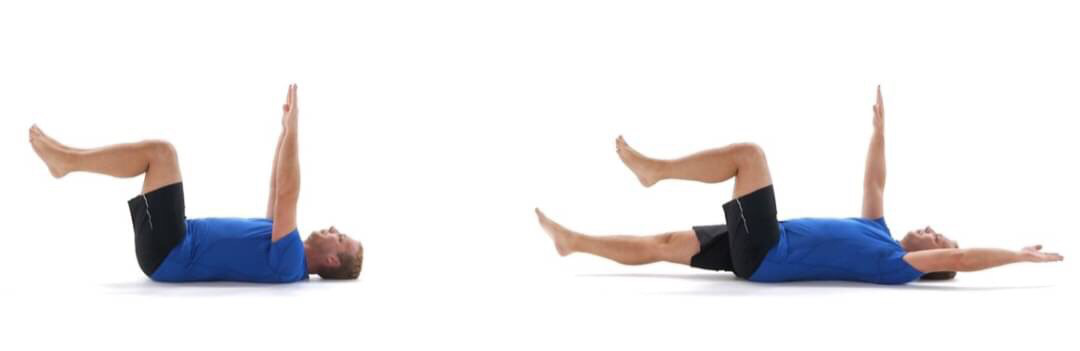
The dead bug exercise
2. Bird dog This exercise strengthens the deep back muscle (multifidus).
Start on all fours, with your arms and legs at right angles to the floor, your hands shoulder-width apart and your knees hip-width apart. Extend one arm forward and the opposite leg backwards, keeping your back and hips straight and still. Then slowly bring the arm and leg back to the starting position. Alternate sides, repeating 10 times.
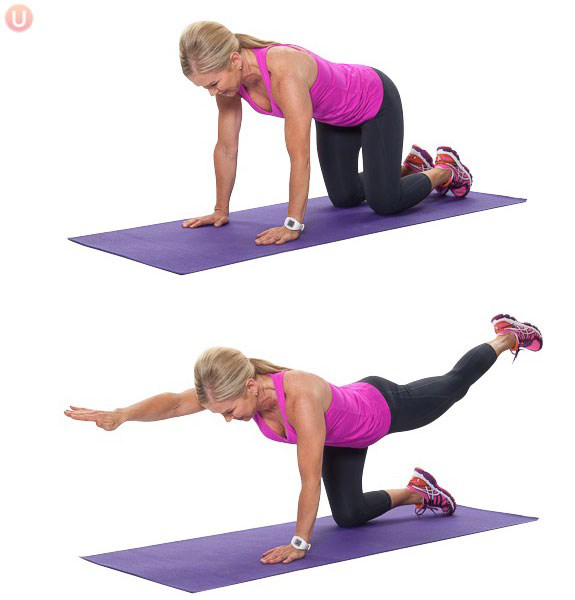
The bird dog exercise
3. Bridging This exercise strengthens the buttock, hip, abdominal and lower back muscles, as well as the pelvic floor muscles.
Start by lying on your back without a pillow, with your legs hip-width apart and both knees raised, so that your hips are bent about 40 degrees and your knees about 80 degrees. Squeeze your buttocks, tighten your abdominal muscles and lift your hips until your back is straight. Try to control the movement so you do not shake; if you shake, you can lower the height. Hold for 10 seconds, then return your hips to the starting position. Repeat 10 times.
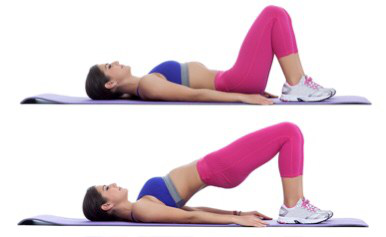
The bridging exercise
4. Elbow plank This is probably an exercise many people know and have done. It strengthens all the core muscles.
Lie face down with your elbows bent at 90 degrees on the floor, then lift your body so that your trunk and hips are straight and parallel to the floor. Hold for 15–30 seconds and repeat 3–5 times.
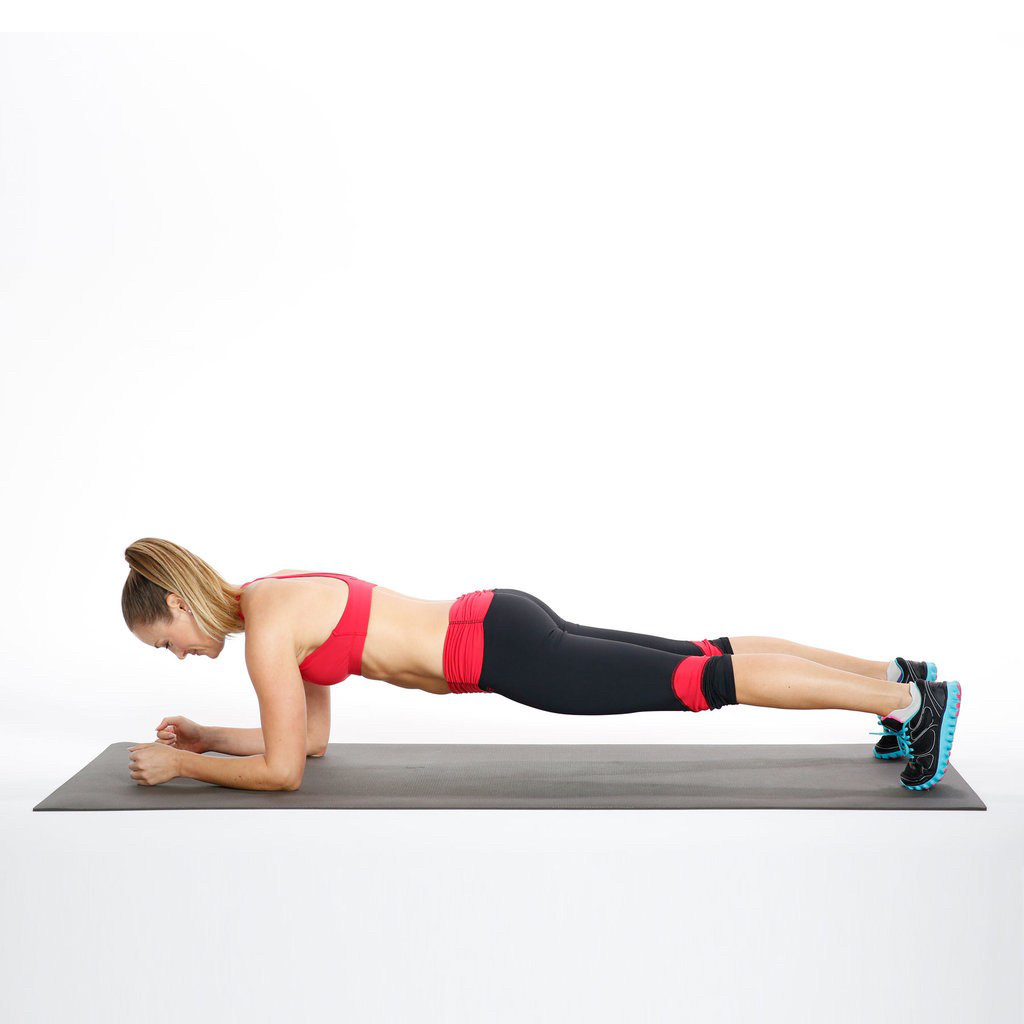
The elbow plank exercise
Lifting objects is one of the leading causes of back pain. Today we will show you the correct way to lift so that you do not hurt your back.
How to lift without hurting your back
The principles of correct lifting, to prevent muscle inflammation, reduce pain, reduce twisting of the spine and prevent a herniated disc, are as follows:
1. When lowering yourself, bend your knees and keep your back straight so that your spine stays aligned and the pressure on the spinal discs is distributed evenly.
2. When standing up, use your leg muscles to push yourself up slowly. When lifting, use your back muscles as little as possible. This transfers the weight of the object to both thighs and reduces the load on the back muscles.
3. If an object is up high, do not reach for it. Use a step stool so that you lift at the level of your trunk, reducing injuries from bearing weight in the wrong position.
4. If an object is beside you, do not twist your body to lift it. Turn to face the object instead to prevent a herniated disc.
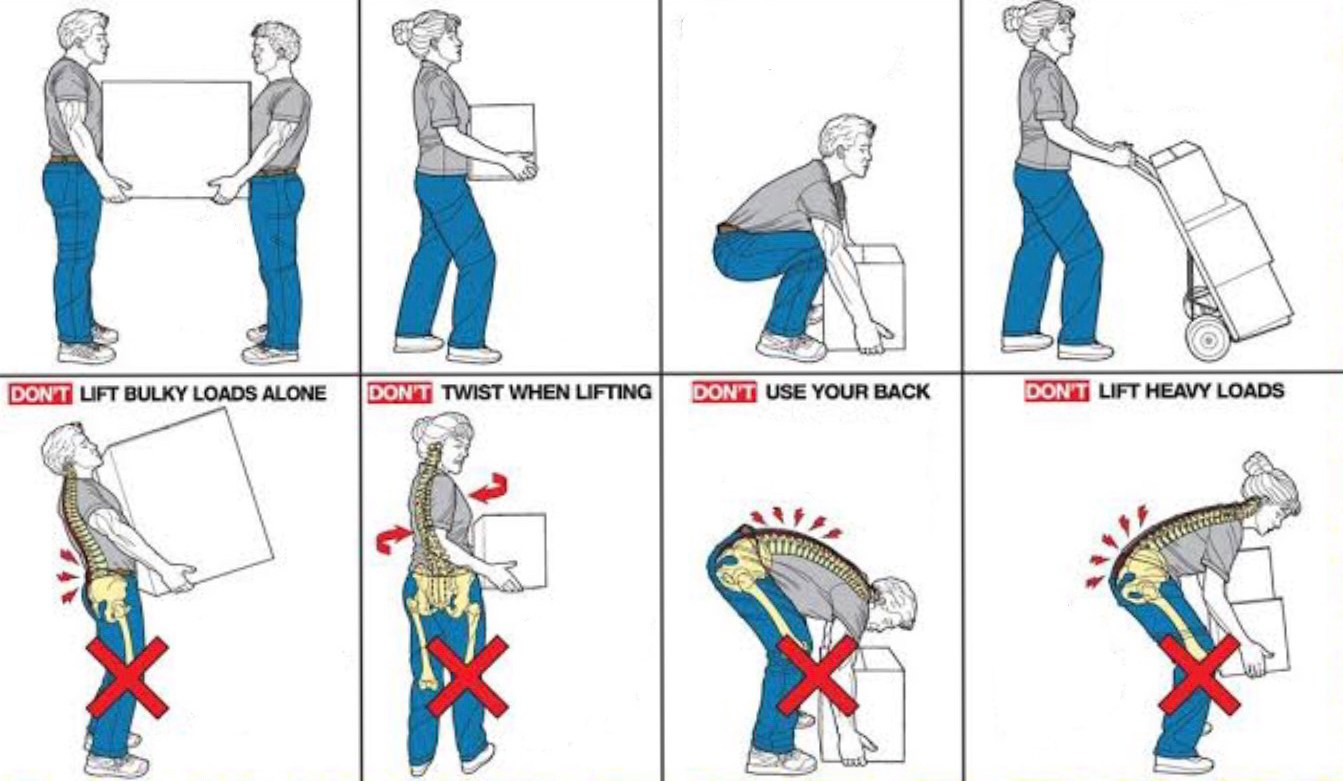
The correct way to lift objects to prevent back pain
As well as lifting, your sleeping position is another factor that can make back pain worse after waking up. This article recommends sleeping positions that help reduce back pain on waking.
Morning back pain can be fixed with the right sleeping position
With the current situation, most working people are doing a lot of WFH, and many feel neck, shoulder and back pain. You have tried exercising, stretching, adjusting your working posture, and adjusting your desk and working environment, but still do not feel as much better as you should. Try adjusting your sleeping position, because each sleeping position affects pain and our body. In fact, there is no single universal, perfectly correct sleeping position, but the most comfortable sleeping position is one in which the joints are not compressed and the muscles are not stretched or contracted for long periods. A suitable sleeping position allows the body to rest fully and to recover and repair itself fully. Here are some sleeping positions we recommend; try adapting them to suit yourself and your symptoms.
Lying on your back
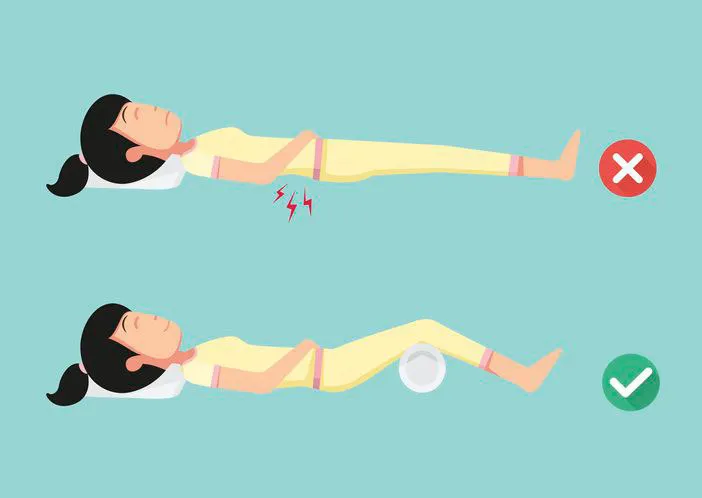
Choose a health pillow that is neither too thick nor too thin, with a curve that supports the neck. This keeps the cervical spine aligned and reduces contraction of the neck muscles, which can cause neck and shoulder pain. You should also place a small pillow under both knees to reduce the curve of the lower spine and reduce contraction of the back muscles, which can cause back pain.
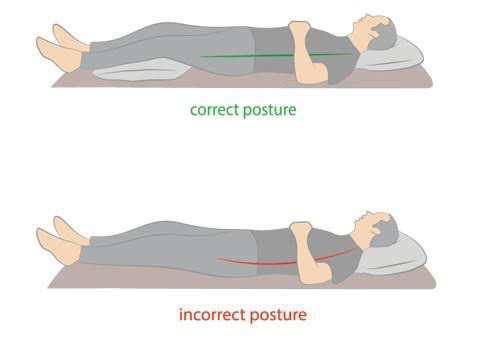
The correct position for lying on your back to reduce back pain
Lying on your side
Choose a health pillow that is neither too thick nor too thin, with a curve that supports the neck. This keeps the cervical spine aligned and reduces contraction of the neck and shoulder muscles, which can cause neck and shoulder pain. Try not to lie on your arm; you can hug a pillow or bolster to reduce pressure on the shoulder joint, which can cause shoulder tendinitis. Also rest your leg over a bolster or hold a pillow between your legs to reduce twisting of the spine and hip joints, which can cause back or hip pain.
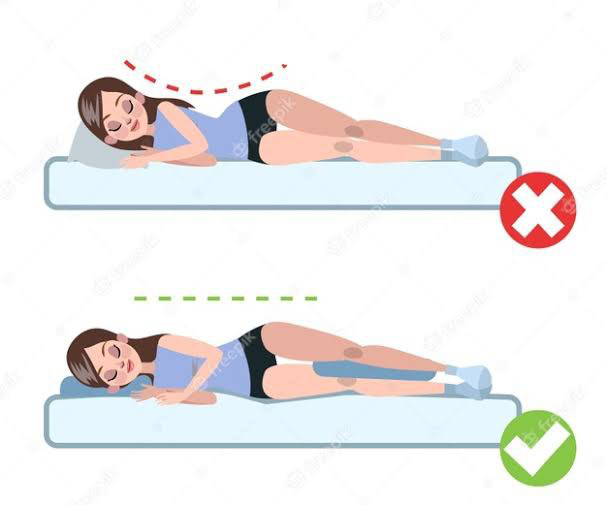
The correct position for lying on your side to reduce back pain
Lying face down
Many people like to sleep face down or need to sleep face down. Use a pillow under your neck and upper chest, turn your face to one side, and place a pillow under your hips or lower abdomen. This keeps the spine at a normal level and reduces contraction of the back muscles, which can cause back pain. For some people with a herniated disc compressing a nerve, sleeping in this position can help the herniated disc gradually move back into the space between the vertebrae.
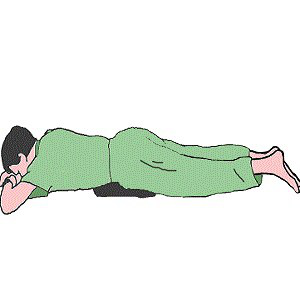
The correct position for lying face down to reduce back pain
For anyone who gets back pain from driving for long periods, the clinic recommends the following driving posture to reduce back pain.
How to sit when driving without neck or back pain
An unsuitable driving posture can lead to various aches and pains. So today we will show you how to adjust your driving position correctly to help reduce pain and fatigue.
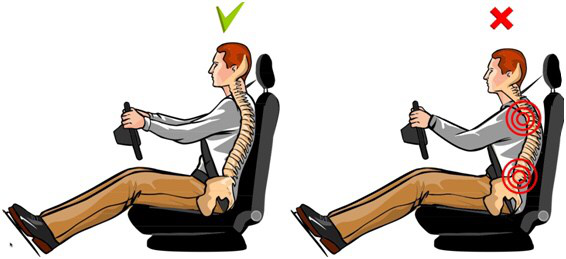
The correct driving posture to prevent back pain
1. Sit fully back in the seat
Sit with your bottom all the way back in the seat. If there is a gap behind your back, place a small cushion there to help reduce muscle tension.
2. Adjust the seat distance
Adjust the seat to suit your knees so that they are only slightly bent. This keeps your leg muscles from tensing too much and lets you press the brake and accelerator comfortably.
3. Steering wheel hand position
The best position is at 3 and 9 o'clock, with your arms only slightly bent and not raised above shoulder level. This position helps reduce fatigue in the upper arms.
4. Adjust the backrest
Recline the backrest slightly, to about 110 degrees, so that you are at a suitable distance from the steering wheel. This helps reduce back aches.
5. Adjust the headrest
Adjust the headrest to the right height for your head to reduce impact and neck injury in an accident. It also helps reduce aches and excessive tension in the neck.
6. Wear your seat belt correctly
The one thing you must never forget is to wear your seat belt every time for safety. It reduces body movement and, in an accident, can greatly reduce the severity of injuries.
Try these tips for a correct driving posture. As well as reducing aches and pains so that you can drive for longer, they also help you drive more safely.
A common question is: once you know you have a herniated disc, how should you sit or lie to prevent the disc from herniating further and to help reduce back pain? The clinic recommends the following useful article.
Back pain from a herniated disc, whatever position you lie or sit in: what should you do?
Back pain radiating down the leg from a herniated disc causes problems with everyday activities, even sitting or lying down. Today we will recommend some postures to prevent and relieve the pain.
1. Sitting position
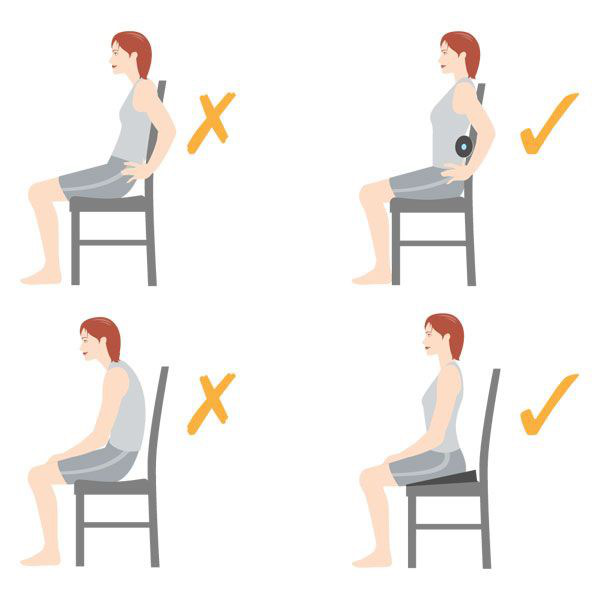
People with a herniated disc often have more pain when sitting, because sitting increases the pressure on the discs. You should therefore avoid sitting for the time being, or if you cannot avoid it, wear a back support belt while sitting. Sit with your bottom fully on the chair and your back straight against the backrest, with a small cushion supporting your lower back. Bend your knees at a right angle with both feet flat on the floor. Distribute your body weight evenly over both buttocks and hips, and do not lean to one side, as this puts your weight on one side and tilts the spine, which can make back pain worse. Most importantly, change position often and do not sit for long periods without a break.
2. Sleeping positions
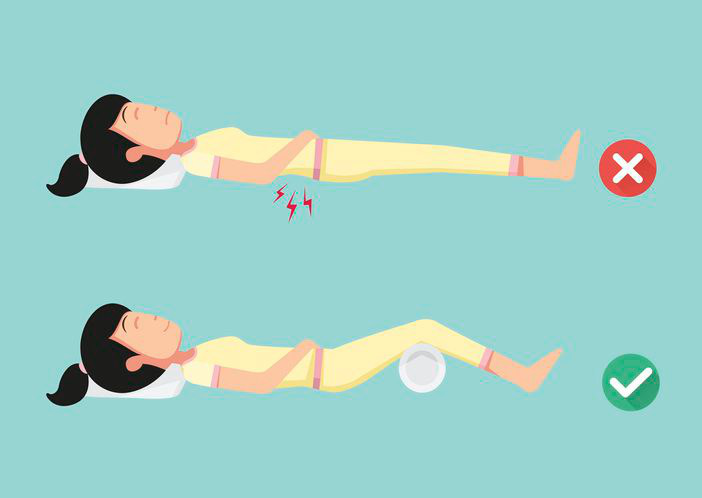
Lying on your back: Lie on your back with a small pillow under your knees so that your hips are slightly bent. This helps reduce arching of the lower back and prevents the back muscles from tensing up and becoming painful.
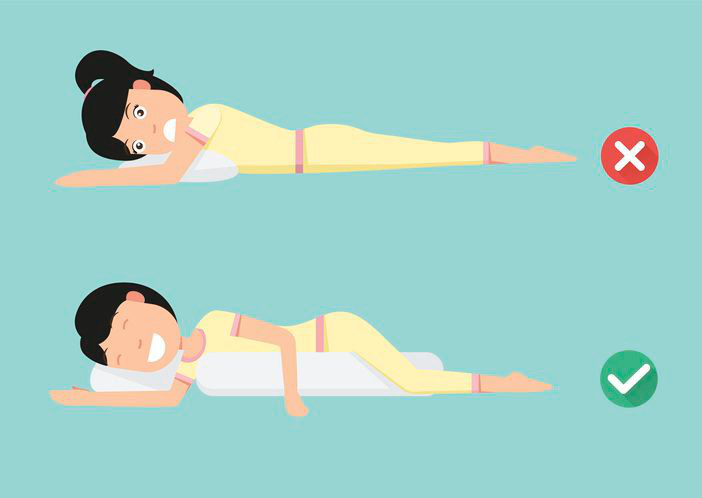
Lying on your side: Lie on either side with the lower leg straight and the upper leg slightly bent at the knee and hip, resting on a bolster; or place a bolster between your legs with both knees and hips bent, keeping your back straight. This position keeps the spine aligned, helping to reduce pain and pressure on the discs.
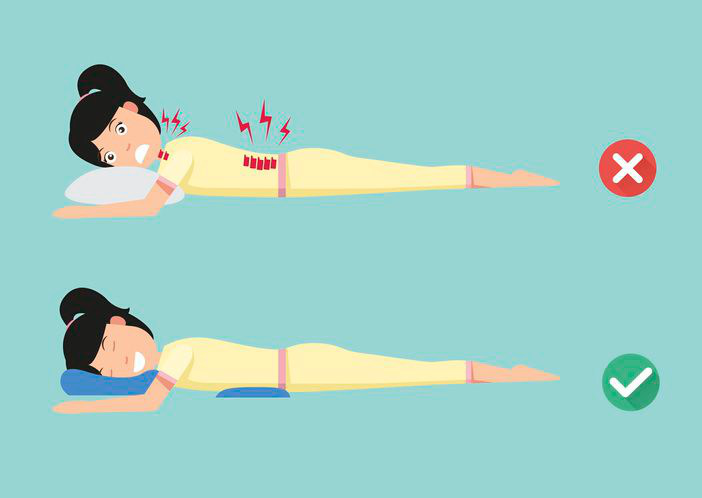
Lying face down: This is the best position for people with a herniated disc. To start with, if lying face down increases the pain, place 1–2 pillows under your stomach so that the lumbar spine is slightly flexed, reducing pressure on the nerves. Stay lying face down until the back pain eases, then gradually reduce the number of pillows until you can lie flat on the floor. This position can help the herniated disc gradually move back into place with the help of gravity, which helps reduce pain radiating down the leg.

Information provided by
Dr. Apiporn Garnjanagoonchorn (Dr. Ann)
Rehabilitation physician