

Frequent neck pain? Watch out for cervical spondylosis
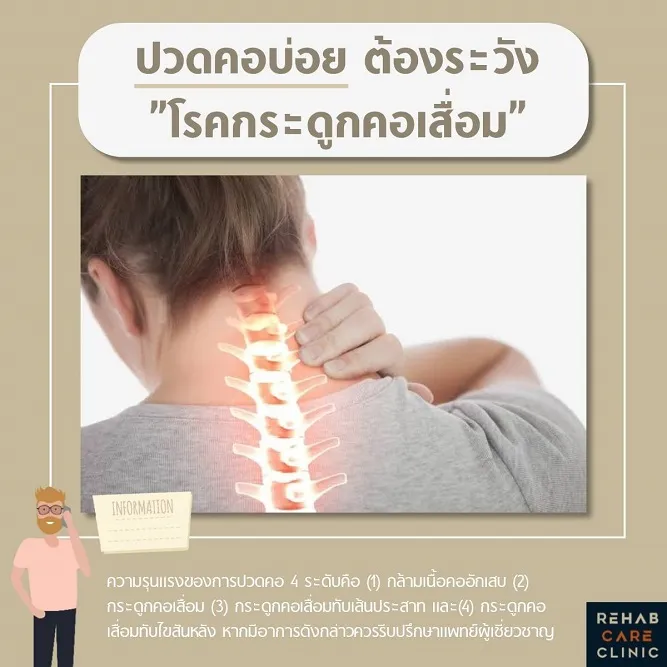
#StiffNeckAndShoulders #NeckPainIsNoJoke It may be a sign of cervical spondylosis (degeneration of the neck spine). Neck pain can progress from chronic muscle inflammation to cervical spondylosis, then cervical spondylosis compressing a nerve, and even cervical spondylosis compressing the spinal cord. Ordinary neck aches, if left untreated, can become a bigger problem than you think.
In this day and age we cannot avoid using mobile phones and computers, which are used widely for things like online selling, online learning and working online. These activities cause neck pain, starting with incorrect postures such as:
1. Sleeping on a pillow that is too high or too low
2. Bending the head down or tilting it up for long periods
3. Working at a computer that is not positioned correctly
4. Writing or reading for long periods without a break
5. Driving for many hours at a stretch
Studies have found that these incorrect postures can cause premature degeneration of the cervical spine. The levels of neck pain are as follows:
1. Neck muscle inflammation: pain and tightness in the muscles around the neck when bending your head to use your phone or sitting for long periods. Symptoms improve when you move and change position.
2. Cervical spondylosis: after sitting at work for long periods you start to feel aches in the back of the neck, upper back and shoulders, with pain radiating to the head and around the eyes.
3. Cervical spondylosis compressing a cervical nerve: pain in the back of the neck, upper back and shoulders, with numbness and shooting pain along the nerve, weakness in the upper arm or hand muscles, difficulty writing, frequently dropping things, and pain radiating from the neck down the arm.
4. Cervical spondylosis compressing the spinal cord: stiffness in the trunk, arms and legs, poor balance, short steps, clumsy hands and frequent falls when walking.
If you start to have these symptoms, you should promptly see a specialist. The doctor will test your muscle strength, balance and limb reflexes to find the cause, make an accurate diagnosis and provide lasting treatment.
Physical therapy treatment for people with neck pain
1. Reducing pain and releasing muscle trigger points
Using focused shockwave therapy, the latest innovation, whose shockwaves can release trigger points; therapeutic ultrasound, which uses heat energy to increase blood flow and repair the injured area; and electrical stimulation to relax the muscles.
2. Reducing muscle inflammation
Using high-power laser therapy, in which laser light energy energises cells and speeds up the repair process for faster recovery.
3. Strengthening the muscles, with exercises designed by a physical therapist to suit the individual.
4. Adjusting behaviour and posture appropriately, with advice and close follow-up from a physical therapist.

Information provided by
Dr. Apiporn Garnjanagoonchorn (Dr. Ann)
Rehabilitation physician