

How to work from home without pain
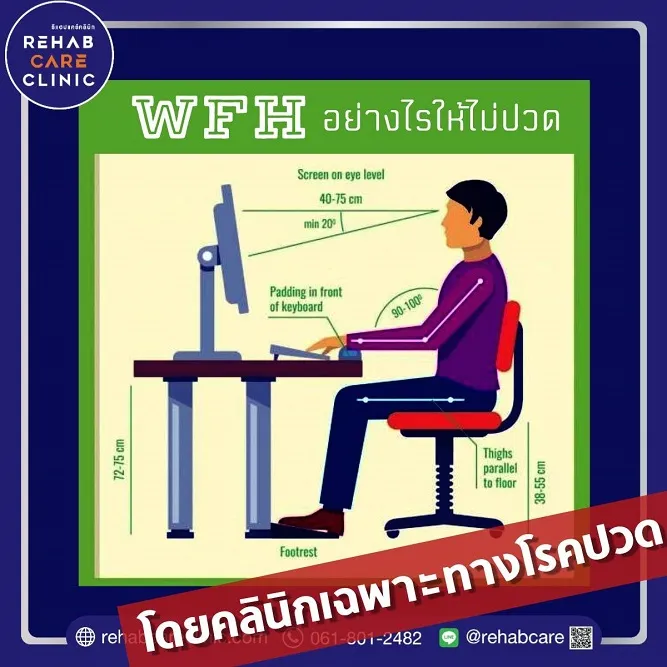
#NeckAndShoulderPainFromSittingAllDay #BackAndButtockPainFromSittingTooMuch Did you know that hip pain can also be a form of office syndrome? With the COVID situation, many people have to WFH, but sitting in the wrong posture for long periods can be a major cause of aches and fatigue without you even realising it. If left to become chronic, it may lead to serious conditions such as a herniated disc, a pinched nerve in the spine or muscles trapping a nerve.
Let's look at the correct sitting posture to help avoid these serious conditions.
1. Head: face straight ahead, without bending your head down or tilting it up too much.
2. Back: sit up straight with your bottom fully on the seat and use a backrest, or place a cushion behind your back to support the curve of your spine.
3. Arms: keep your arms in line with your body, with suitable armrests, and do not raise your shoulders.
4. Elbows and wrists: these should be level with the keyboard and mouse so that the nerves in your hands are not compressed.
5. Knees and hips: your knees should be lower than your hips or at a right angle, and you should sit about 2–3 inches forward from the back of the chair to reduce pressure behind the knees.
6. Feet: place your feet flat on the floor. If your feet do not reach the floor, use a footrest. Do not sit on tiptoe, as this tenses the muscles and leads to pain.
These are only basic tips, however. It is important to change your posture regularly and not to sit working for too long.
If you have any questions or are not sure whether your posture is correct, you can send a photo to the physical therapists at Rehab Care Clinic for an assessment.
For further questions, add us on LINE ID: @rehabcare. #BothClinicBranchesAreOpenAsUsual If you have adjusted your posture and still have pain, do not leave it. Treating it early makes recovery much easier.

Information provided by
Dr. Apiporn Garnjanagoonchorn (Dr. Ann)
Rehabilitation physician