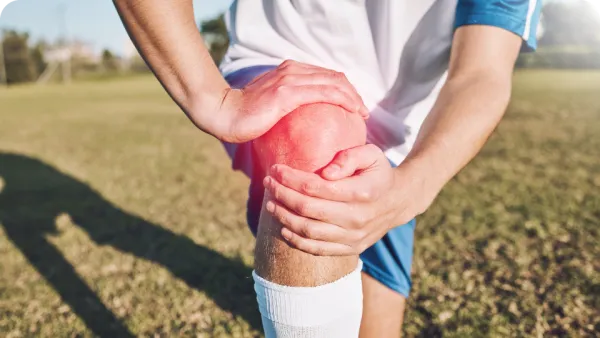

Knee osteoarthritis: what to know if you want to avoid surgery
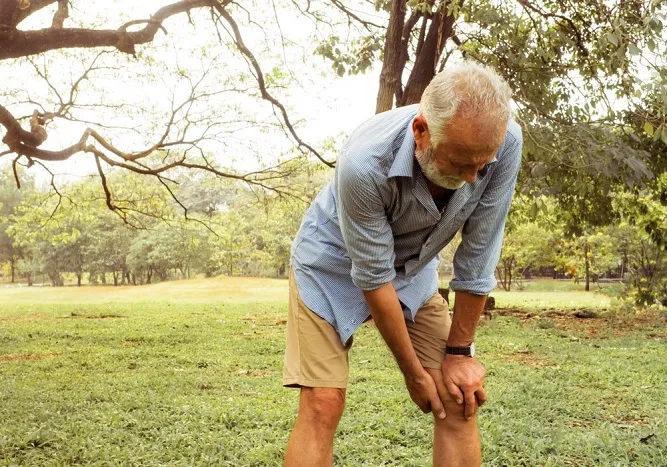
"Knee osteoarthritis" is a condition in which the cartilage that absorbs shock inside the knee joint wears down and deteriorates. As the cartilage surface becomes damaged and progressively thinner, the two bones of the knee joint rub against each other, causing a sharp ache in the joint when you walk and put weight on it. The changes of knee osteoarthritis cannot be reversed, but the degeneration can be slowed.
Let's look at the structure of the knee joint to better understand how the knee works.
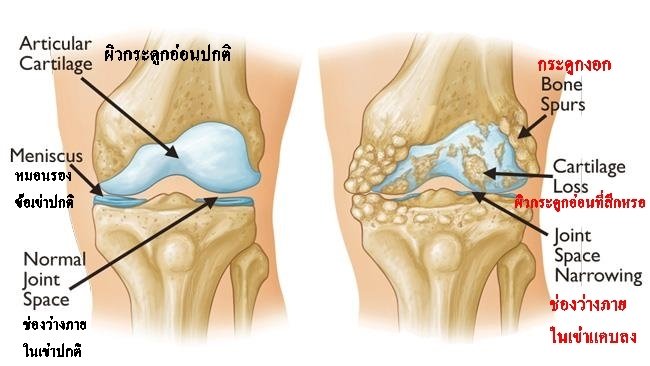
The thigh bone and the shin bone meet to form the knee joint, and cartilage covers both joint surfaces so that the two bones do not rub against each other painfully. The cartilage also helps absorb shock in the knee joint during movement. In addition, the knee joint contains synovial fluid, which acts like a lubricating oil inside the knee.
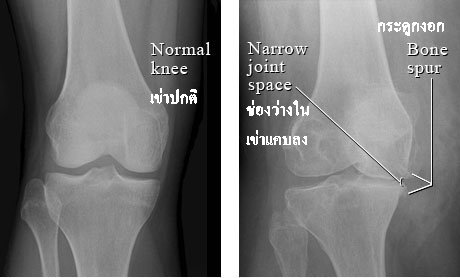
When the cartilage degenerates, the surfaces of the thigh bone and shin bone rub against each other, causing knee pain when walking and bearing weight. When the bone surface is damaged, the body grows new bone to compensate (spurs), but these bone spurs are rough, like stalactites and stalagmites. When the knee moves, the new bone spurs rub against the tissues around the knee, which can then cause pain.
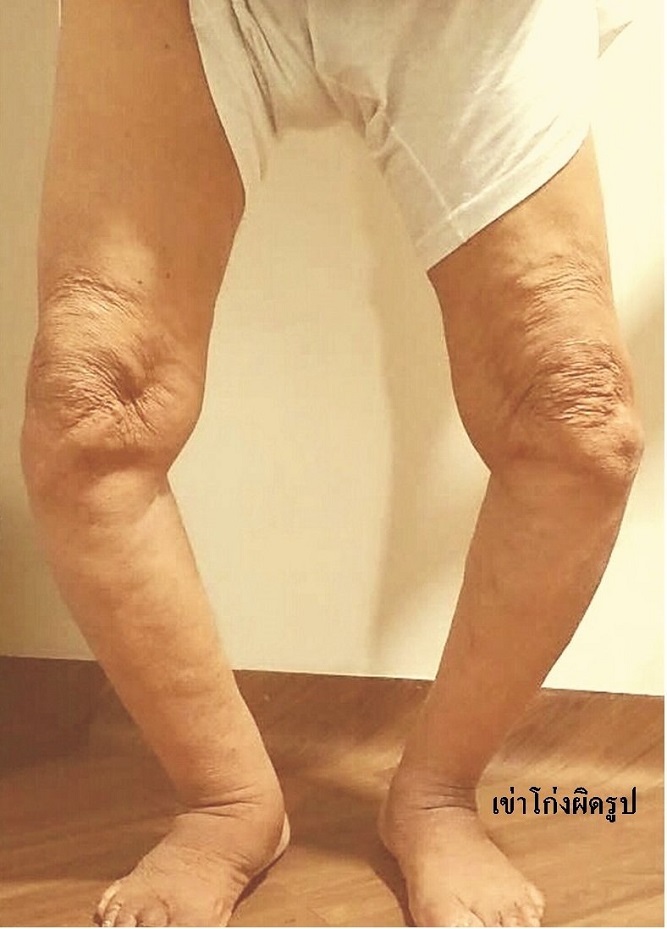
People with knee osteoarthritis also have reduced strength in the muscles around the knee, so the knee joint becomes less stable. Over time, the structure of the knee joint may change, eventually resulting in bow legs.
X-ray images comparing a normal knee joint (left) and an osteoarthritic knee joint (right)
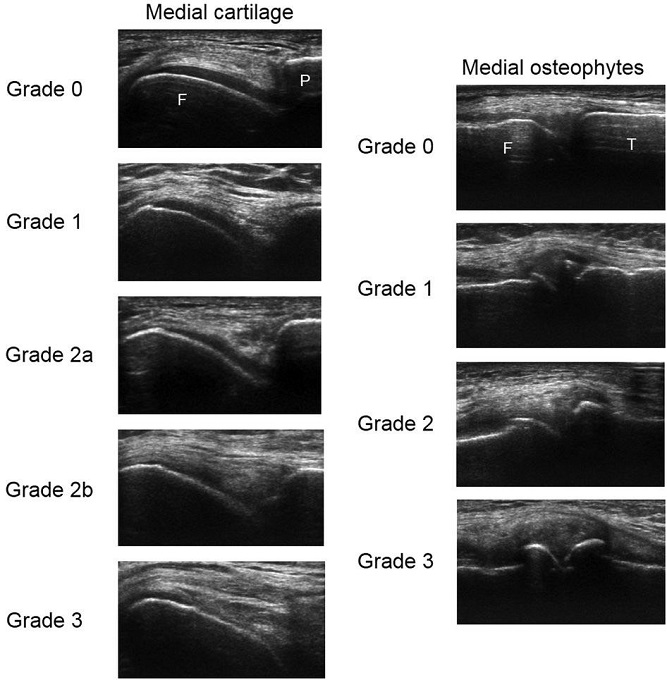
Ultrasound image of the knee joint, showing a reduced distance between the bones (joint space) and newly formed bone spurs
Causes of knee osteoarthritis
1. Ageing, which causes age-related deterioration of the cartilage surface
2. Excess body weight, which increases the load on the knee joints
3. Use, postures and activities that accelerate knee degeneration, such as kneeling, sitting with the legs folded to one side, sitting cross-legged, or frequently going up and down stairs, which put heavy pressure on the knee joints
4. Women after menopause
5. Using the knees incorrectly, such as running every day or playing sports that involve jumping without training the leg muscles
6. A previous direct injury to the knee or previous knee surgery, which makes the knee degenerate faster
7. People with rheumatoid arthritis, gout and similar conditions
Symptoms of knee osteoarthritis
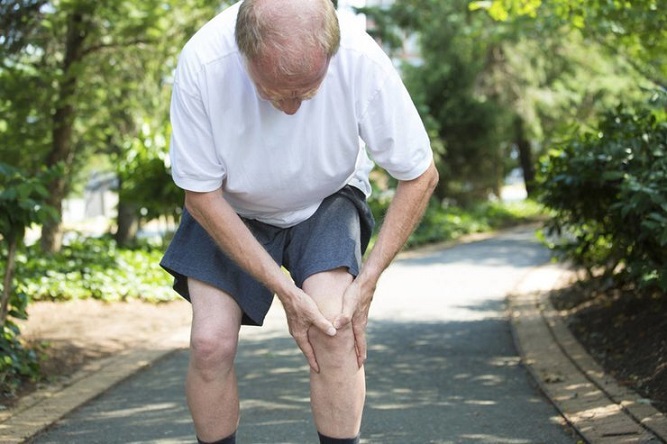
- A sharp ache in the knee joint, particularly on the inner side, when bearing weight or moving, such as walking, going up and down stairs or sitting with the knees bent. Symptoms improve when the joint is rested.
- Stiffness after resting the knee for a long time, especially in the morning after waking up
- Swelling of the knee due to inflammation of the tissues around the joint
- A noise when moving the knee, caused by the bones rubbing together
- When osteoarthritis has been present for a long time, the knee cannot fully straighten or bend, the thigh muscles waste, the knee becomes loose, and the knee becomes deformed into a bow-legged shape, making walking and daily life difficult
How to prevent knee osteoarthritis
- Avoid positions that put pressure on the knee joint, such as sitting with the legs folded to one side, kneeling, sitting cross-legged, squatting, sitting on low chairs, crossing your legs or twisting the knee, going up and down stairs unnecessarily often, and lifting or carrying heavy objects.
- Keep your body weight under control to reduce pressure and impact on the knee joints.
- Avoid sports that involve jumping or heavy use of the knees, such as basketball, running and tennis.
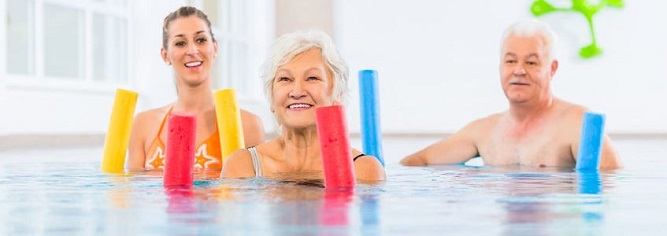
- Exercise and train the muscles around the knee regularly. Recommended forms of exercise are swimming and cycling.
( Read more about swimming for knee osteoarthritis at https://www.rehabcareclinic.com/blog/%E0%B8%9B%E0%B8%A7%E0%B8%94%E0%B8%AB%E0%B8%A5-%E0%B8%87-%E0%B8%9B%E0%B8%A7%E0%B8%94%E0%B9%80%E0%B8%82-%E0%B8%B2%E0%B8%AD%E0%B8%AD%E0%B8%81%E0%B8%81%E0%B8%B3%E0%B8%A5-%E0%B8%87%E0%B8%81%E0%B8%B2%E0%B8%A2%E0%B9%83%E0%B8%99%E0%B8%99-%E0%B8%B3%E0%B8%8A-%E0%B8%A7%E0%B8%A2%E0%B9%84%E0%B8%94-%E0%B8%AD%E0%B8%A2-%E0%B8%B2%E0%B8%87%E0%B9%84%E0%B8%A3 )
Knee exercises for knee osteoarthritis
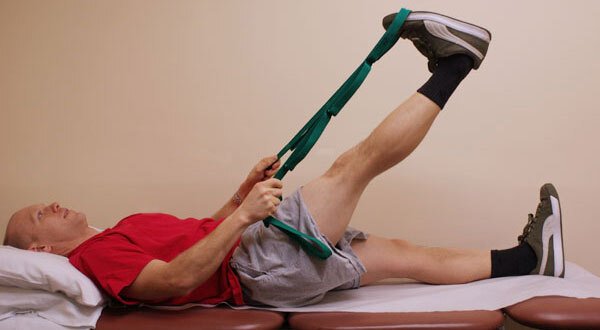
1. Stretching the back of the thigh and the back of the knee
How to do it: Lie on your back or sit up straight and straighten the knee of the leg you want to stretch. Loop a long towel or resistance band around your foot, pull your ankle up and use both hands to pull on the ends until you feel a stretch but no pain. Hold for 10–15 seconds and repeat 5–8 times.
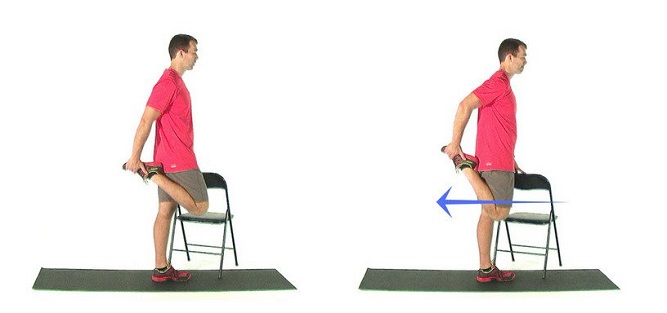
2. Stretching the front of the thigh
How to do it: Stand up straight holding a chair. Bend the knee you want to stretch backwards, with the knee pointing to the floor. Hold the ankle of that leg behind you until you feel a stretch but no pain. Hold for 10–15 seconds and repeat 5–8 times.
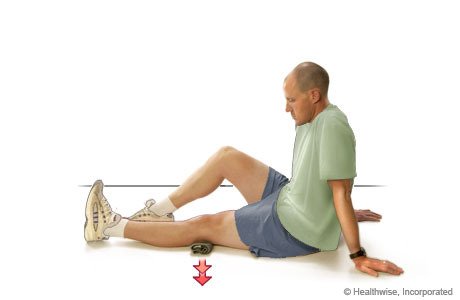
3. Knee muscle exercise
How to do it: Lie down or sit up straight with a rolled towel under the back of your knee. Press your knee down into the towel while pulling your ankle up. Hold for 10 seconds and repeat 10 times, for 3 sets.
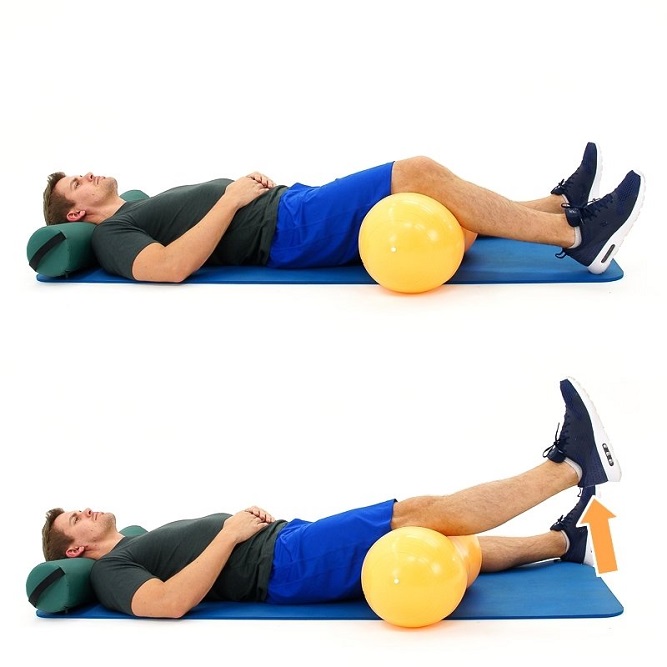
4. Front thigh muscle exercise
How to do it: Lie on your back with a foam roller or a large pillow under the back of your knee. Slowly kick your leg up until the knee is straight while pulling your ankle up. Hold for 10 seconds, then slowly lower your leg back to the starting position. Repeat 10 times, for 3 sets.
5. Front thigh muscle exercise
How to do it: Sit upright on a chair with both feet flat on the floor and your knees bent at 90º. Slowly kick your leg up until the knee is straight while pulling your ankle up. Hold for 10 seconds, then slowly lower your foot to the floor. Repeat 10 times, for 3 sets.
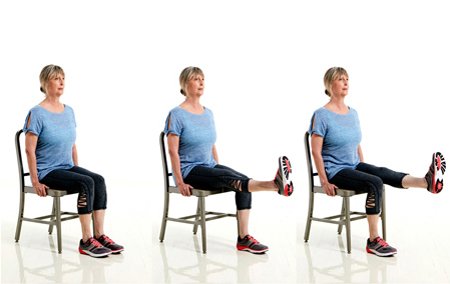
6. Back thigh muscle exercise
How to do it: Stand up straight holding a chair. Slowly bend your knee, lifting your foot up behind you with the knee pointing to the floor, then slowly lower your leg to the floor. Repeat 10 times, for 3 sets.
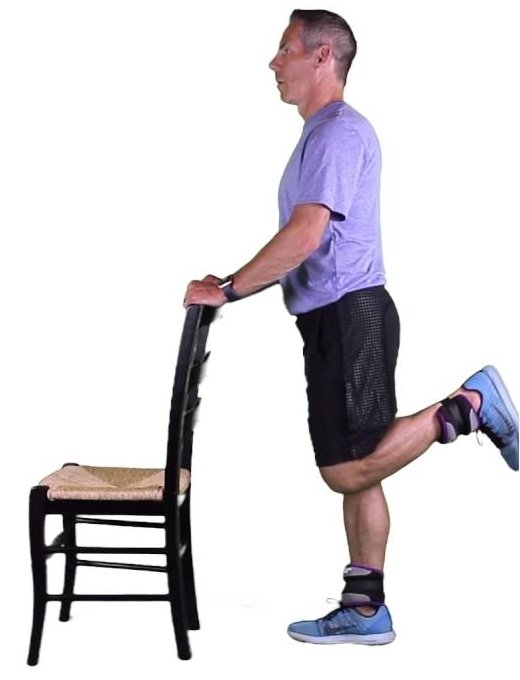
Treatment of knee osteoarthritis
Treatment options include non-surgical treatment and surgical knee replacement. Here we will focus on non-surgical treatment.
Non-surgical treatment
1. Lifestyle changes, such as losing weight, avoiding positions that put pressure on the knee, and exercising to strengthen the knee muscles, e.g. swimming or cycling
2. Painkillers and anti-inflammatory medication
3. Physical therapy to reduce pain and strengthen the thigh muscles
Physical therapy treatment for patients with knee osteoarthritis
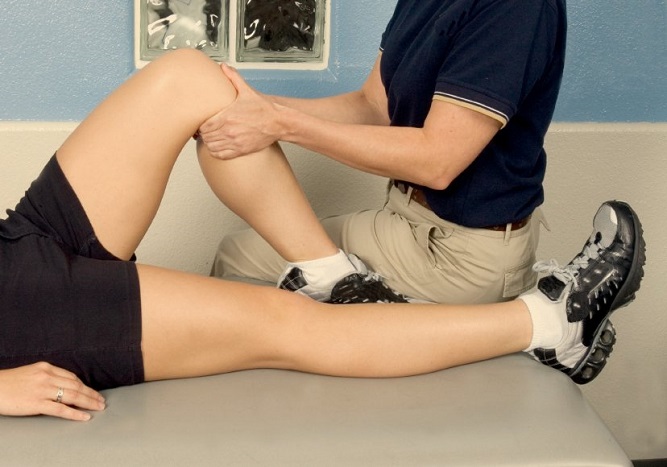
- Joint mobilisation to reduce pain and increase the range of knee bending and straightening (mobilization)
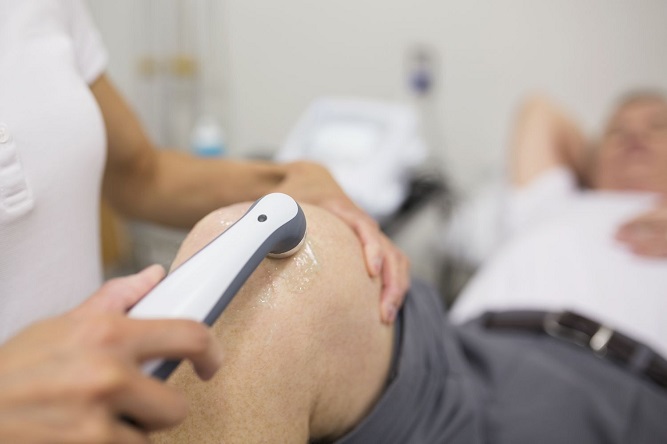
- Ultrasound therapy helps reduce pain and muscle spasm, treats injuries to deep tissues and joints, and accelerates tissue repair by increasing blood circulation and making connective tissue more flexible.
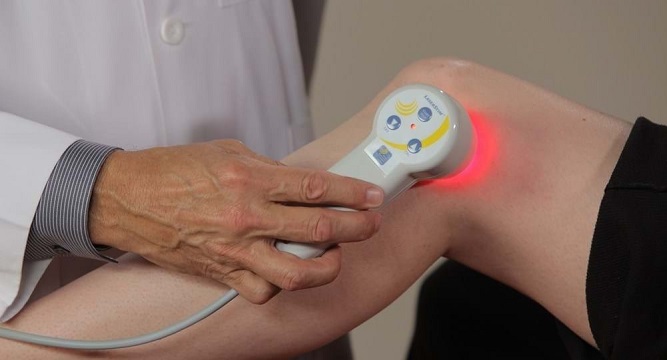
- High-power laser therapy stimulates the nerve endings, inhibiting the pain process and reducing pain, swelling and inflammation. The laser also has a heating effect that dilates the blood vessels, bringing more blood and oxygen to the cells, speeding up the removal of waste products and helping to reduce inflammation. Most importantly, the laser's key strength is boosting cellular energy (ATP) by speeding up oxygen transport and mitochondrial activity within the cells. The increase in ATP allows the cells to repair and recover more quickly.
That's a quick taste of knee osteoarthritis, exercises for knee osteoarthritis and its treatment for today. In the next article, we will look at non-surgical medical treatment options. See you then.
You can contact Rehab Care Clinic for advice on your health problems from our rehabilitation physicians and specialist physical therapists.
For more information, contact "Rehab Care Clinic"
Address: 423 Phetkasem Road, Bang Wa, Phasi Charoen, Bangkok (inside Kanari Sports Center, before Seacon Bang Khae) ? 061-801-2482 Line ID : @rehabcare

Information provided by
Dr. Apiporn Garnjanagoonchorn (Dr. Ann)
Rehabilitation physician