

Pain radiating down the leg from the back of the thigh
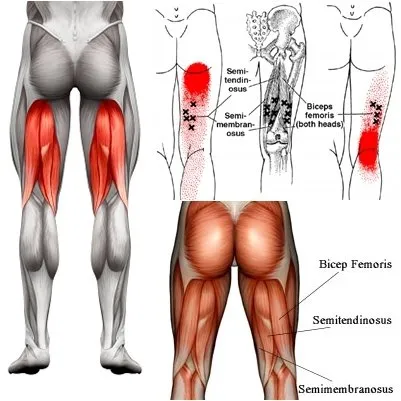
Many people who love exercising may be suffering from pain in the back of the thigh, or pain under the buttock that radiates down the leg. Let's get to know the muscles at the back of the thigh that cause this pain.
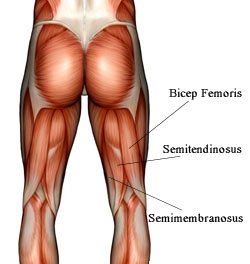
The back of the thigh is made up of 3 muscles known as the Hamstrings: the Semitendinosus , Semimembranosus and Biceps femoris. These muscles run between the hip joint and the knee joint, with their origin at the ischial tuberosity. The hamstrings extend the thigh and bend the knee, especially when walking.
Attachments of the semitendinosus
Tip: it gets its name because it is half tendon and half muscle.
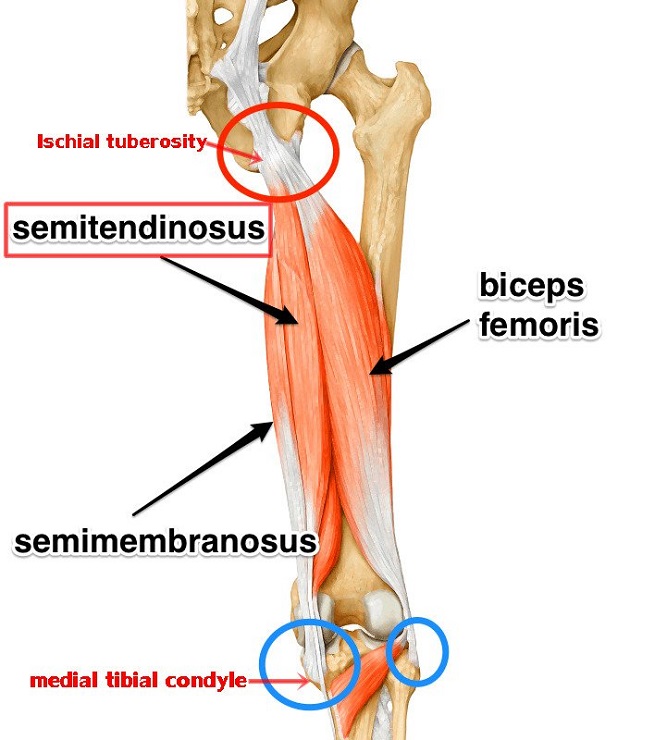
Origin : Ischial tuberosity
Insertion : posterior aspect of the medial tibial condyle
Function : bends the knee and rotates the leg inwards; assists hip extension
(Function: Hip extension, knee flexion, medial rotation of knee in knee flexion)
Attachments of the semimembranosus
It lies deeper than the semitendinosus and is half membrane, half muscle.
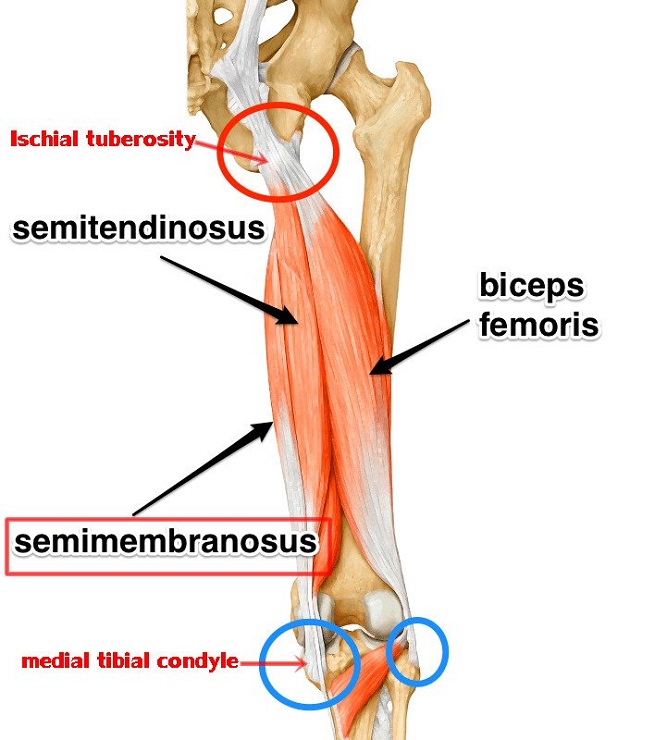
Origin : Ischial tuberosity
Insertion : posteromedial aspect of the tibial condyle
Function : bends the knee, rotates the leg inwards and assists hip extension
(Function: Hip extension, knee flexion, medial rotation of knee in knee flexion)
Attachments of the biceps femoris
The name biceps femoris indicates a spindle-shaped muscle with 2 heads, the long head and the short head. In the lower part of the thigh, the long head becomes a tendon.
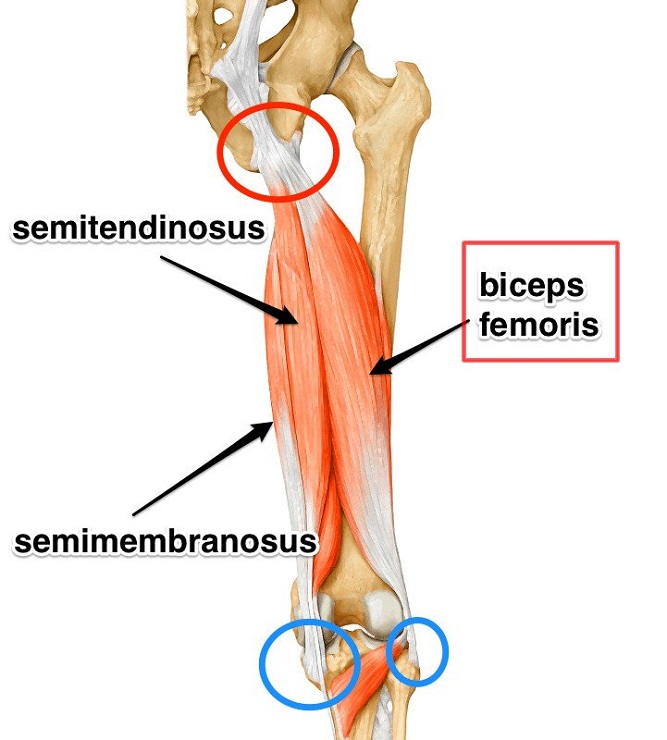
Origin : the long head attaches to the inner edge of the ischial tuberosity and the sacrotuberous ligament. The short head attaches to the linea aspera and the lateral supracondylar line of the femur.
Insertion : head of the fibula
Function : bends the knee and rotates the leg outwards; the long head assists hip extension when the foot is planted on the ground
(Function: Knee flexion, Hip extension, and knee external rotation when the knee is flexed)
Referred pain of Hamstrings
A trigger point (a painful or tender spot) in the hamstrings can cause pain that radiates through the body, as shown in the picture.
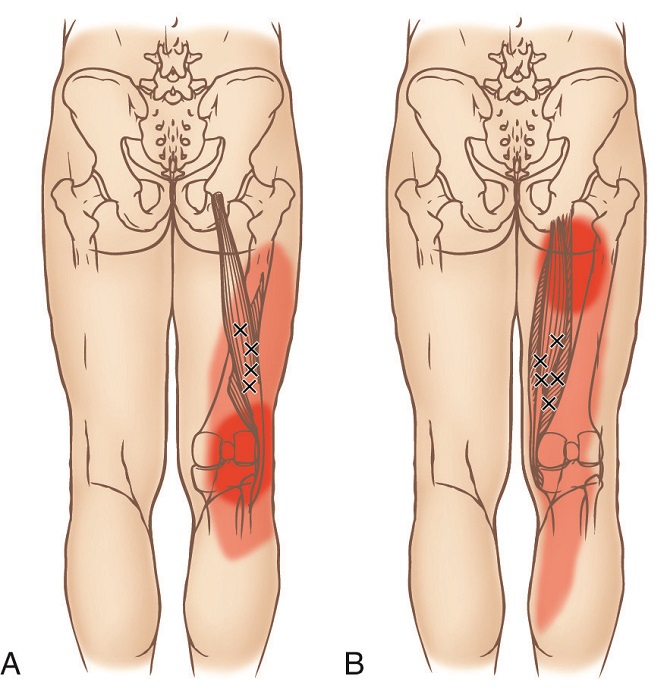
Hamstring strain means an injury to the hamstring muscles in which the muscle fibres tear. It is common in people who run or kick a lot, such as sprinters and high jumpers. A forceful jerk of the muscle can tear its origin at the ischial tuberosity.
In addition, for pain in the back of the thigh, an ultrasound machine can be used to scan the painful area for abnormalities such as calcification of the tendons, muscle degeneration or muscle tears. Ultrasound can also be used to guide injections accurately, precisely on target and with a high level of safety.
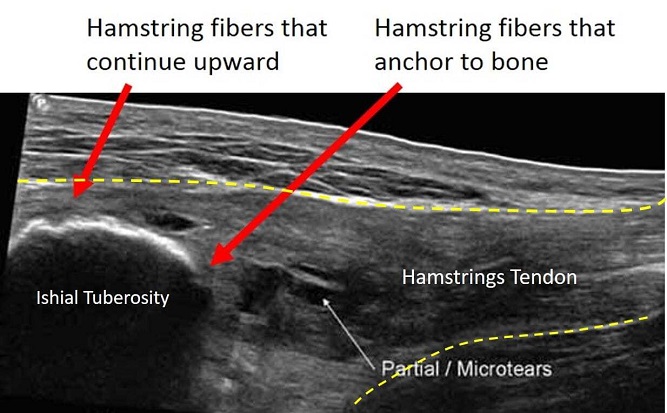
The picture shows an injured hamstring muscle on ultrasound.
Physical therapy treatment
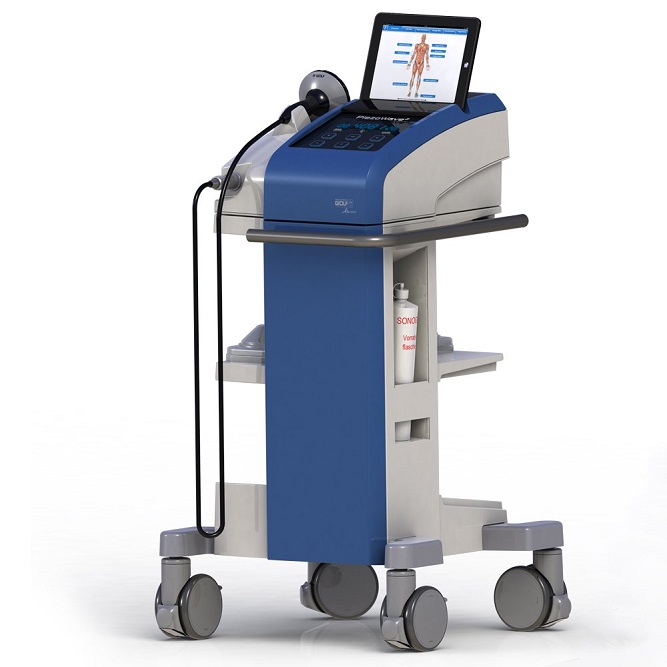
Shockwave therapy
Shockwaves send vibrations into the tissues, particularly areas that are inflamed or injured. This stimulates the injured area, accelerating the body's own repair and regeneration of tissue.
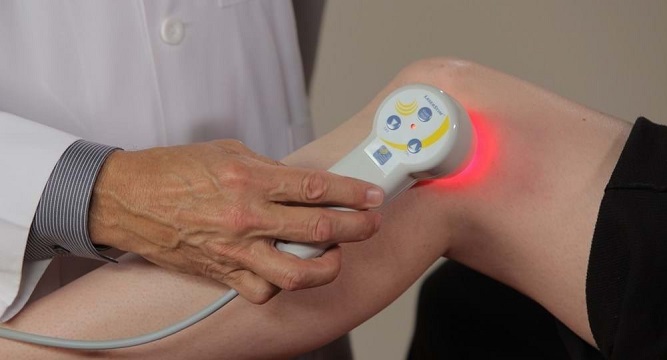
High-power laser therapy
It stimulates the nerve endings, inhibiting the pain process and reducing pain, swelling and inflammation. The laser also has a heating effect that dilates the blood vessels, bringing more blood and oxygen to the cells, speeding up the removal of waste products and helping to reduce inflammation. Most importantly, the laser's key strength is boosting cellular energy (ATP) by speeding up oxygen transport and mitochondrial activity within the cells. The increase in ATP allows the cells to repair and recover more quickly.
Hamstring stretches
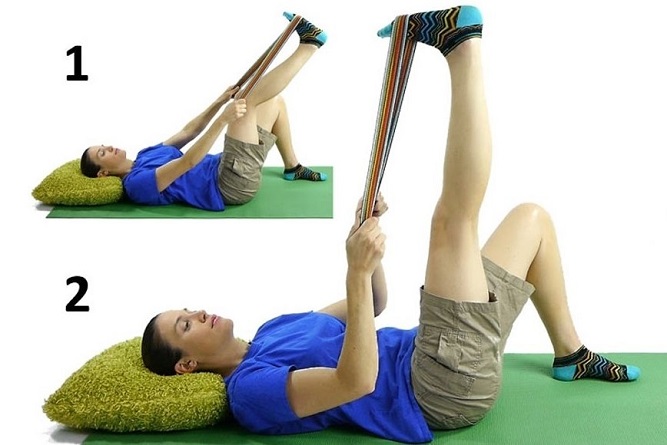
1. Lying Hamstrings stretch
How to do it: Lie on your back with the knee of the leg you want to stretch bent. Loop a resistance band or long piece of cloth (such as a towel or sarong) around the ball of your foot and hold the ends with both hands. Then slowly straighten your leg upwards until the knee is straight and you feel a moderate stretch in the back of the thigh or behind the knee. Hold for 15–30 seconds and repeat 3–5 times, as shown in the picture.
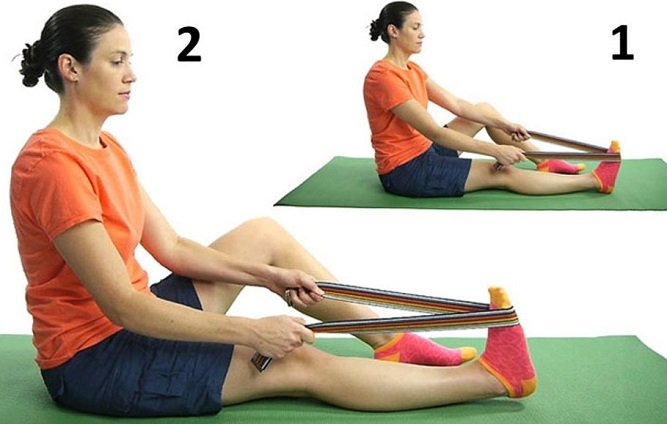
2. Sitting Hamstrings stretch
How to do it: Sit up straight and straighten the leg you want to stretch, with the knee flat on the floor and the toes pulled up. Loop a resistance band or long piece of cloth around your foot, hold the ends with both hands and pull until you feel a moderate stretch in the back of the thigh or behind the knee. Hold for 15–30 seconds and repeat 3–5 times, as shown in the picture.
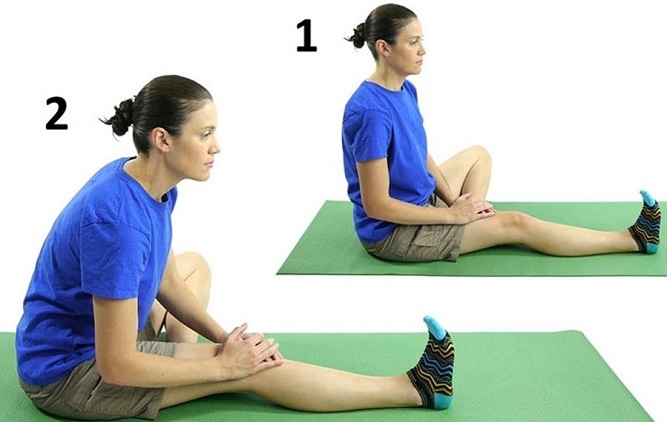
Alternatively, sit up straight, straighten the leg you want to stretch, reach your arms towards your toes and lean forward so your fingers touch your toes (bend from the hips, not by rounding your back). Stretch until you feel a moderate stretch in the back of the thigh or behind the knee. Hold for 15–30 seconds and repeat 3–5 times, as shown in the picture.
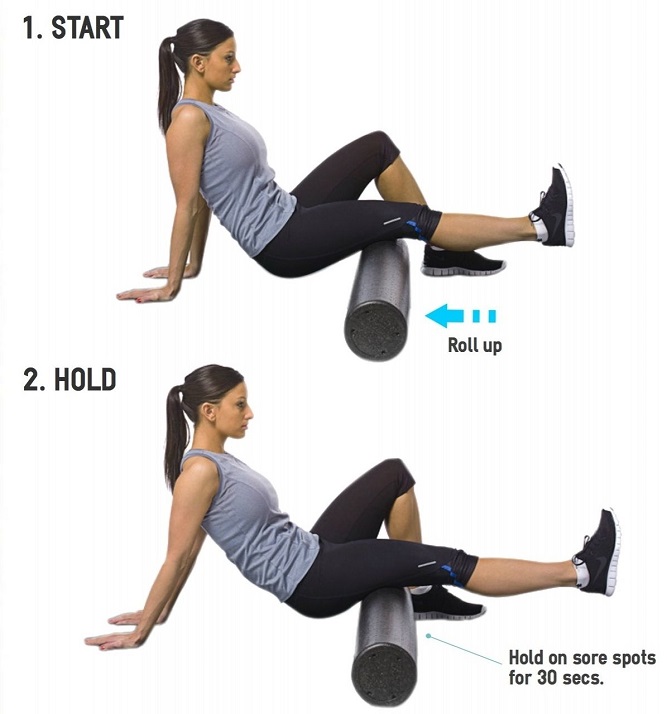
3. Foam roller
How to do it: Place a foam roller under the back of your thigh, then press down with your body weight and roll back and forth to release the tight muscles, as shown in the picture.
You can contact Rehab Care Clinic for advice on your health problems from our rehabilitation physicians and specialist physical therapists.
For more information, contact "Rehab Care Clinic"
Address: 423 Phetkasem Road, Bang Wa, Phasi Charoen, Bangkok (inside Kanari Sports Center, before Seacon Bang Khae) ? 061-801-2482 Line ID : @rehabcare

Information provided by
Dr. Apiporn Garnjanagoonchorn (Dr. Ann)
Rehabilitation physician