
Rounded shoulders, forward head and hunched back: a condition you shouldn't ignore
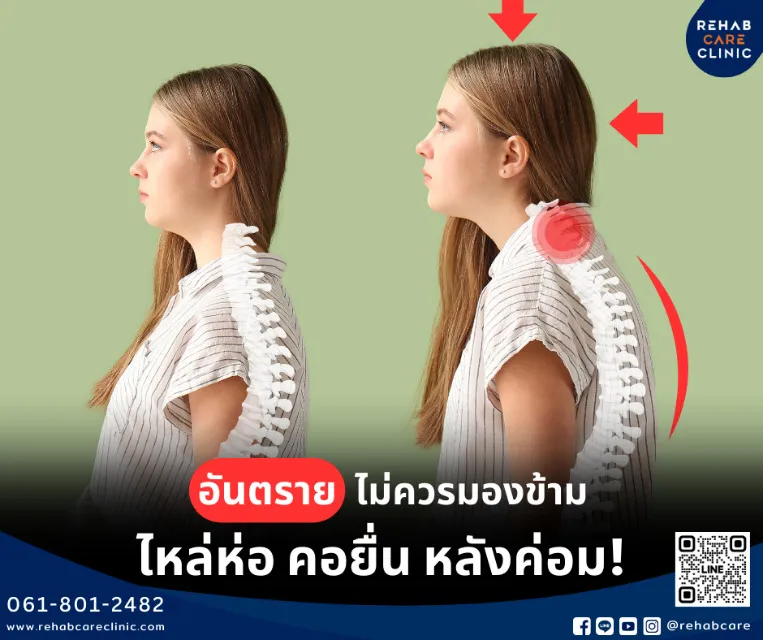
Rounded shoulders (round shoulder), forward head posture (forward head) and a hunched back (hypokyphosis), or “ Upper crossed syndrome ” is described in research by V Janda (2013) as a condition caused by muscle imbalance, in which some muscles become weak and lengthened while the muscles on the opposite side become tight and shortened. The deep neck flexors (deep cervical flexor) and the muscles around the shoulder blades (middle & lower trapezius, rhomboid, serratus anterior) are found to be lengthened, while the neck and shoulder muscles (suboccipital, upper trapezius, levator scapulae) and the chest muscles (pectoralis major and minor) are tight. This imbalance leads to inappropriate movement patterns that vary from person to person and may bring other health problems, such as:
- Pain in the neck, shoulders and shoulder blades, often with tender points in the very tight muscles, which may cause pain radiating to the head, temples, eye sockets or down the arm.
- Compression of the cervical nerve roots: a neck that juts forward can irritate the nerve roots in the neck, which may cause radiating pain or numbness down the arm.
- Reduced chest expansion: the chest cannot expand fully, so the lungs expand less and lung capacity is reduced. As a result, some people may feel that their breathing is short and shallow, or that they cannot take a full breath.
The muscle imbalance that leads to Upper crossed syndrome is usually caused by working posture, for example office workers who sit at a computer for long periods, drivers who hold the steering wheel for long periods, or even school and university students who sit studying and reading for hours on end. Habits that keep you bent forward for long periods, such as using a mobile phone or tablet, folding your arms, carrying a heavy backpack or lying on your front to read, or any posture repeated continuously for a long time without changing position, are also factors that can lead to rounded shoulders, forward head posture and a hunched back.
How to check for rounded shoulders, forward head posture and a hunched back
You can easily check for rounded shoulders, forward head posture and a hunched back at home.
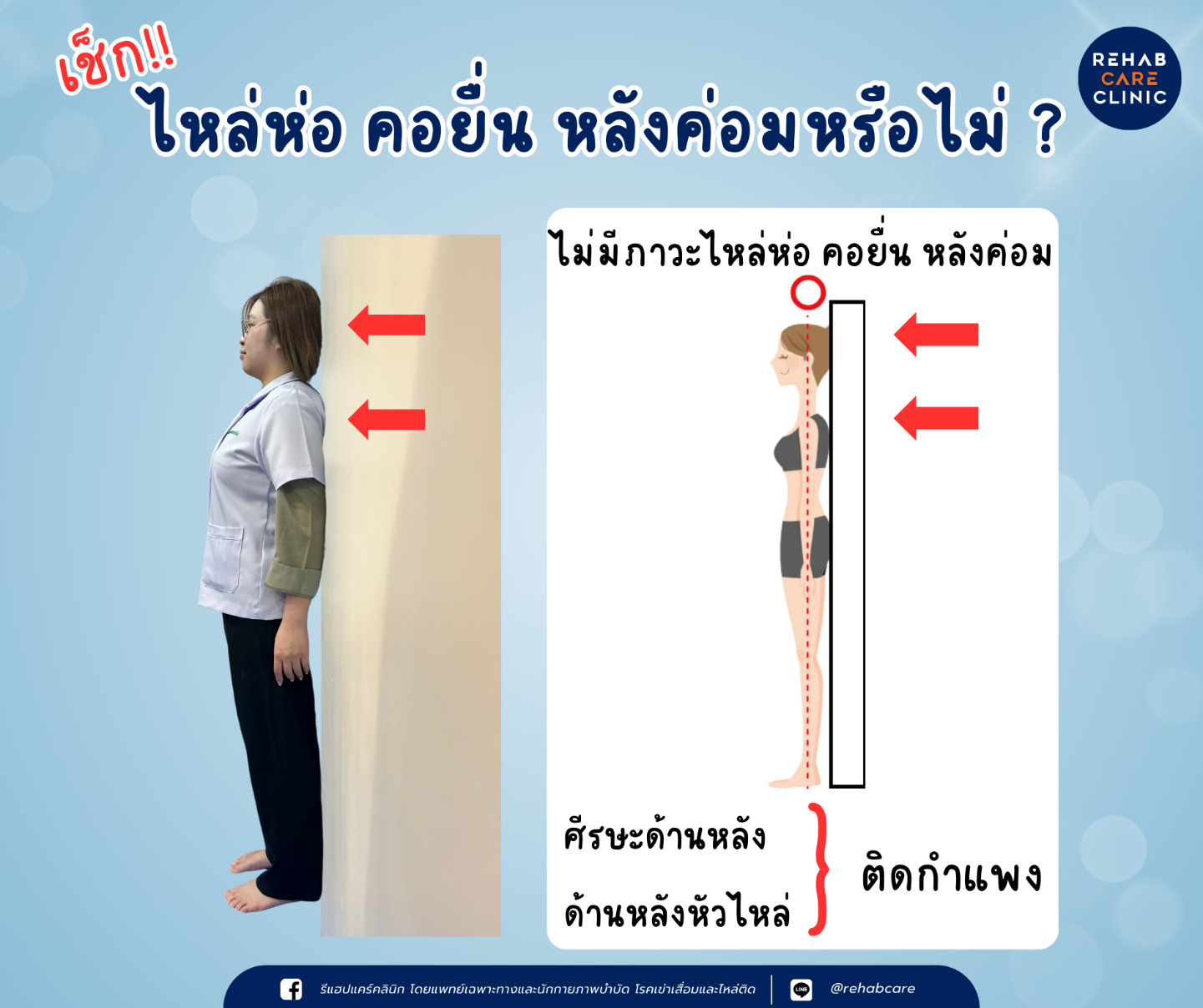
Method 1 Simply stand up straight with your back to a wall and let your shoulders relax without trying to squeeze them together. If the back of your head and the backs of your shoulders do not touch the wall, this is a sign that you may have rounded shoulders, forward head posture and a hunched back.
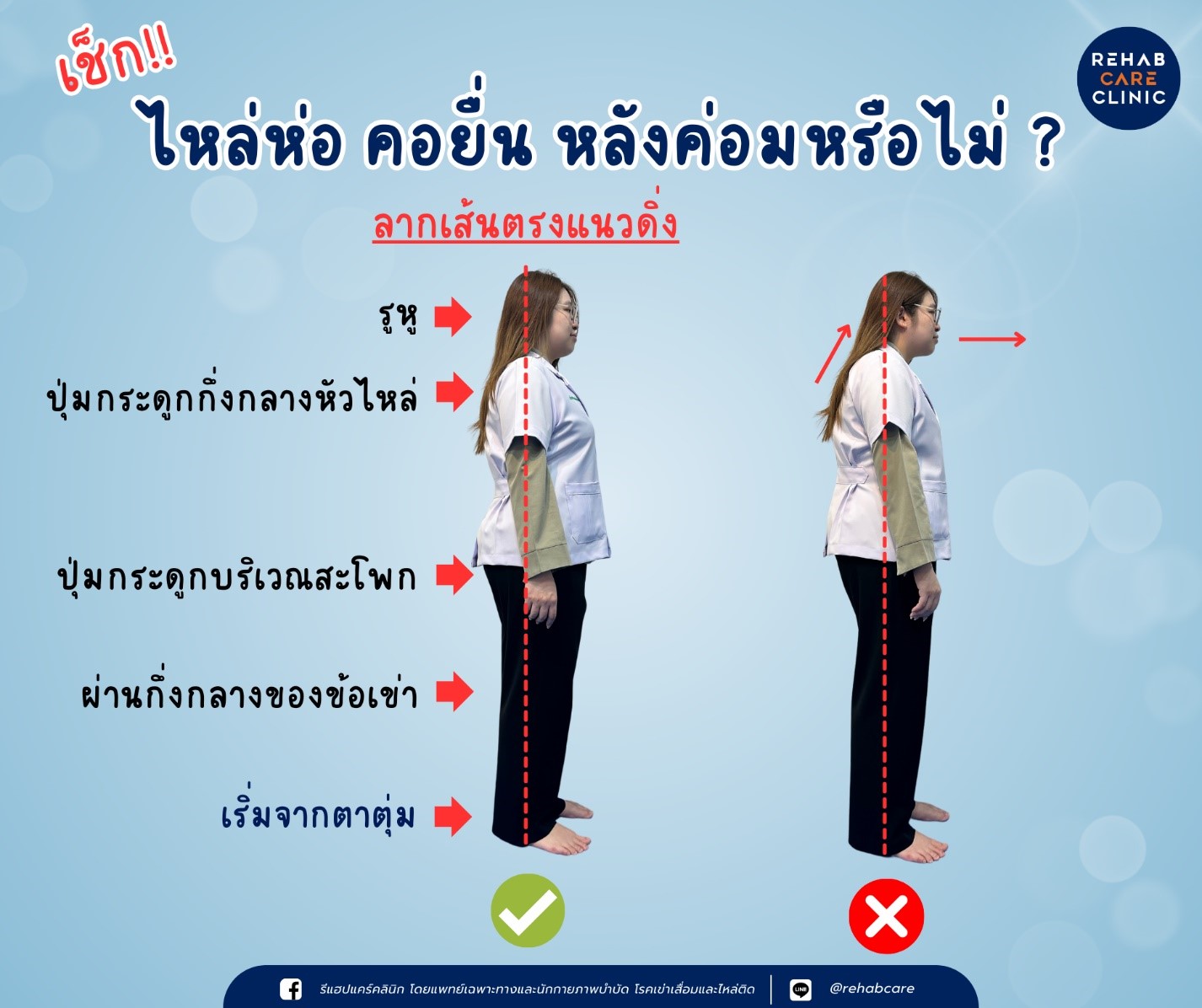
Method 2 Take a photo of yourself standing straight, from the side. Then draw an imaginary vertical line starting from the outer ankle bone straight up to the head. In good posture, a straight line drawn up from the outer ankle bone should pass through the middle of the knee, the bony point of the hip, the bony point at the middle of the shoulder and the ear hole. If these bony landmarks sit in front of the imaginary line, this indicates rounded shoulders, forward head posture and a hunched back.
Treatment
1. Medical treatment There are many options, such as dry needling to release muscle trigger points, glucose or sugar injections (prolotherapy) and concentrated platelet injections (PRP) to repair areas of inflammation.
2. Physical therapy to reduce pain and inflammation using physical therapy equipment such as focused shockwave therapy (focus shockwave), electromagnetic stimulation (PMS: Peripheral Magnetic Stimulation), high-power laser therapy (high power laser) and high-frequency sound waves (ultrasound), combined with an individual exercise programme to reduce the chance of recurrence.
Whether you are treated with medical methods or physical therapy, the most important part of treating rounded shoulders, forward head posture and a hunched back, which should never be neglected, is exercise to strengthen the weak muscle groups, together with stretching to increase the flexibility of the tight, shortened muscle groups. For better results, this should be combined with changing your habits: avoid staying in any one position for long periods, and set up your desk so that it suits your work and makes it easy to move your body.
Rehab Care Clinic recommends the following exercises for Upper crossed syndrome.
1. Wall Stretch to stretch the chest muscles at the front (pectoralis)
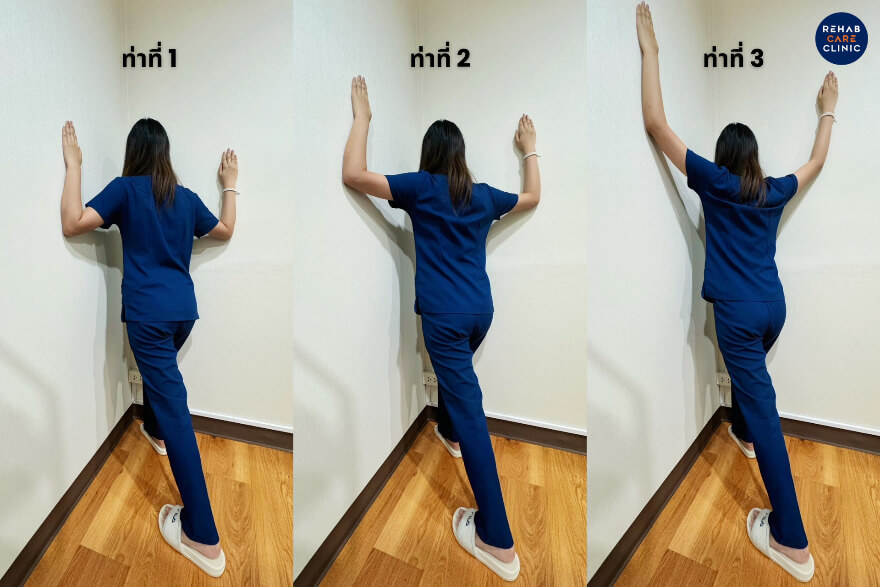
Image: Wall Stretch
2. Stretching upper trapezius to stretch the neck and shoulder muscles (upper trapezius)
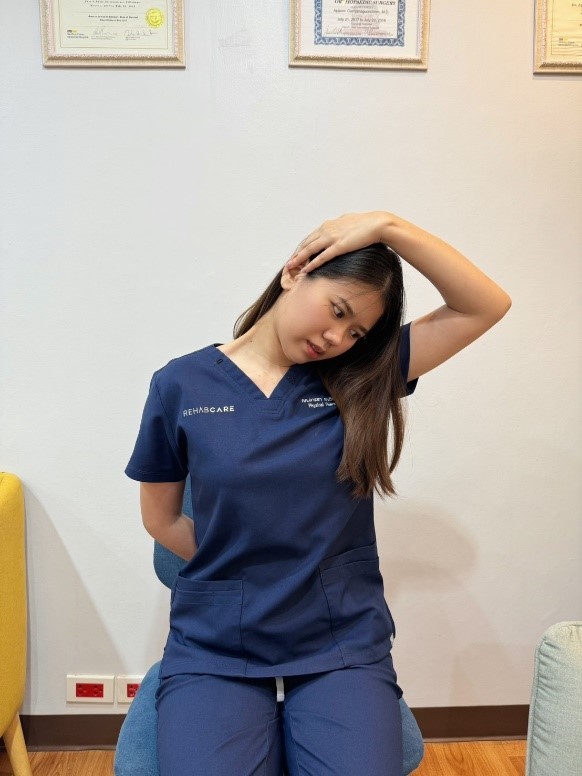
Image: Stretching upper trapezius
3. Wall Slides to strengthen the shoulder blade muscles (middle & lower trapezius, rhomboid, serratus anterior)
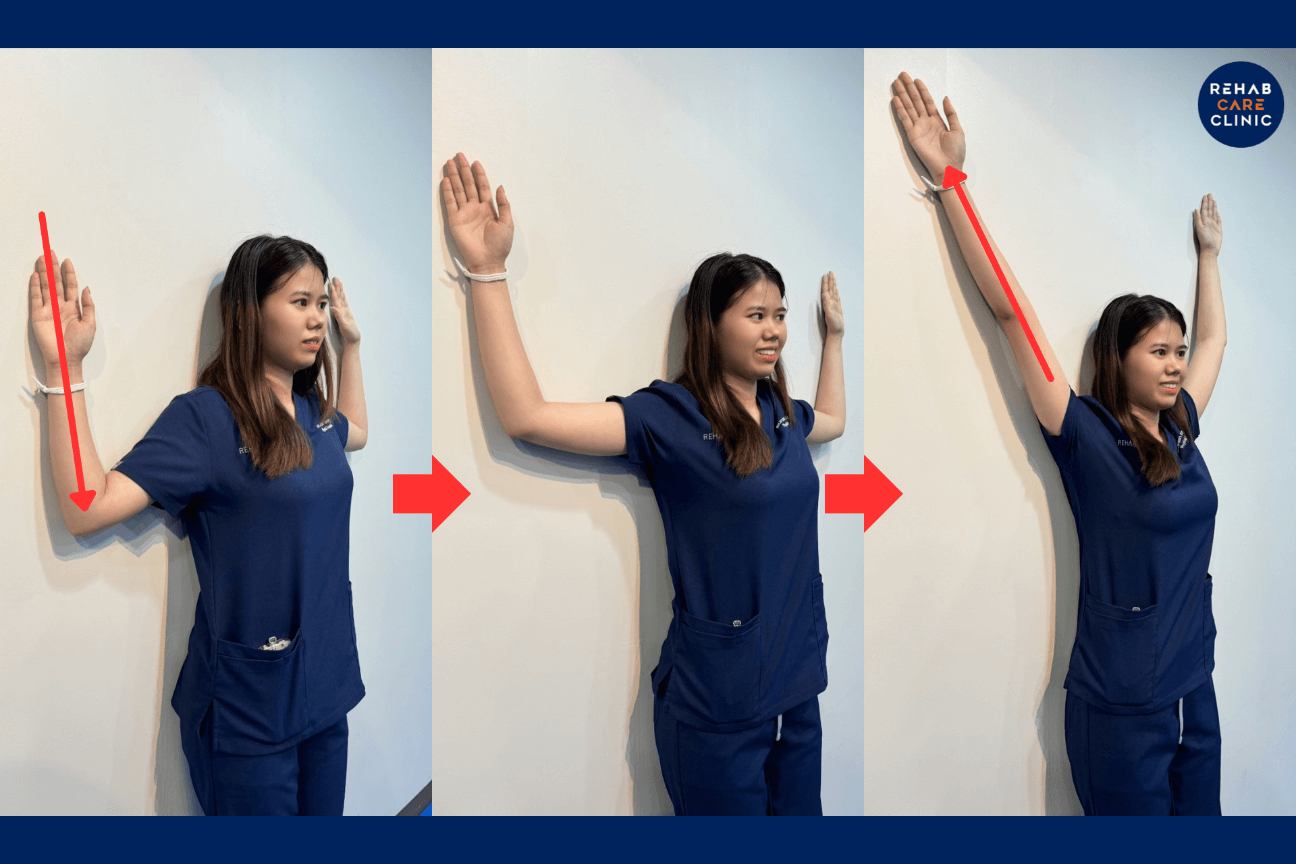
Image: Wall Slides
4. Scapula retraction to strengthen the inner shoulder blade muscles (rhomboid)
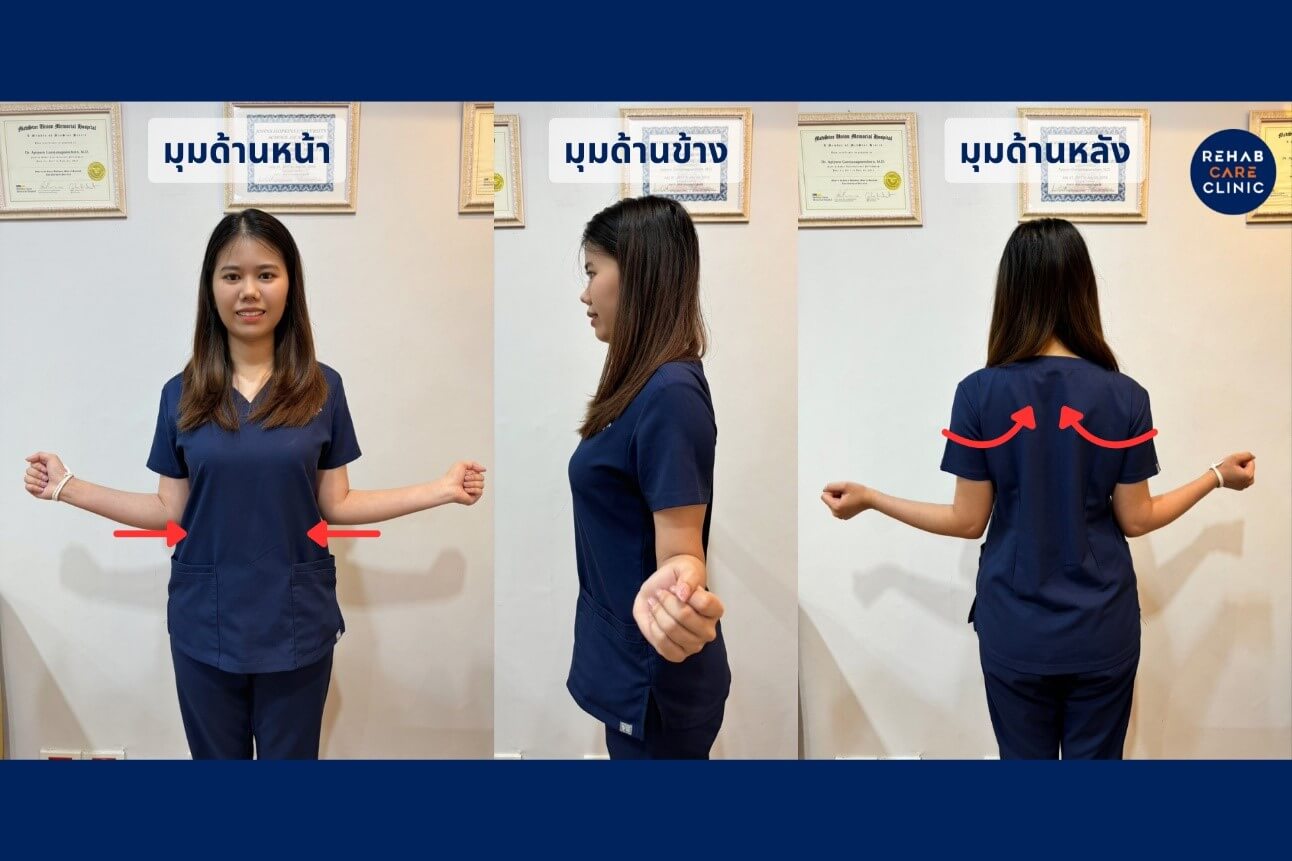
Image: Scapula retraction
5. Chin tuck to strengthen the deep neck muscles and help reduce forward head posture
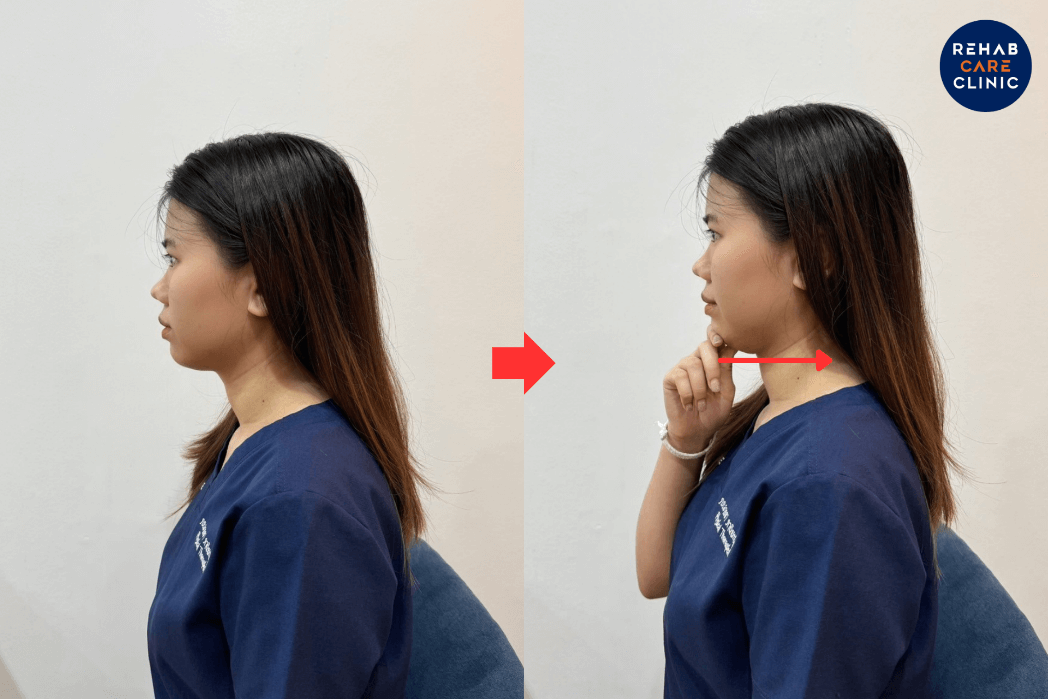
Image: Chin tuck
If you are starting to feel pain, or would like a postural assessment to find out whether you have rounded shoulders and forward head posture, please consult the clinic.
Thanaphon (Bonus), PT
Reference
https://www.physio-pedia.com/Upper-Crossed_Syndrome
https://pt.mahidol.ac.th/knowledge/?p=1985
https://abbottcenter.com/bostonpaintherapy/2009/05/26/rotator-cuff-and-shoulder-pain-5-stretches/
https://www.menshealth.com/fitness/a28723564/pullup-training-workout/
https://learnmuscles.com/glossary/upper-trapezius-stretching-2/
https://markgibsonphysio.com/2017/12/31/a-scapula-retraction/

Information provided by
Dr. Apiporn Garnjanagoonchorn (Dr. Ann)
Rehabilitation physician