Shin pain: the problem no runner wants
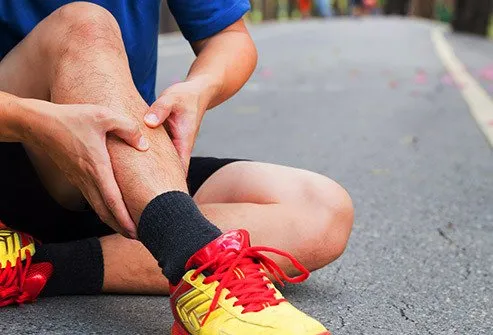
Many runners are probably familiar with pain at the front or inner side of the shin. If you have just started running, let's take a look at shin pain.
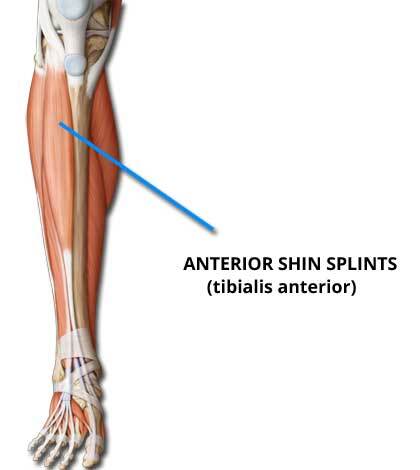
Shin pain, also known as shin splints (Shin splints syndrome), is caused by inflammation of the muscles, tendons and the membrane covering the bone (periosteum) around the shin bone (Tibial bone).
There are two types of shin splints: pain at the front of the shin (Anterior shin splints) and pain along the inner side of the shin (Medial shin splints, or Medial tibial stress syndrome). The latter is usually found on the lower inner part of the shin, where the soleus and tibialis posterior muscles attach. These muscles turn the ankle inwards and point the foot downwards.
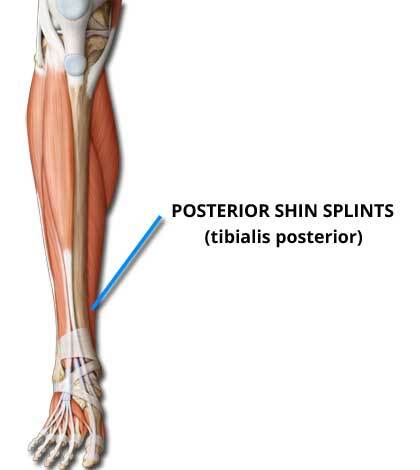
Shin pain can be caused by accidents, such as torn muscles or fractures, but the most common cause is overuse or training too hard and too fast.
Causes of shin splints
1. Running too hard, or ramping up training too quickly
2. Not stretching or warming up before running
3. Not stretching enough before and after exercise
4. Wearing unsuitable shoes or shoes with soles that are too hard, or running on hard surfaces
5. Having flat feet (Flat feet), or a running style in which the feet turn outwards too much (Pronation)
Initial care
- When shin pain starts (pain, swelling, redness and warmth in the shin, which are signs of inflammation), stop the activity that causes the symptoms, then apply a cold compress to the front of the shin for 10–15 minutes.
(Find out more at https://www.rehabcareclinic.com/blog/เคล-ดล-บแก-อาการบาดเจ-บจากการเล-นก-ฬา)
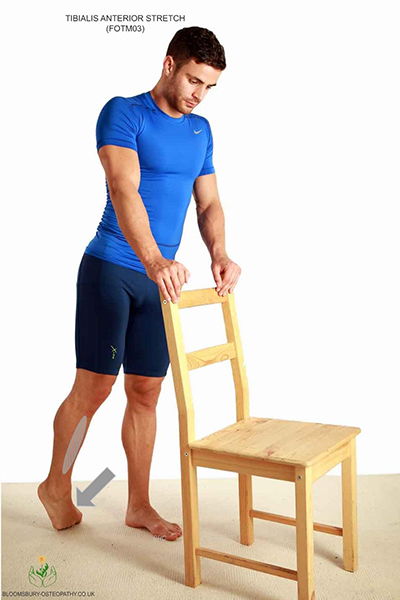
While resting, stretch your shin and calf muscles regularly every day
- Stand and press the top of your toes into the floor while turning your foot inwards or outwards to find the tight spot in the shin. While stretching, the front of the shin should not be so tight that it hurts. Hold for 15–20 seconds. Repeat 3–5 times, as shown in the picture.
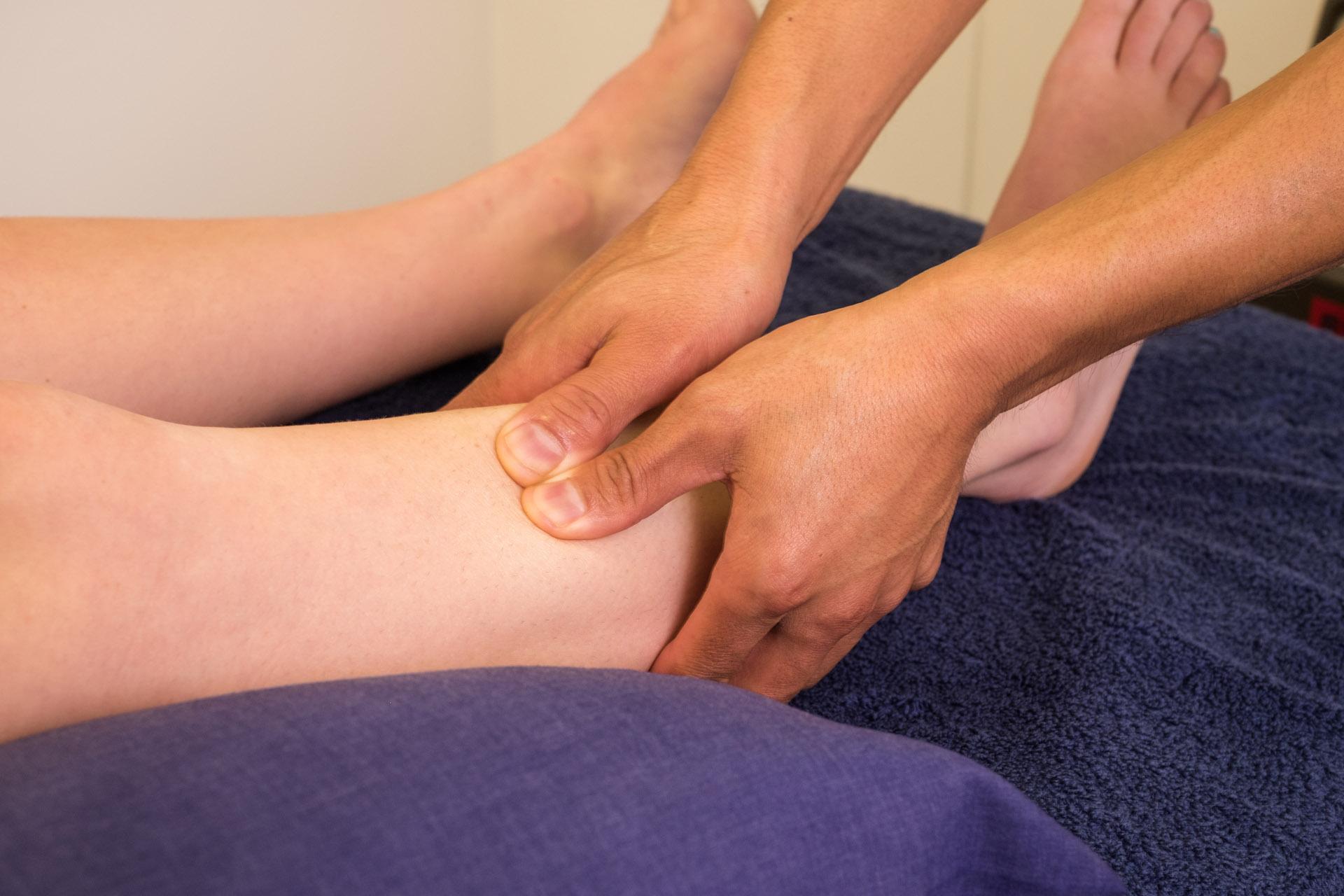
- Use your thumb to press and massage the tight, painful muscle beside the shin bone
(do not press too hard).
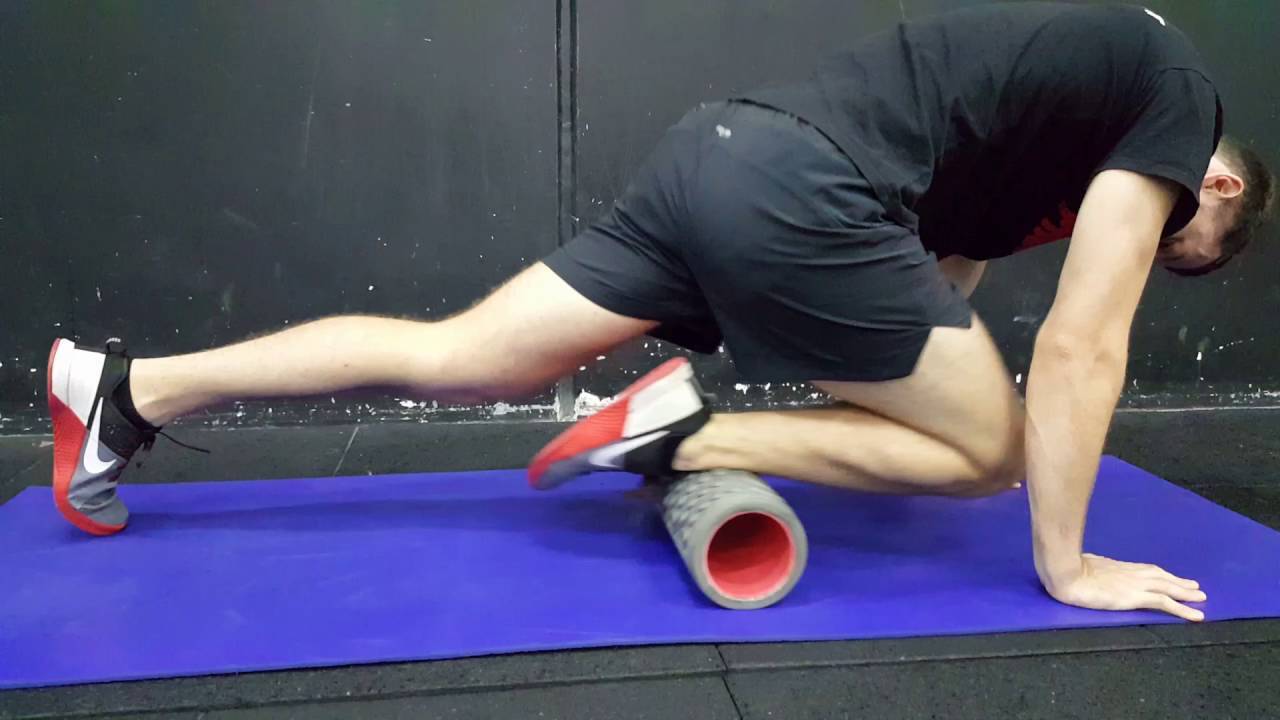
- Use a foam roller to roll the painful shin muscles.
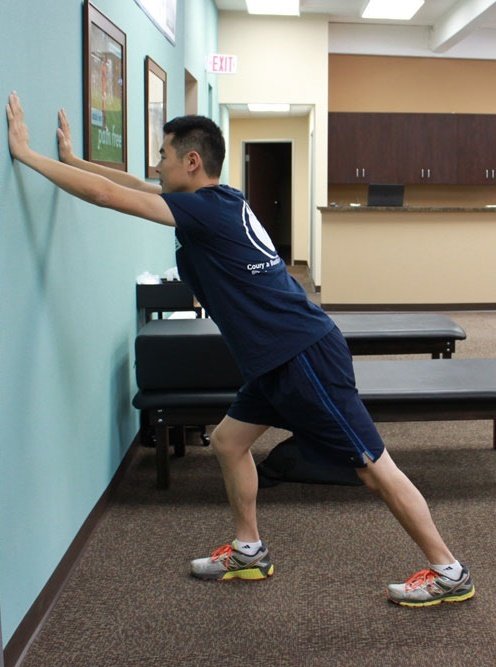
- Stand facing a wall and extend the leg whose calf you want to stretch behind you, with the sole flat on the floor. Hold for 15 seconds, then return to standing upright. Repeat 3–5 times, as shown in the picture.
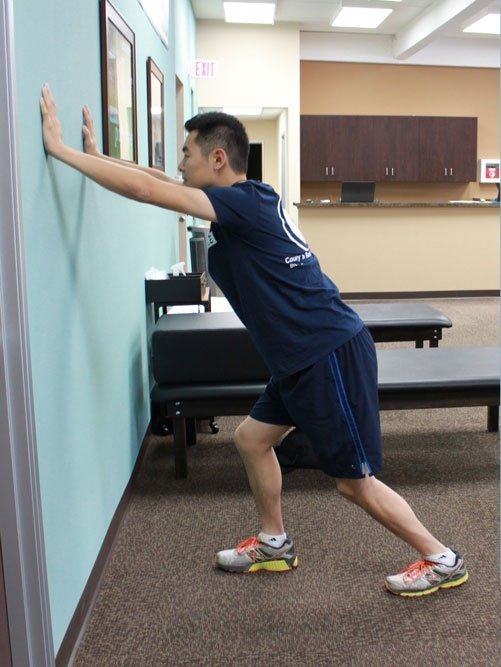
- Stand facing a wall and extend the leg whose calf you want to stretch behind you, bending the knee slightly, with the sole flat on the floor. Hold for 15 seconds, then return to standing upright. Repeat 3–5 times, as shown in the picture.
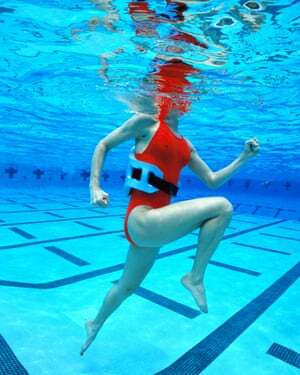
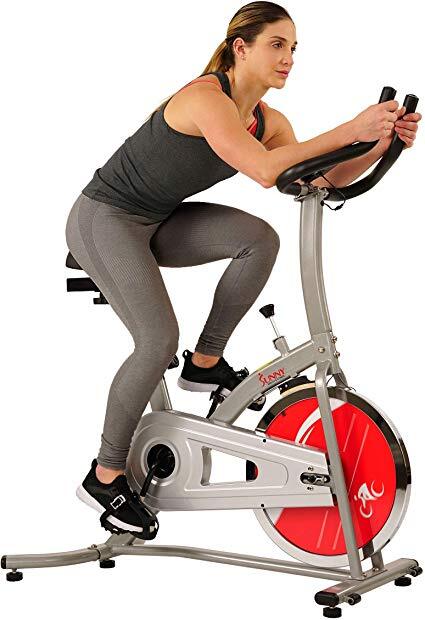
While your muscles recover, try switching to sports with less impact on the shins, such as swimming, water running or cycling
Once the pain has eased, strengthen your shin muscles to prepare for running and absorbing the impact of running
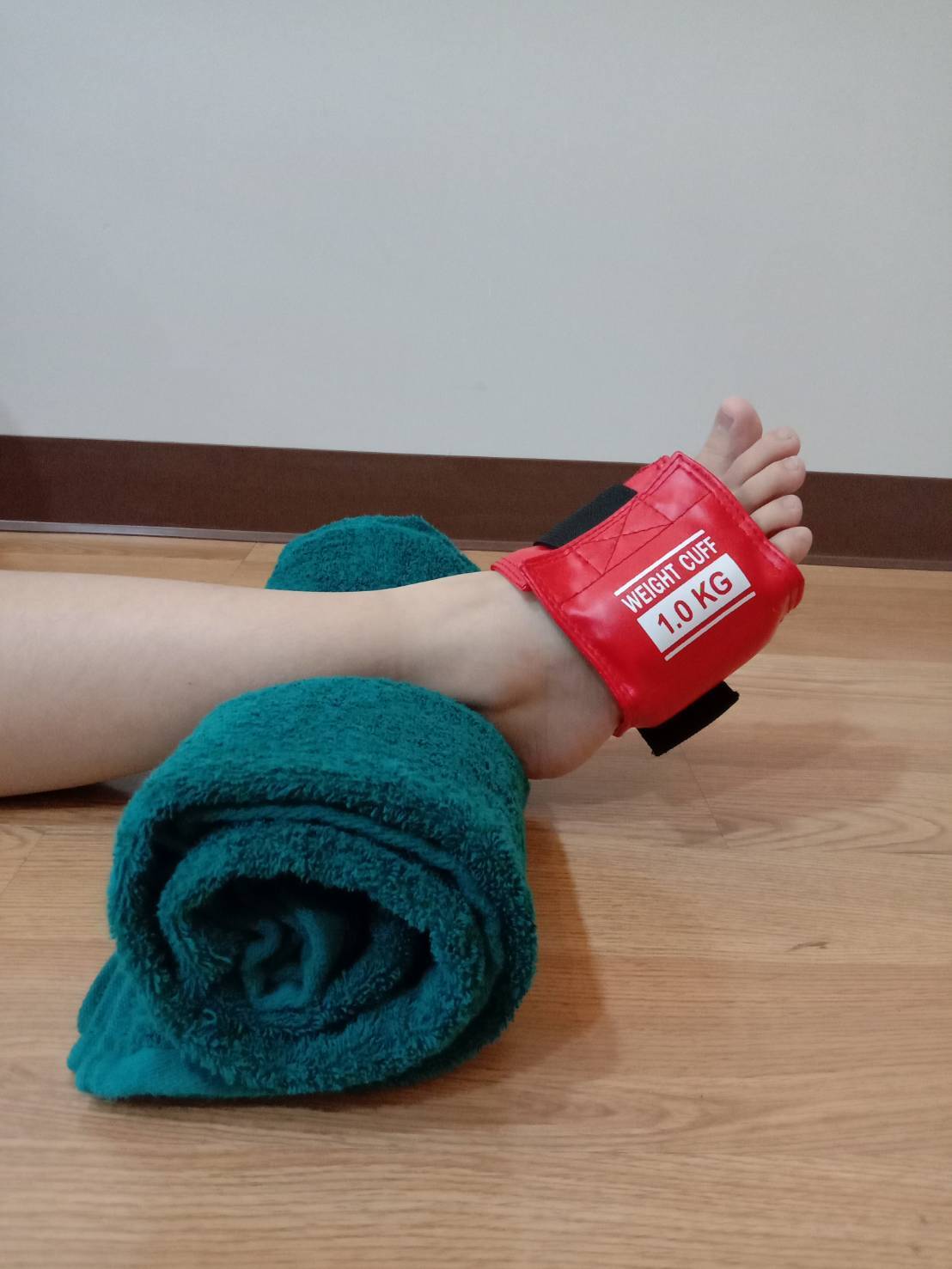
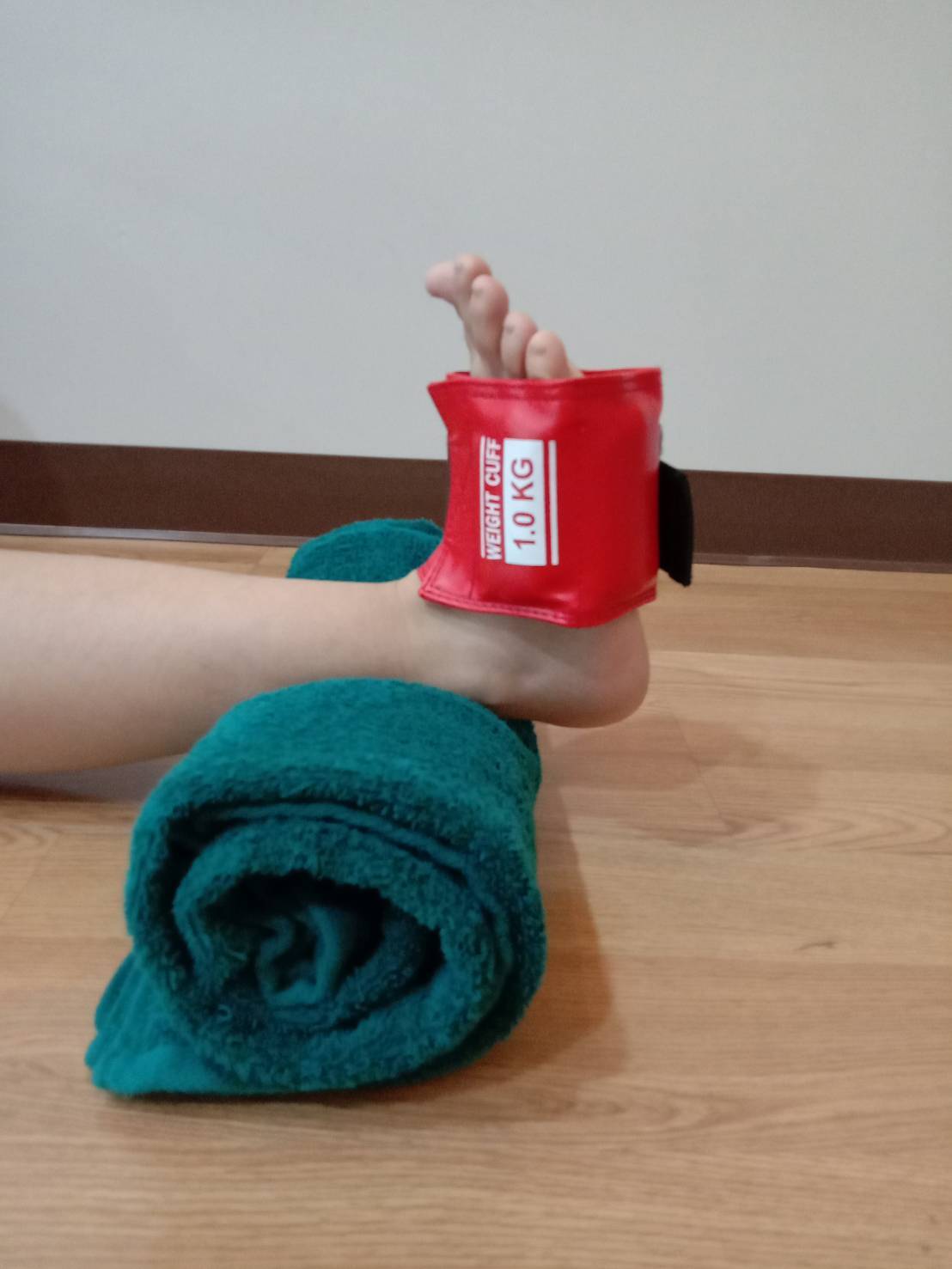
- Place a rolled towel under your ankle and move your foot up and down. You can add an ankle weight, starting at 0.5 kg or 1 kg. Do 10–12 repetitions, 3–5 sets.
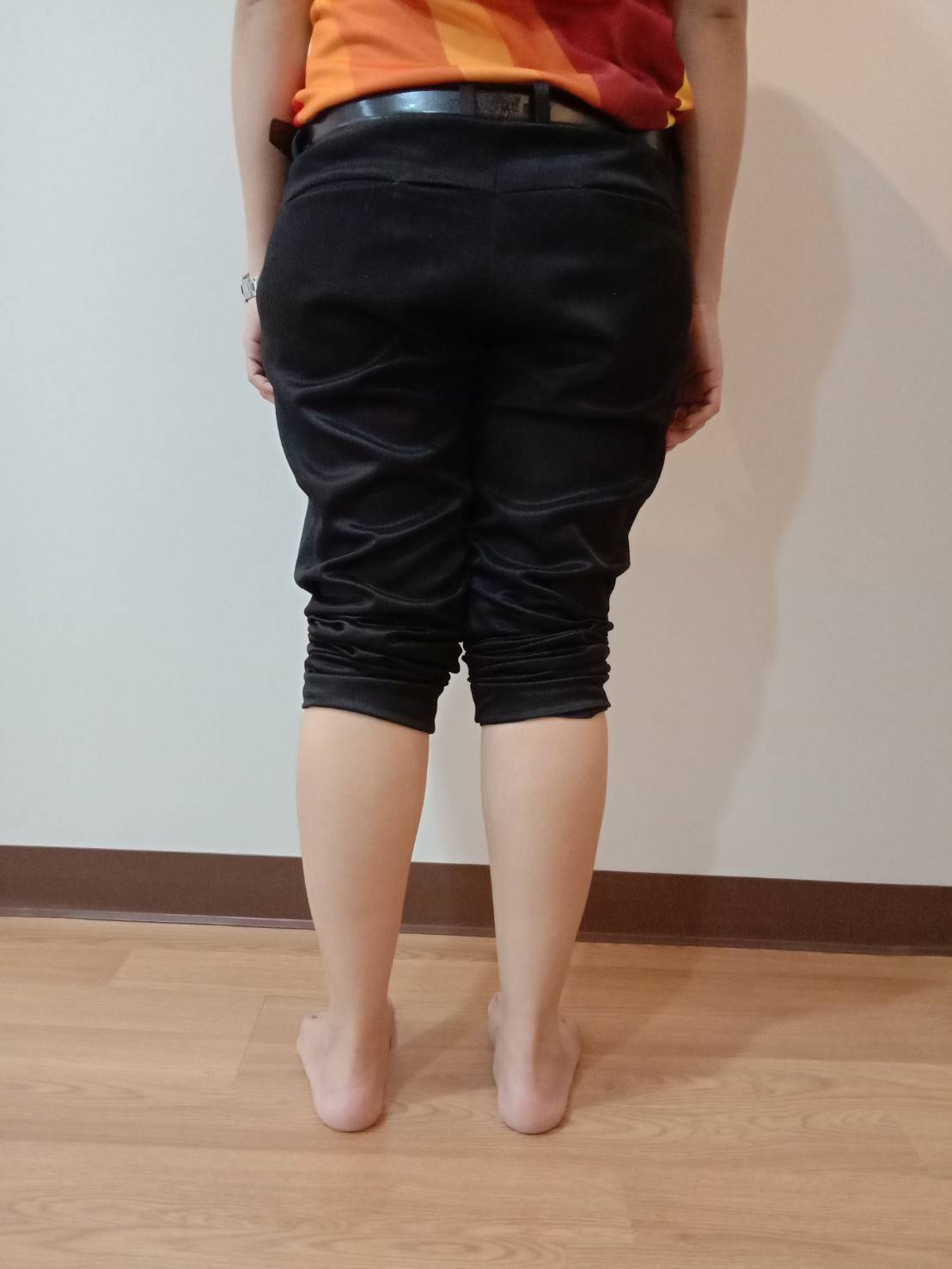
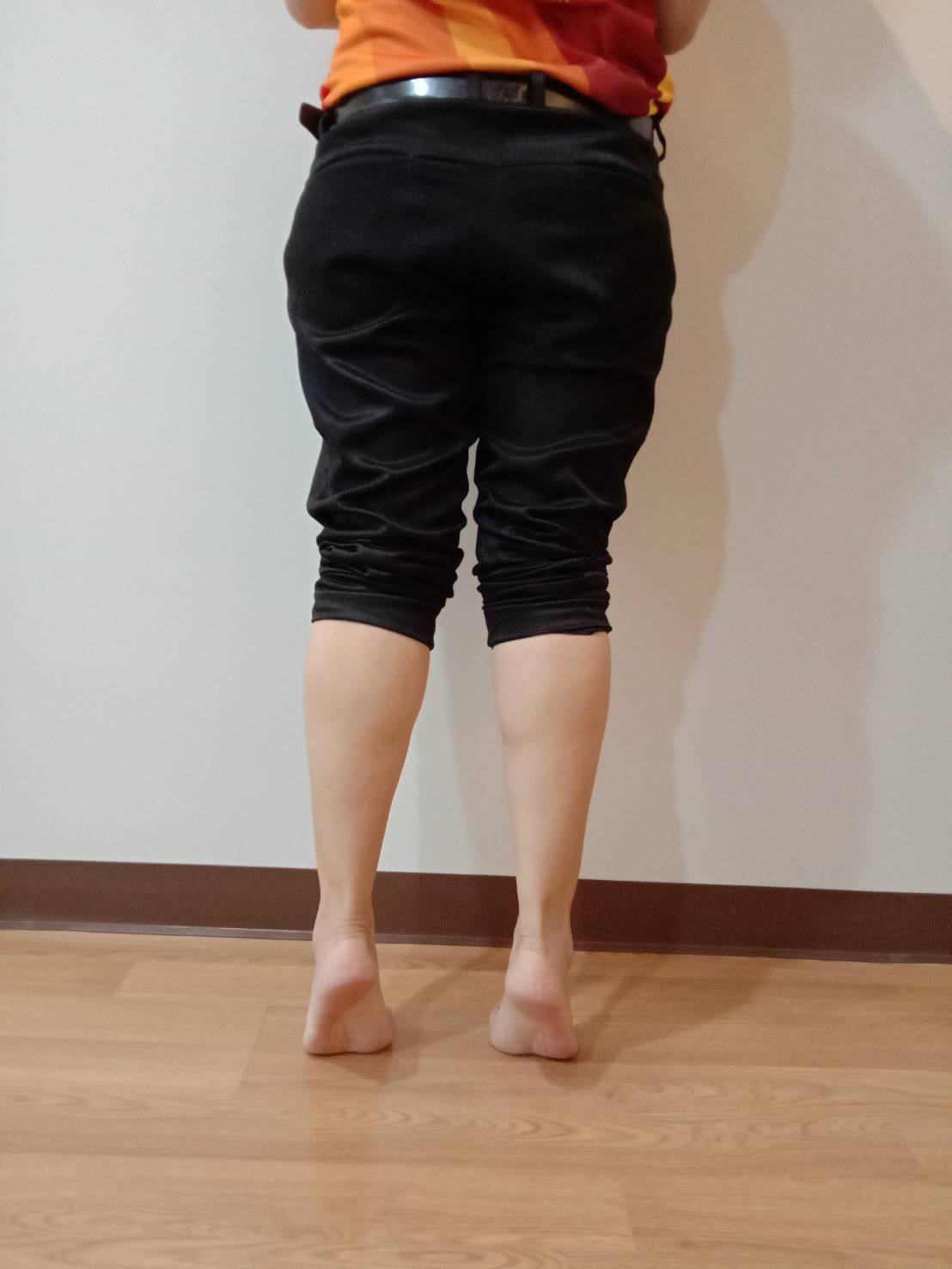
- Stand and rise up onto your toes and lower back down 10–12 times. Repeat 3–5 sets.
If the pain is chronic, does not improve with initial self-care, or returns when you go back to running, we recommend seeing a doctor for an examination and having physical therapy. Physical therapy equipment is used to help reduce pain and inflammation and stimulate the body's repair process so it heals faster.
Prolotherapy injection
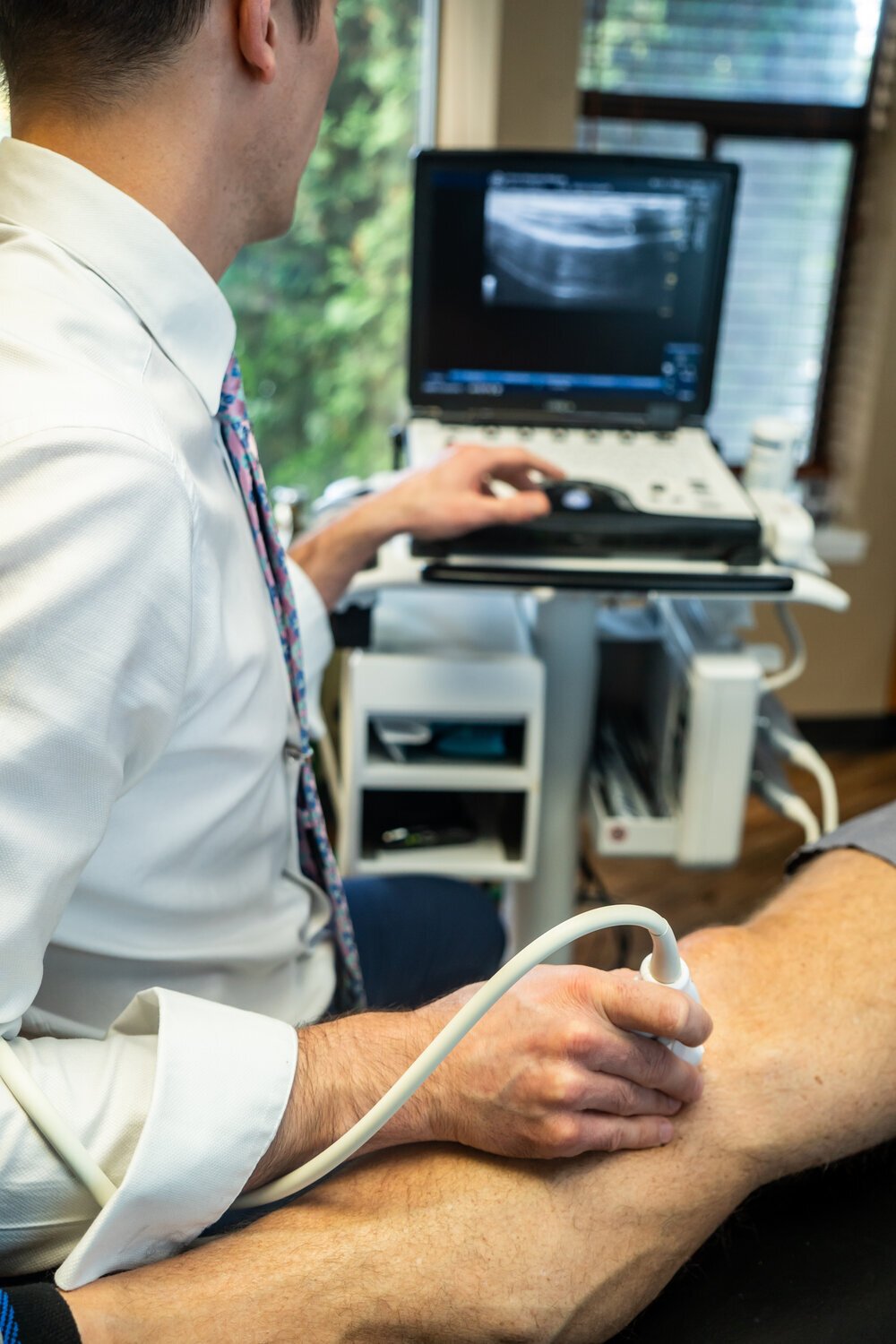
Glucose is injected into the injured or inflamed muscle area to stimulate repair and speed up the body's natural healing and recovery process. The injection is guided by ultrasound, which makes it safer and more accurate and reduces the risk of hitting a nerve.
Physical therapy
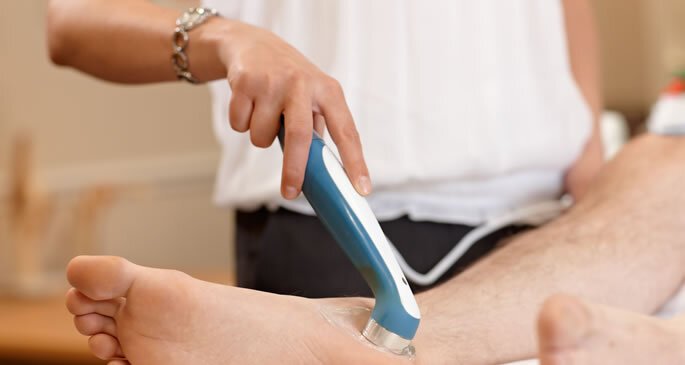
1. Ultrasound therapy
Helps treat injuries to deep tissues and joints and speeds up tissue repair by increasing blood circulation, improving the flexibility of connective tissue, and reducing pain and muscle spasm.
2. High-power laser therapy
Stimulates nerve endings to inhibit pain signals and reduces pain, swelling and inflammation. The laser also has a heating effect that dilates blood vessels, bringing more blood and oxygen to the cells, speeding up the removal of waste and helping reduce inflammation. Most importantly, the laser's key advantage is that it boosts cellular energy (ATP) by speeding up oxygen transport and mitochondrial activity within the cells. With more ATP, cells repair and recover more quickly.
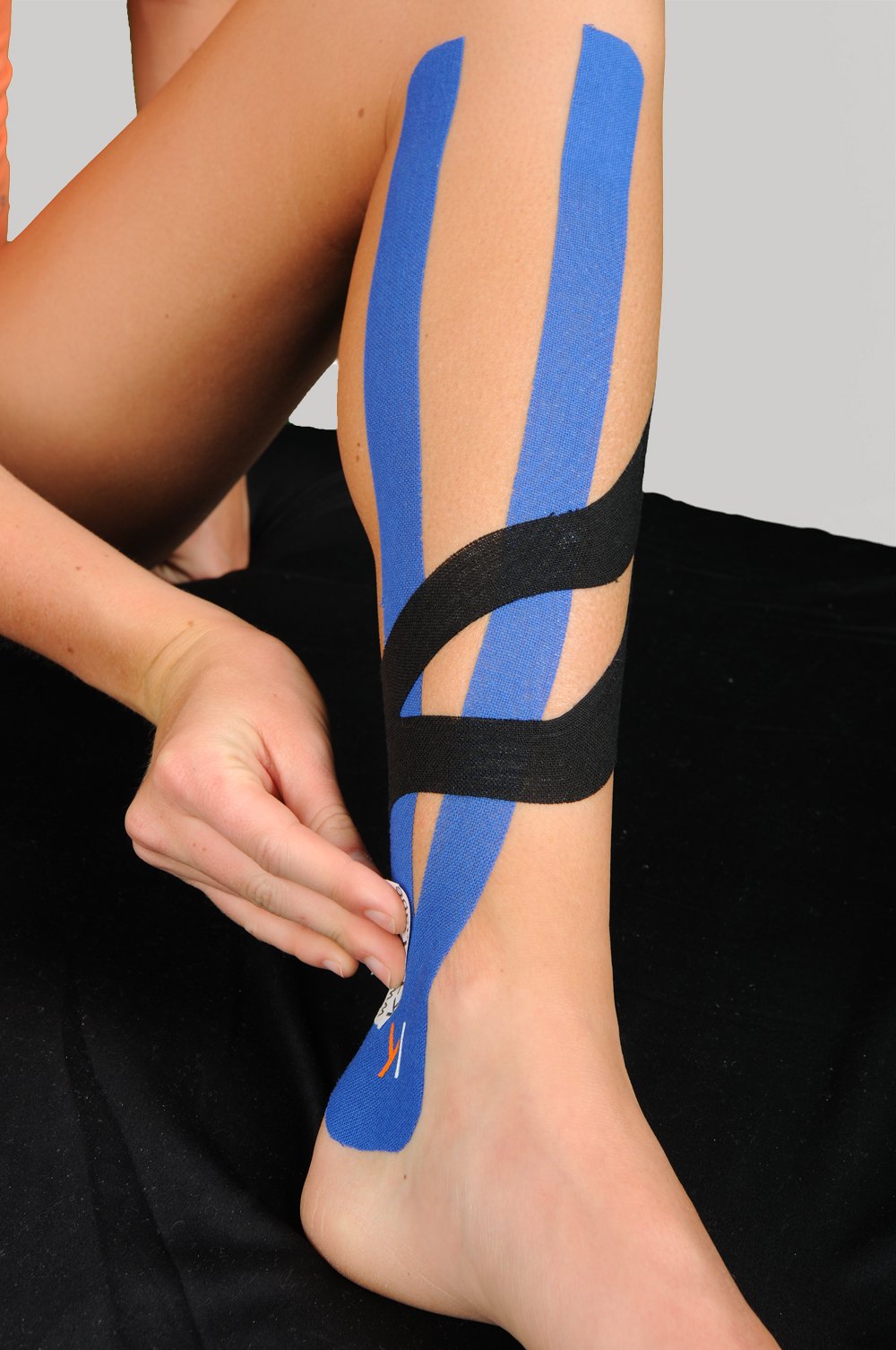
3. Kinesio taping
Kinesio tape is applied to the shin muscles to support the injured muscles and reduce their workload, so you can return to your usual activities without triggering pain.
If your shoes have hard soles, we recommend choosing shoes with softer soles to reduce the impact on your shins. If you have flat feet, we recommend using insoles with arch support, and avoiding running on steep slopes and surfaces that are too hard.
If you have an injury, do not leave your doubts unanswered. See a doctor, who can use ultrasound to examine the affected structures, plan your treatment and help your body recover its strength.
You can contact Rehab Care Clinic to consult our rehabilitation physicians and specialist physical therapists about your health concerns.
For more information, contact "Rehab Care Clinic"
Address: 423 Phetkasem Road, Bang Wa, Phasi Charoen, Bangkok (inside Kanari Sports Center, before Seacon Bang Khae) ? 061-801-2482 Line ID : @rehabcare

Information provided by
Dr. Apiporn Garnjanagoonchorn (Dr. Ann)
Rehabilitation physician