

Shoulder pain isn't just frozen shoulder: shoulder impingement and subacromial bursitis
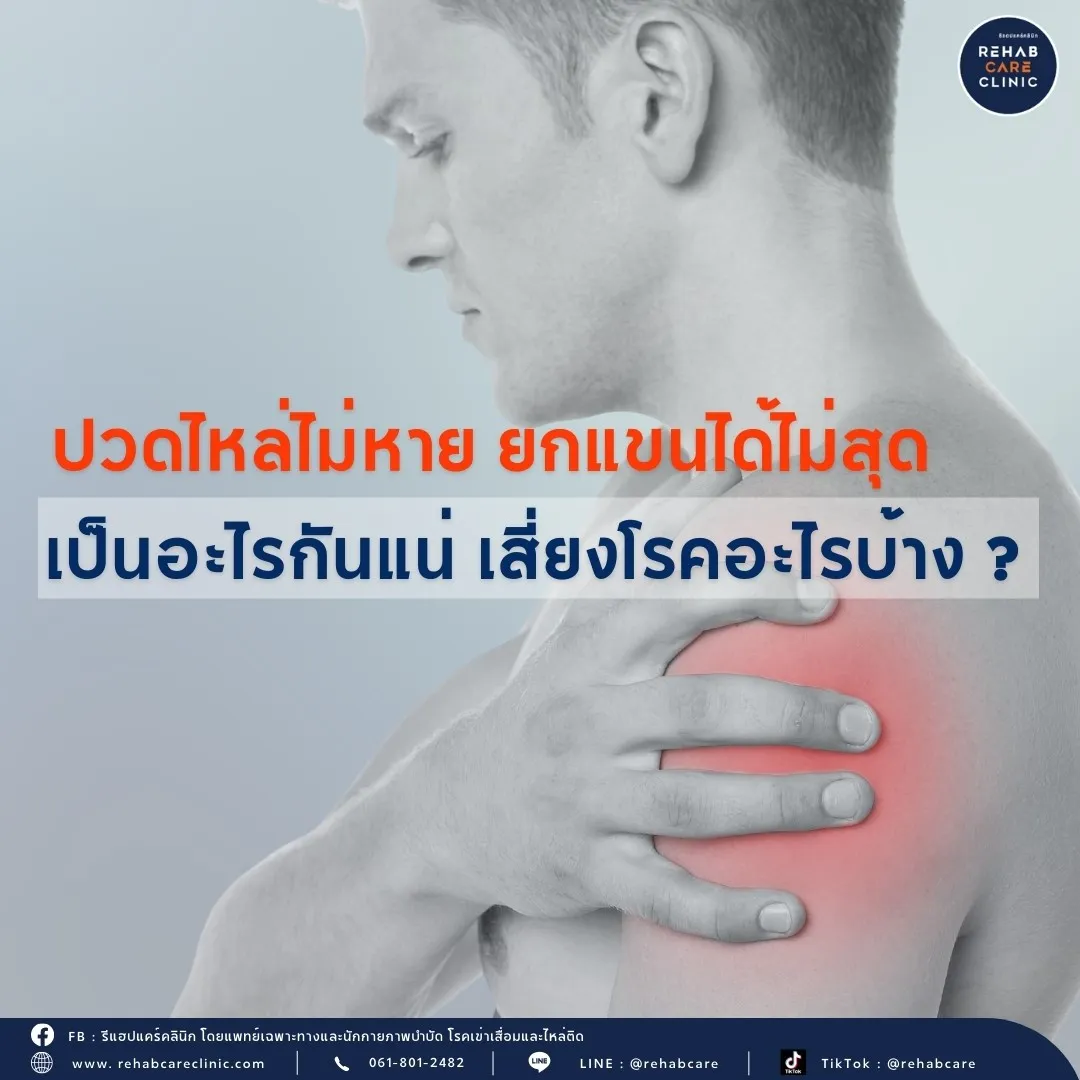
Shoulder pain can lead to a variety of conditions, so it needs to be assessed to identify the cause and the specific condition and to plan appropriate treatment. Apart from frozen shoulder, 2 conditions found in people with shoulder pain are:
1. Shoulder impingement syndrome (SIS) Also known as painful arc syndrome, this condition causes pain at the front of the shoulder. It occurs when the bone at the coracoacromial arch and the head of the upper arm bone rub against each other, compressing the shoulder tendons (rotator cuff) and resulting in inflammation and injury. It is divided into 3 stages:
Stage 1: the supraspinatus tendon becomes swollen with internal bleeding
Stage 2: fibrosis develops and the coracoacromial ligament of the shoulder thickens
Stage 3: the rotator cuff tendons tear
It is mostly caused by overusing the shoulder joint or by activities that move the shoulder repeatedly for long periods. It may also be caused by abnormalities of the bones around the shoulder, which can lead to shoulder impingement syndrome.
Common symptoms
1. Pain at the front and side of the shoulder that comes and goes or gradually gets worse
2. Severe pain at night
3. Inability to lie on the painful side
4. Shoulder pain that interferes with activities or daily life, inability to raise the arm fully, and possible arm weakness because the pain reduces arm movement
Diagnosis involves taking a history of the pain, activities, causes and postures, together with other indications or previous accidents, as well as a physical examination using specific tests to confirm shoulder impingement syndrome. This is combined with diagnostic ultrasound, which shows abnormalities of the tendons, muscles and joints in greater detail and clarity.
2. Subacromial bursitis This is inflammation of the bursa located between the acromion and the supraspinatus muscle. It may be caused by an accident or by repetitive use of the shoulder, and it often occurs together with shoulder tendinitis.
Most people have obvious shoulder pain and swelling, and the skin may feel warm or hot or look red. They cannot raise the arm to comb their hair, have difficulty putting on a T-shirt, and feel severe pain if the shoulder is squeezed. The pain is usually worse at night.
Diagnosis: because shoulder pain can have many causes, such as tendon injury, ligament injury, bursitis or a problem with the shoulder joint itself, diagnostic ultrasound (musculoskeletal ultrasound) can clearly show the cause. The ultrasound probe is scanned over the skin
down to the inflamed bursa to help make an accurate diagnosis, as it can show the injured or inflamed structures inside the shoulder joint. Images showing inflammation reveal more fluid in the bursa than normal, or thickening of the bursa wall.
Even mild shoulder pain can lead to serious conditions. You should see a doctor promptly for a diagnosis and correct treatment to prevent it from getting worse.

Information provided by
Dr. Apiporn Garnjanagoonchorn (Dr. Ann)
Rehabilitation physician