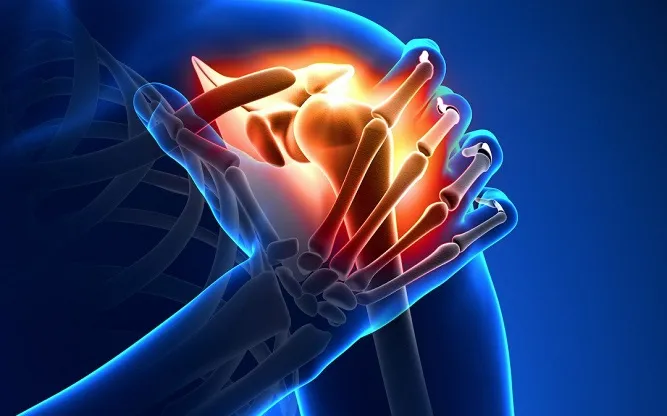
Subscapularis tendinitis (anterior shoulder tendon inflammation)
Let's get to know the muscle we are going to talk about.
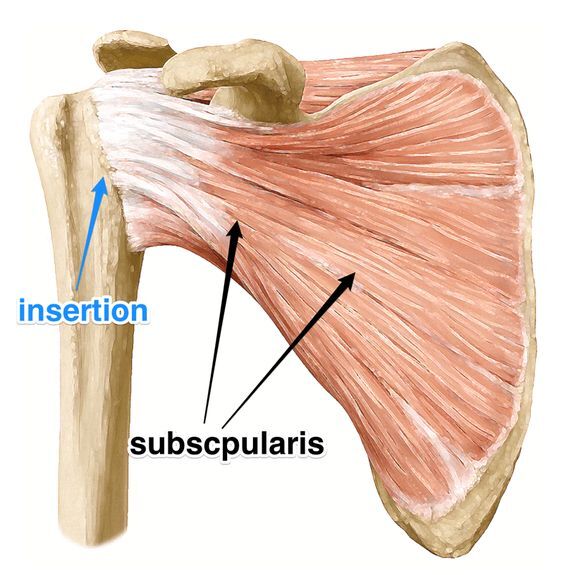
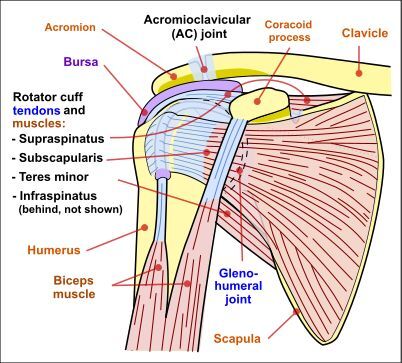
This muscle is called the "Subscapularis Muscle"
- It is a large triangular muscle.
- It attaches from the front hollow of the shoulder blade to the upper arm bone.
- Its function is to rotate the shoulder joint inwards.
- It belongs to the rotator cuff muscles, namely the supraspinatus, infraspinatus, subscapularis and teres minor. This group holds the head of the upper arm bone within the socket of the shoulder joint, providing stability and strength to the shoulder joint.
- It is the largest and strongest muscle of the rotator cuff group.
- It is the most used of the muscles around the shoulder.
Causes
1. The tendon of this muscle becomes torn and inflamed due to:
2. Repetitive use over long periods or overuse
3. Fast and forceful shoulder movements
4. The arm being jerked
5. Work that involves carrying or lifting heavy loads
Symptoms
- Pain around the shoulder joint, especially when lifting or moving it. At first the symptoms may not be severe, but if you keep using the shoulder the pain may become more severe and may occur at night or at rest.
- Swelling around the shoulder
- Pain may radiate down to the upper arm
- The shoulder may be difficult to move
- The arm feels tired and weak
- Reduced range of movement
- Difficulty with some activities, such as washing or combing your hair, scratching your back, or doing up buttons or zips at the back
There are 2 types of treatment: surgical and non-surgical
1. Surgical treatment
- Indicated for patients who do not respond to non-surgical treatment
2. Non-surgical treatment
- Rest and activity modification, such as avoiding heavy lifting and work that involves raising the arm high
- Non-steroidal anti-inflammatory drugs help reduce inflammation, swelling and pain.
- Injection (prolotherapy injection): glucose is injected into the injured or inflamed muscle area to stimulate repair and accelerate the body's natural healing and recovery process. The injection is guided by ultrasound, which makes it safer and more accurate and reduces the risk of hitting a nerve.
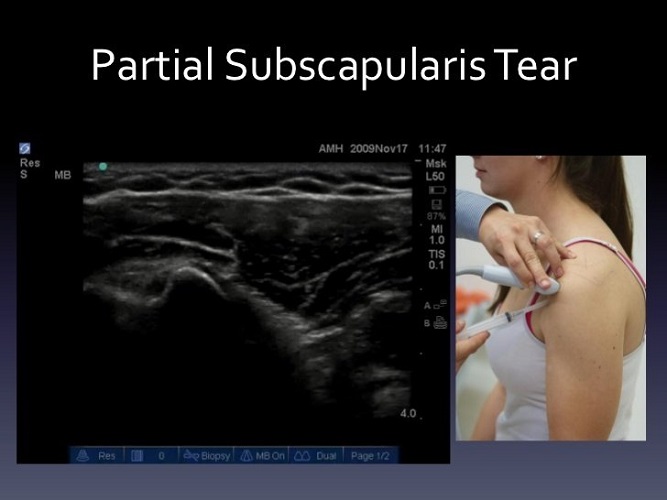
- Physical therapy to reduce pain, increase range of movement, and strengthen the tendons and muscles around the shoulder
Shockwave Therapy
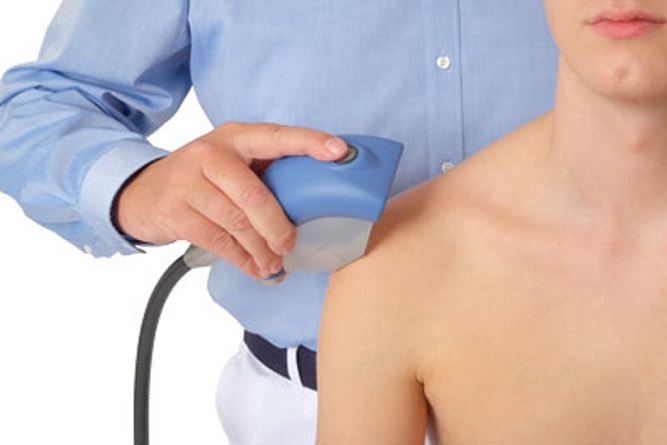
A treatment using shockwaves that send vibrations into the tissues, particularly areas that are inflamed or injured. This stimulates the injured area, accelerating the body's own repair and regeneration of tissue.
High-power laser therapy
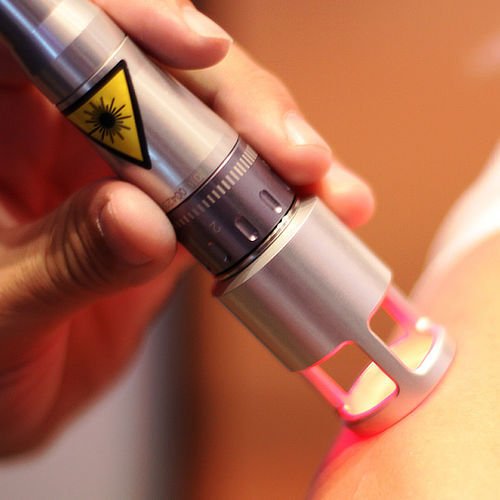
It stimulates the nerve endings, inhibiting the pain process and reducing pain, swelling and inflammation. The laser also has a heating effect that dilates the blood vessels, bringing more blood and oxygen to the cells, speeding up the removal of waste products and helping to reduce inflammation. Most importantly, the laser's key strength is boosting cellular energy (ATP) by speeding up oxygen transport and mitochondrial activity within the cells. The increase in ATP allows the cells to repair and recover more quickly.
Ultrasound therapy
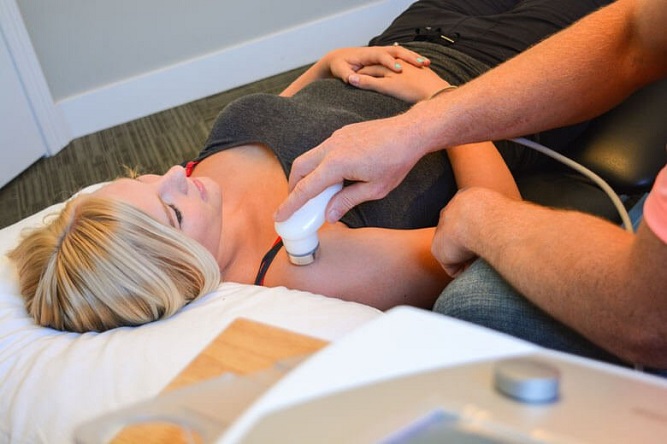
It helps treat injuries to deep tissues and joints and accelerates tissue repair by increasing blood circulation and making connective tissue more flexible, while reducing pain and muscle spasm.
Exercises
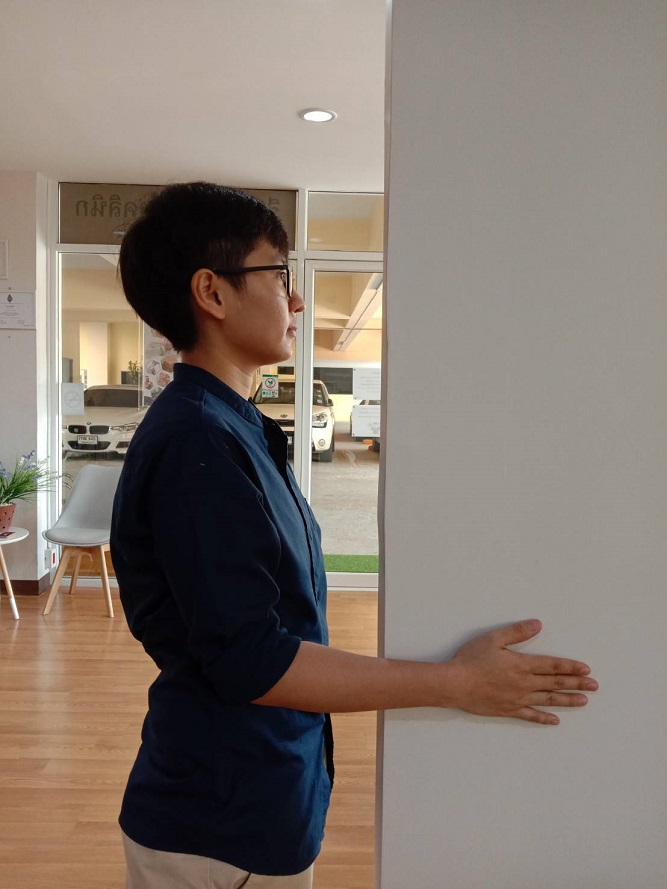
1. Stand up straight with your elbow against your side, bent at a right angle. Stand a little away from a wall, with the wall at your side. Slowly push against the wall (as if rotating your arm away from your body). Hold for a count of 1–10, then slowly relax. Repeat 5–10 times.
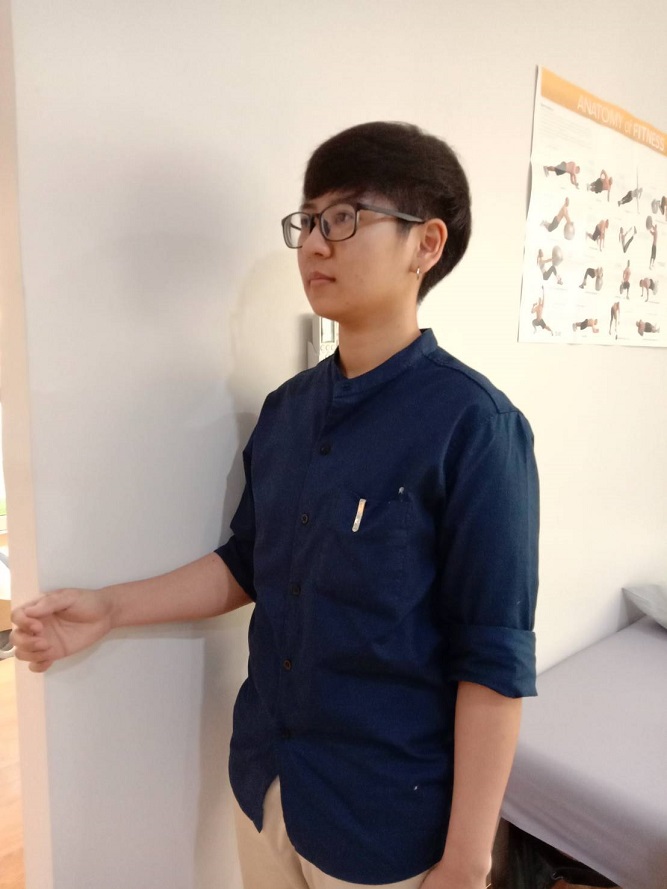
2. Stand up straight with your elbow against your side, bent at a right angle. Stand a little away from a wall, with the wall on the inner side of your arm. Slowly push against the wall (as if rotating your arm towards your body). Hold for a count of 1–10, then slowly relax. Repeat 5–10 times.
You can contact Rehab Care Clinic for advice on your health problems from our rehabilitation physicians and specialist physical therapists.
For more information, contact "Rehab Care Clinic"
Address: 423 Phetkasem Road, Bang Wa, Phasi Charoen, Bangkok (inside Kanari Sports Center, before Seacon Bang Khae) ? 061-801-2482 Line ID : @rehabcare

Information provided by
Dr. Apiporn Garnjanagoonchorn (Dr. Ann)
Rehabilitation physician