
When will this pain go away? Recovery times after injuries to different parts of the body

Injuries to different body systems, such as tendons, muscles, joints and soft tissues, have different recovery periods depending on the severity of the injury, each patient's health and the treatment received. Recovery times for each type of injury may therefore vary, but can generally be divided into the following categories.
1. Muscle injuries are graded by severity as follows
- Grade 1 (minor tear): recovery takes about 2–4 weeks
- Grade 2 (moderate tear): recovery takes about 4–8 weeks
- Grade 3 (severe tear or complete rupture): recovery takes about 3–6 months, and in many cases surgery is needed
2. Tendon and ligament injuries are divided into several grades by severity, with different recovery times
- Minor injury or partial tear: recovery takes about 4–6 weeks
- Severe tear or complete rupture: recovery takes about 3–6 months, and in some cases surgery may be needed
- Rehabilitation after surgical tendon repair: full recovery may take 6–12 months, together with ongoing physical therapy
3. Bone injuries (fractures) are divided into 2 main types, with the following recovery times
- Simple fracture: healing takes about 6–8 weeks, but full recovery may take longer
- Severe fracture (complex or requiring surgery): recovery takes about 3–6 months
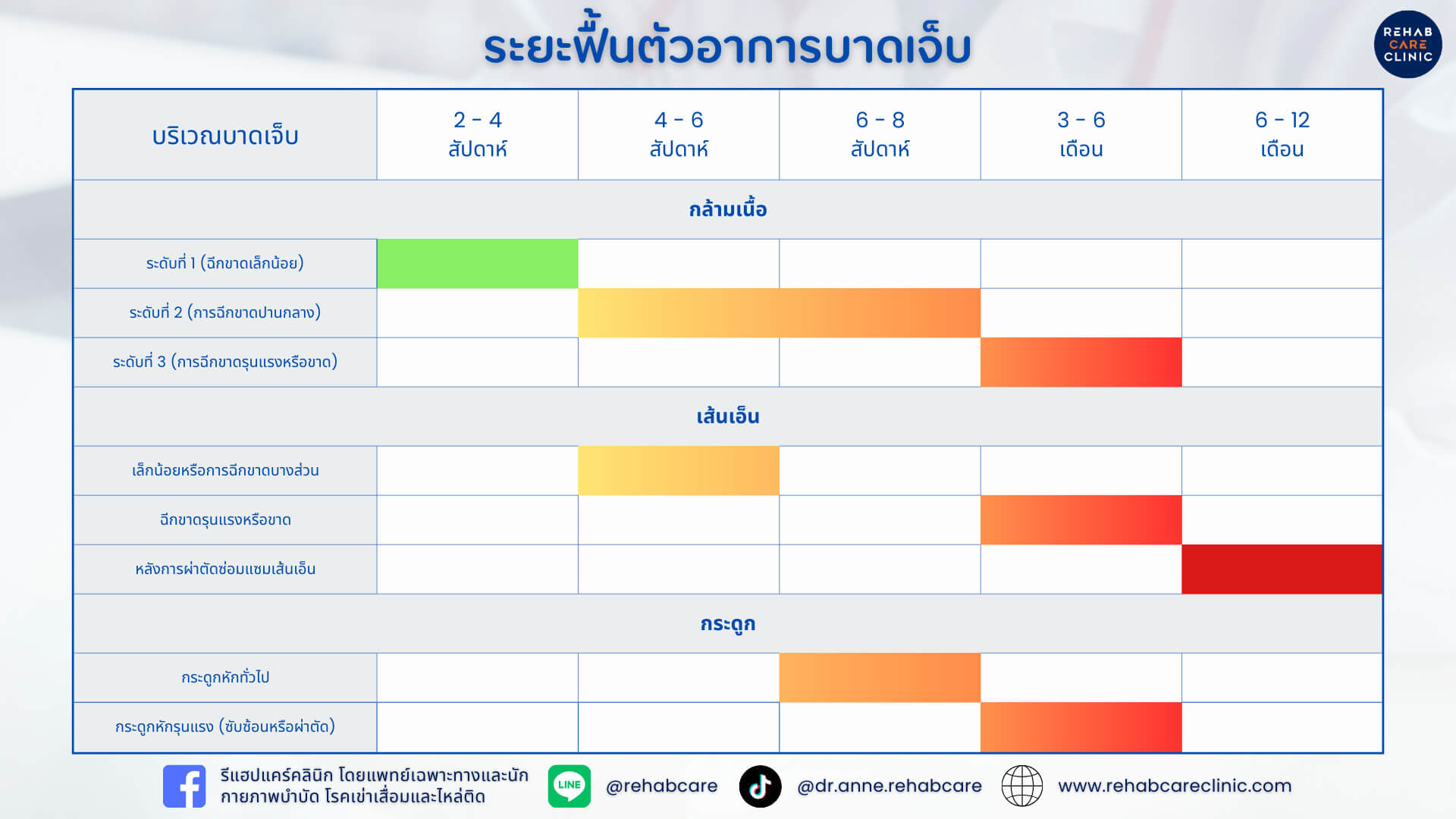
Table: Recovery times for injuries to different parts of the body
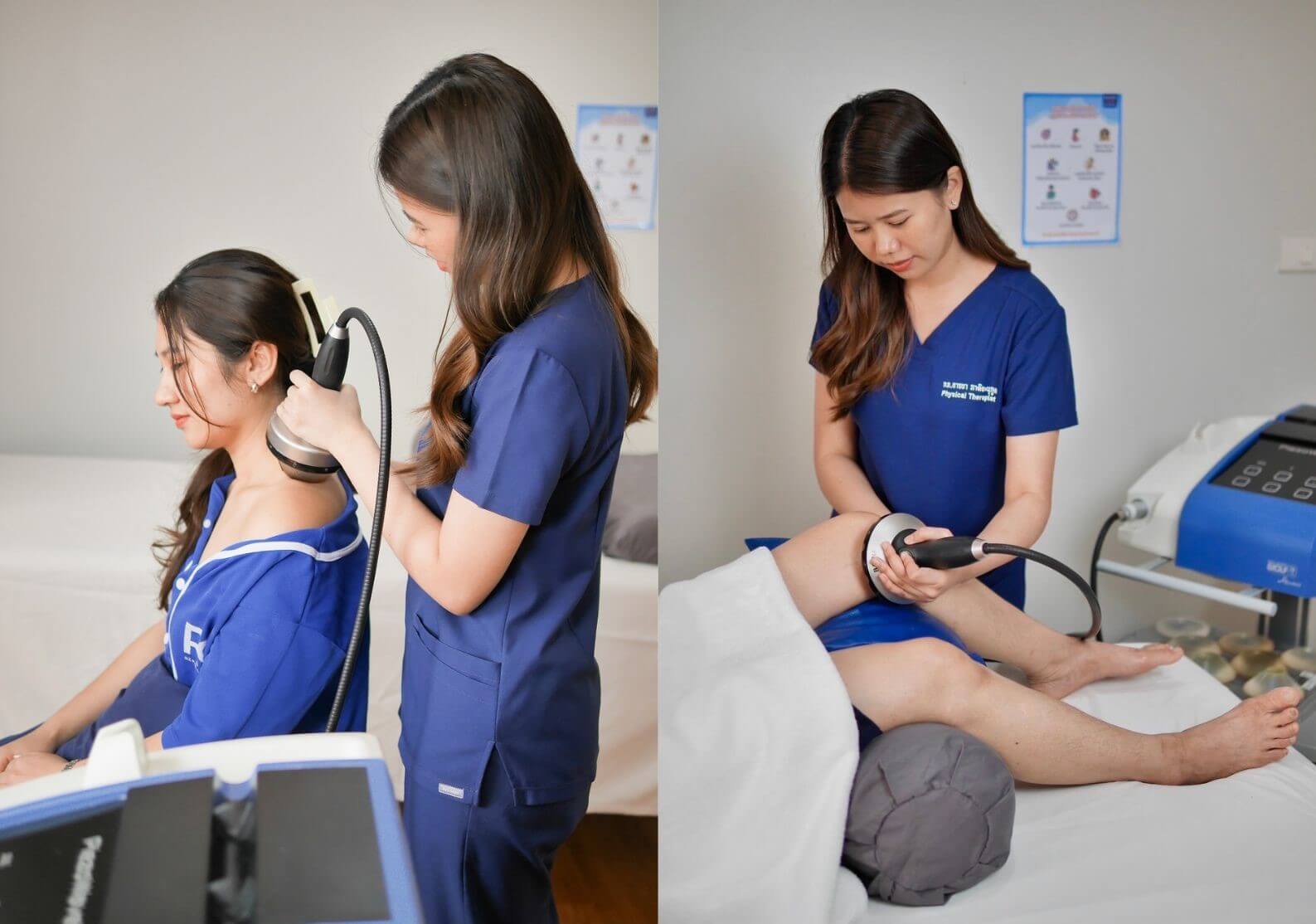
Image: Example of a shockwave therapy programme
For muscle inflammation, such as chronic muscle pain (myofascial pain) or office syndrome, repair and recovery take 2–4 weeks, using a focused shockwave programme 1–2 times a week to stimulate repair and reduce pain, together with exercises suited to the stage of symptoms as recommended by the physical therapist.
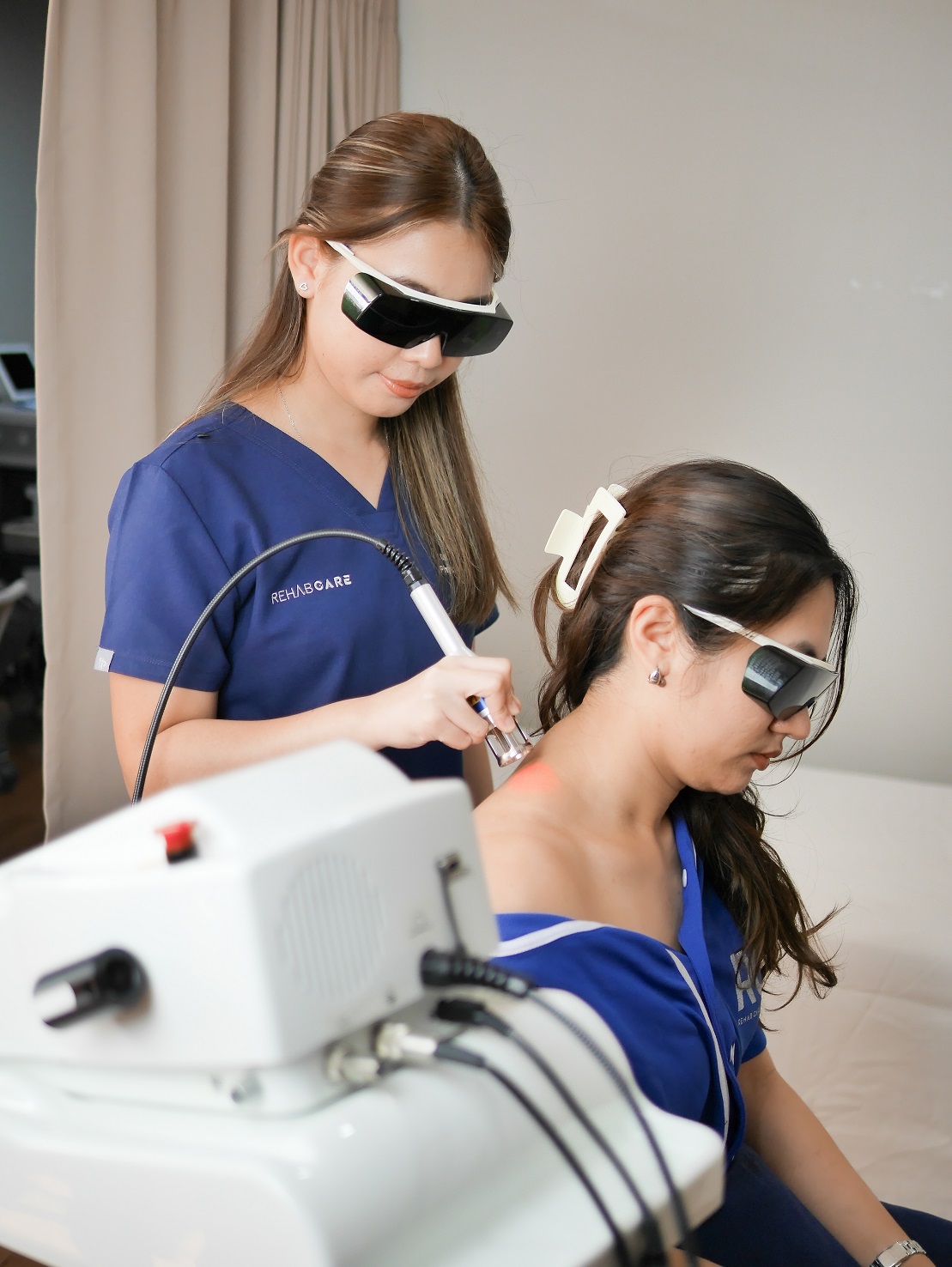
Image: Example of a high-power laser therapy programme (high power laser)
For early or acute inflammation of a joint or tendon (acute phase), we recommend a laser programme 2–3 times a week to reduce inflammation and speed up repair. For chronic inflammation (chronic phase), we recommend a focused shockwave programme once a week for about 4–6 weeks to stimulate repair and reduce pain.
Factors that affect recovery
Recovery from injury depends not only on the severity of the injury but also on other factors, including age, general health, nutrition, strict adherence to the rehabilitation programme, and ongoing physical therapy, which plays an important role in speeding up recovery.
Knowing the recovery time for each type of injury helps patients prepare and follow their treatment plan correctly, and increases the chance of an effective recovery.
Frequently asked questions about recovery from musculoskeletal injuries
1. Is there a way to speed up recovery from an injury?
Answer: Several things can help speed up recovery:
- Get adequate rest and avoid overusing the injured area
- Have physical therapy to reduce stiffness and strengthen the muscles
- Eat foods high in protein and calcium to repair muscles and bones
- Provide basic first aid with ice and heat as advised by your doctor to relieve pain and reduce inflammation
2. Do painkillers or anti-inflammatory drugs affect recovery?
Answer: Painkillers (such as paracetamol) and anti-inflammatory drugs (NSAIDs such as ibuprofen) can help reduce pain and swelling, but they should be used as advised by a doctor, because taking them continuously for too long may cause side effects, and they may make patients feel so well that they overuse their body without realising it.
3. If I have been injured before, could I be injured again?
Answer: Yes, re-injury is possible, especially if the muscles, tendons or joints are not yet strong enough. The best prevention is to:
- Strengthen the muscles around the injured area
- Exercise correctly and avoid overloading your body
- Adjust your movement patterns appropriately
- Have physical therapy as advised by your doctor
4. How long should I use a support such as a bandage or soft splint?
Answer: It depends on the severity of the injury.
- Supports can help absorb impact and prevent movements that might worsen the injury
- They should not be used for too long, as the muscles in that area may weaken from lack of use
- Use supports as advised by your doctor and start physical therapy when appropriate
Chenchira Thongchan (Fern), PT
References
Khan, K. M., & Maffulli, N. (1998). Tendon injuries: Basic science and clinical medicine. BMJ, 316(7133), 1038-1041.
Jarvinen, T. A. H., et al. (2005). Muscle injuries: Biology and treatment. American Journal of Sports Medicine, 33(5), 745-764.
Einhorn, T. A., & Gerstenfeld, L. C. (2015). Fracture healing: Mechanisms and interventions. Nature Reviews Rheumatology, 11(1), 45-54.
Fu, F. H., et al. (1993). Biomechanics of knee ligaments: Basic concepts and clinical application. Journal of Bone and Joint Surgery, 75(1), 171-182.

Information provided by
Dr. Apiporn Garnjanagoonchorn (Dr. Ann)
Rehabilitation physician