
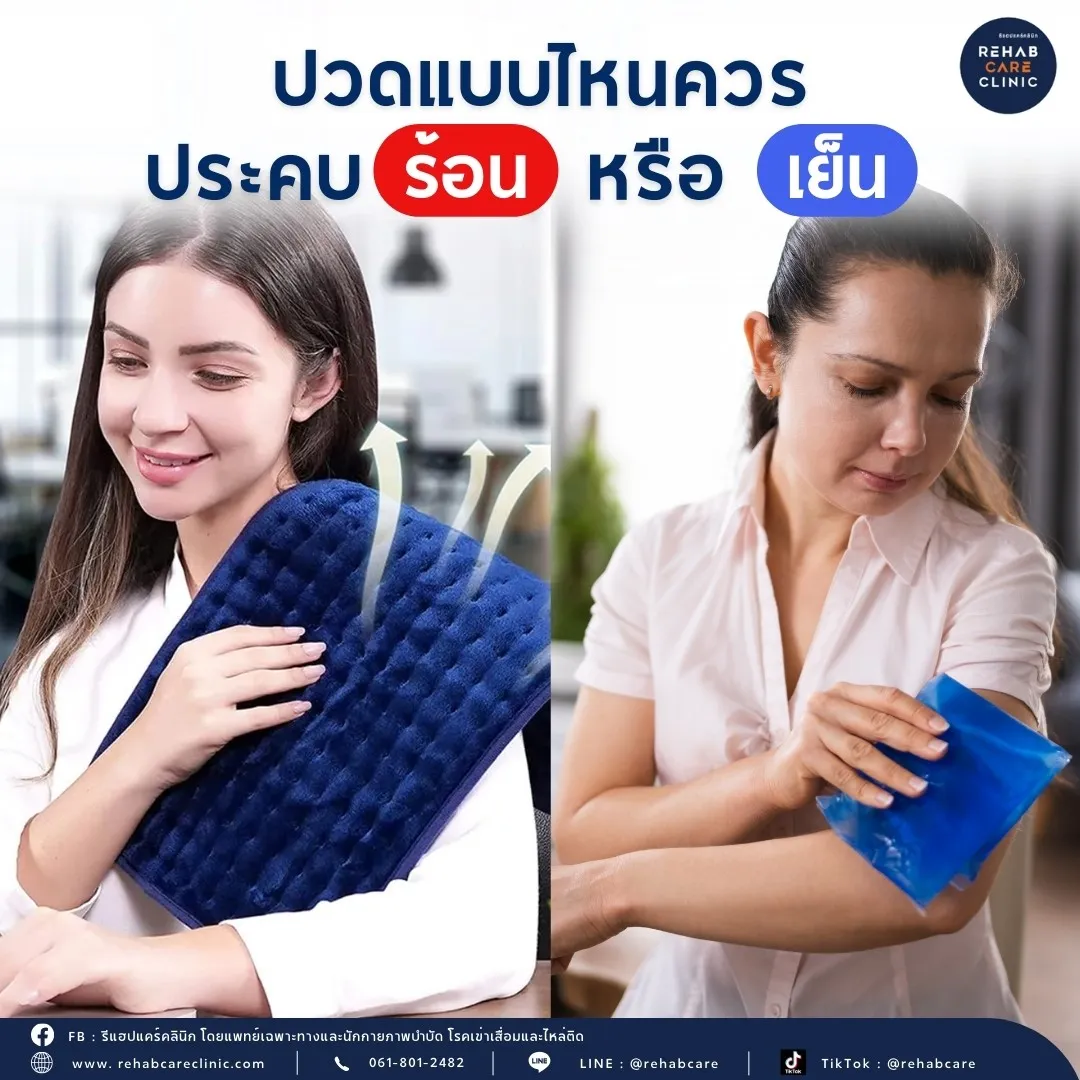
Which kinds of pain need a hot or a cold compress?
Using a cold compress to reduce pain
Use a cold compress in the first 24–48 hours after an injury, or when there are signs that blood vessels in the area are torn or inflamed, such as pain together with swelling, redness and warmth. Cold causes the blood vessels to constrict, reducing bleeding, so injury and inflammation are reduced as well.
Symptoms that call for a cold compress include headache, high fever, toothache, a painful swollen ankle, sprains, nosebleeds, or painful swelling elsewhere caused by injury or in the early stage of pain.
How to apply a cold compress You can use a ready-made cold gel pack or make your own ice pack: fill a suitably sized plastic bag with equal amounts of water and ice and wrap it in a cloth. Check that it is not too cold by placing it on your skin. If the affected area is the hand, arm, leg or foot, you can instead soak it in a container of cold water. Apply the compress or soak for about 10
- 15 minutes at a time, 2–3 times a day.
Using a hot compress to reduce pain
A warm compress stimulates better blood circulation, relaxes the muscles, increases flexibility, reduces fatigue and also helps relieve pain. It is easy to do yourself, and combining it with stretching makes it even more effective at reducing pain.
Symptoms that call for a warm compress Aches, pain and muscle tightness from various causes, such as sitting at work for long periods, driving for long periods without a break, or standing for long periods. You can apply a warm compress anywhere, whether on muscles, tendons or joints, such as the neck and shoulders, back and legs.
How to apply a warm compress Use a comfortably warm temperature that does not sting the skin or feel too hot, to prevent burns and blistering. Applying it for 15–20 minutes at a time, 1–2 times a day, is recommended.
Contraindications and precautions for warm compresses
Do not apply a warm compress to areas with inflammation, swelling, redness or warmth, open wounds, or skin rashes.
Equipment for warm compresses
1. A warm gel pack or hot water bottle, which must be wrapped in a cloth to give a suitable level of heat. The advantages are that they are easy to find and inexpensive, but you cannot control the temperature.
2. An electric heat pad, a newer form of warm compress. The advantage is that you can control the heat to a suitable level. Electric heat pads provide constant heat, are convenient to use, are very safe because you can set a timer, last a long time and can be applied evenly to any part of the body, but they cost more than a hot water bottle.

Information provided by
Dr. Apiporn Garnjanagoonchorn (Dr. Ann)
Rehabilitation physician