
Who is at risk of frozen shoulder?

Frozen shoulder is a condition that restricts movement of the shoulder joint, reducing its range of motion both when you move it yourself and when someone else moves it for you. It is usually a condition that resolves, but it takes quite a long time, and most patients find the pain hard to bear, especially at night.
Frozen shoulder has 3 stages
1. Painful (freezing) stage: the shoulder is very painful, even with slight movement. The pain gradually increases and the shoulder's range of motion decreases. This stage can last from 6 weeks to 9 months.
2. Frozen stage: the pain gradually eases, but the shoulder becomes stiffer and the range of motion is clearly reduced. This stage lasts about 4–9 months.
3. Recovery (thawing) stage: the frozen shoulder gradually improves and the range of motion increases. This stage may take 6 months to 2 years.
Who is at risk of frozen shoulder?
Frozen shoulder can affect anyone, male or female, but it is more common in women than men, at around 40–60 years of age. In some cases it is linked to an underlying condition such as diabetes, which accounts for up to 20%. Most commonly, however, the cause is unclear, although it often begins with shoulder pain, a shoulder injury, shoulder tendinitis, or inflammation of the shoulder joint capsule that thickens and reduces shoulder movement.
Treatment for frozen shoulder
Although frozen shoulder can resolve on its own, treatment spares patients from suffering with pain and helps speed up recovery. Rehab Care Clinic offers several treatment approaches, including:
1. Physical therapy using equipment to reduce pain and inflammation and speed up recovery, such as the Focus shockwave programme and the High power laser programme, together with exercises and shoulder mobilisation to increase the shoulder's range of motion.
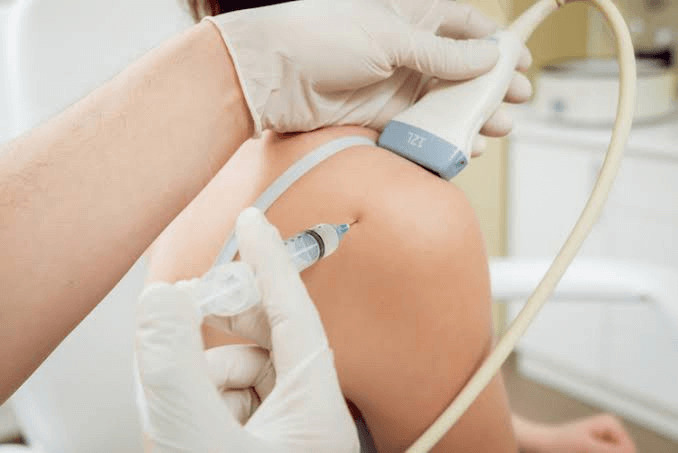
2. Injections given by a specialist doctor under ultrasound guidance so they are precisely targeted and effective. These include steroid injections into the shoulder joint for people with severe pain, or concentrated glucose injections (prolotherapy) to distend the shoulder joint so it can move better. Injections help make physical therapy more effective.
If you are starting to have shoulder pain, cannot move your shoulder fully, or are less able to carry out daily activities because of shoulder pain, see a doctor promptly for diagnosis and appropriate treatment.
Araya (Maprang), PT
Reference
Medically Reviewed by Jabeen Begum, MD on November 07, 2023 Written by WebMD Editorial Contributor, Jennifer Walker-Journey
Shoulder Elbow. 2017 Apr; 9(2): 75–84. Published online 2016 Nov 7. doi: 10.1177/1758573216676786

Information provided by
Dr. Apiporn Garnjanagoonchorn (Dr. Ann)
Rehabilitation physician