
Wrist pain from carrying your baby but can't take medication? What new mums need to know
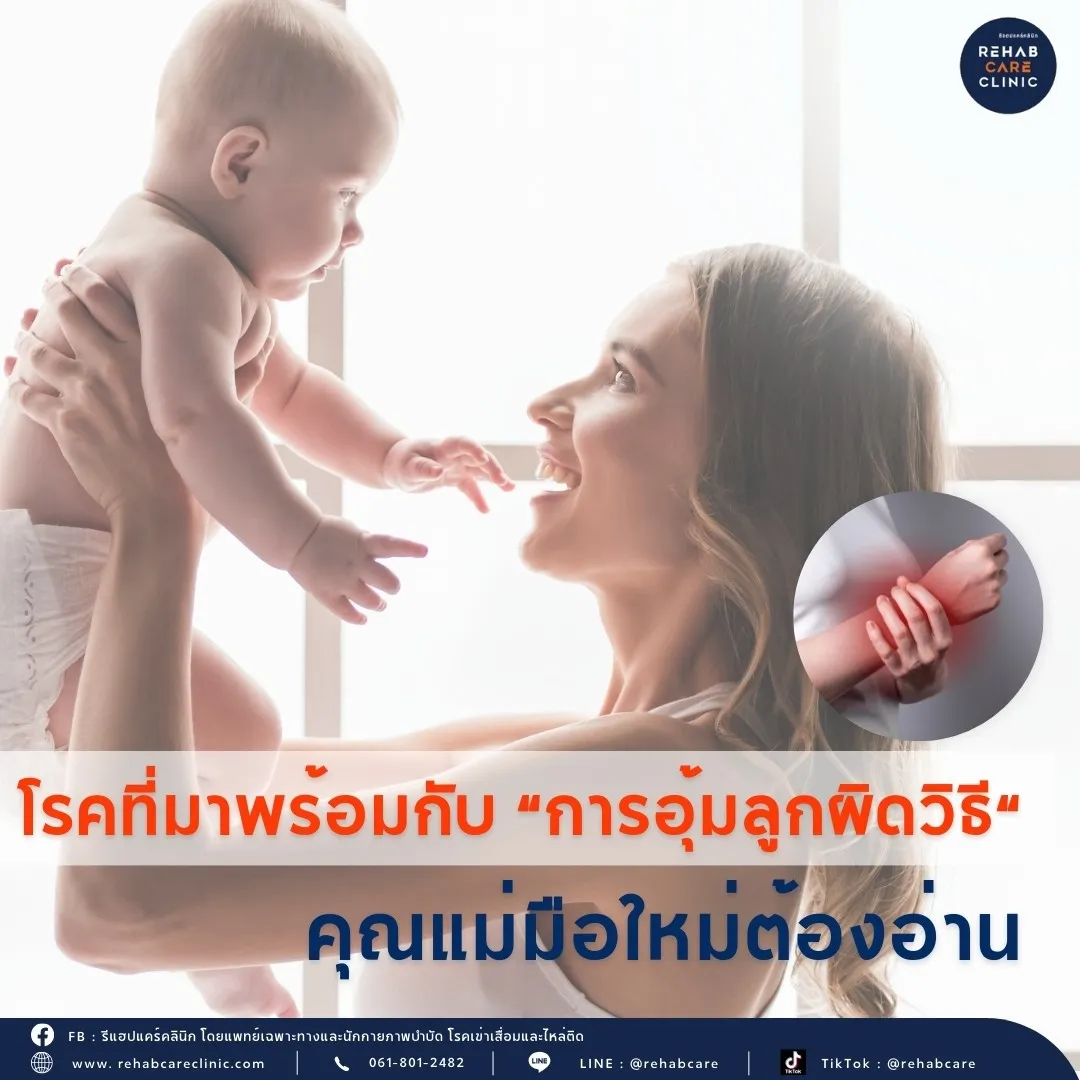
Wrist pain in new mothers is common from shortly after giving birth until the baby is old enough to walk. During this period mothers carry their babies for long stretches, which can inflame the tendons and tendon sheaths of the wrist. This condition is known as "De Quervain's tenosynovitis (De Quervain's disease)". It causes pain around the wrist and the base of the thumb, and the pain may also spread into the forearm. It is caused by using the wrist or thumb in the same way repeatedly over a long period until inflammation develops, and the more the hand continues to be used, the worse the pain can become.
Which ways of carrying your baby put you at risk of De Quervain's, and which are safe for mums?
The position that encourages wrist injury, or puts mothers at risk of De Quervain's, is lifting the baby by sliding the web between the index finger and thumb under the baby's armpits and lifting them up. Done repeatedly, or as the baby gets heavier, this can inflame the wrist tendons. The way to minimise wrist strain is to lift with your palm facing up, scooping under the baby's bottom while they are lying on their back, and sliding your forearm under to support their back and head. This position reduces the load on the wrist tendons and so protects the mother's wrists.
A simple two-step self-test for De Quervain's, called Finkelstein's test
1. Hold your arm out, then make a fist with your thumb tucked into your palm.
2. Bend your wrist down towards your little finger.
If you feel pain at the base of the thumb, the test is considered positive, indicating De Quervain's tenosynovitis.
If Finkelstein's test is positive, or you are unsure of the result, we recommend a further assessment by a specialist doctor. Rehab Care Clinic has experienced rehabilitation medicine specialists who can use ultrasound to diagnose the problem.
Image: De Quervain's tenosynovitis (De Quervain's disease) detected with diagnostic ultrasound
Reference: Corvino A, Lonardo V, Corvino F, Tafuri D, Pizzi AD, Cocco G. “ Daddy wrist”: A high-resolution ultrasound diagnosis of de Quervain tenosynovitis. J Clin Ultrasound. 2023; 51(5): 845-847.
What should you do if you have De Quervain's tenosynovitis (De Quervain's disease)?
However severe the pain, breastfeeding mothers often cannot take medication. Meanwhile, the postures and activities involved in caring for a baby keep aggravating the inflammation, so the pain keeps coming back. If the pain is left to continue without proper care and treatment, it may become chronic. That is why Rehab Care Clinic would like to share some basic self-care tips and drug-free treatments that let mothers look after their little ones fully, without pain getting in the way.
Basic pain self-care
1. Rest the hand or avoid activities that cause pain.
2. Wear a wrist-thumb splint to reduce movement and limit the use of the wrist.
3. Apply heat or cold
3.1 Cold compress / soaking in cold water: immediately after repetitive use, or when the pain comes with swelling, redness and warmth, to reduce inflammation from using the hand and wrist.
3.2 Warm compress / soaking in warm water: for chronic injuries with aching and tightness, to relax the muscles and improve blood circulation.
Medical treatment
Injections are recommended when the pain is severe, when a quick recovery is needed, or when there is no response to physical therapy. Injections should be given by a specialist doctor using ultrasound guidance to improve safety, accuracy and treatment effectiveness. There are two options:
1. Platelet-rich plasma (PRP) injection: an injection of highly concentrated platelets. Your own blood is processed to extract the components that promote repair and reduce inflammation, which are then injected back into the injured area to speed up healing and recovery. PRP can help relieve pain, and improvement is usually seen from the first injection. Its advantages are that it is safe and highly effective, but it costs more than other injections.
2. Steroid injection: an injection to reduce inflammation and pain. Its advantages are fast results, because the drug is a strong pain reliever, and a lower cost than PRP. The disadvantages are that, in the long term, it may prevent the tendon from repairing and recovering if the hand is not rested, unlike PRP. It cannot be given more than 2–3 times a year or in repeated succession, and it is riskier than PRP, because if it is injected into the tendon it may weaken the tendon and make it more likely to rupture.
Image: The needle during an injection into the tendon sheath under ultrasound guidance
Reference: Corvino A, Lonardo V, Corvino F, Tafuri D, Pizzi AD, Cocco G. “ Daddy wrist”: A high-resolution ultrasound diagnosis of de Quervain tenosynovitis. J Clin Ultrasound. 2023; 51(5): 845-847
Physical therapy to reduce pain
Physical therapy using equipment to reduce pain includes:
1. Focus Shockwave (focused shockwave therapy) is applied to the tendons and tendon sheaths of the wrist to reduce pain and speed up the body's own repair. It can also be used on painful, tight forearm muscles to relax them effectively and safely.
2. High Power Laser (high-power laser therapy) delivers highly concentrated light energy at a wavelength of 1064 nm that penetrates deep into the tendons. It is applied to areas of inflammatory pain to add energy, accelerate self-repair and reduce inflammation quickly.
3. Ultrasound uses high-frequency sound waves whose heating effect helps increase blood flow. It is used on both injured muscles and tendons.
4. TENS (electrical stimulation) is applied to the painful area to relieve pain and relax the muscles effectively.
5. Hot Pack (warm compress) can be applied to tight forearm muscles.
6. Exercise programme
Exercises to prevent De Quervain's disease
1. Thumb flexor stretch: turn your palm up, then use the other hand to pull the thumb back until you feel a stretch in the thumb. Hold for 10 seconds and repeat 10 times.
2. Inner forearm stretch: straighten your elbow with your palm facing up, then pull your palm down until you feel a stretch in the inner forearm muscles. Hold for 10 seconds and repeat 10 times.
3. Outer forearm stretch: straighten your elbow with your palm facing down, then pull the back of your hand down until you feel a stretch in the outer forearm muscles. Hold for 10 seconds and repeat 10 times.
4. Forearm strengthening: turn your palm up, make a fist, then slowly bend your wrist upwards. Hold for 5 seconds, then slowly return to the starting position. Repeat 10 times. Add a weight to make it harder.
5. Forearm strengthening: turn your palm down and make a fist, then slowly bend your wrist upwards. Hold for 5 seconds, then return to the starting position. Repeat 10 times. Add a weight to make it harder.
6. Finger strengthening: place a large resistance band around the outside of your fingers, then spread and close your fingers against the band. Repeat 10 times.
If you are a new mum with wrist pain or De Quervain's tenosynovitis and cannot take medication because you are breastfeeding, see a doctor or physical therapist promptly to assess your symptoms and plan suitable treatment, so the inflammation does not get worse and turn into chronic pain that requires surgery.

Information provided by
Dr. Apiporn Garnjanagoonchorn (Dr. Ann)
Rehabilitation physician